


A comprehensive, human-written guide to the most common questions about Autonomous Mobile Robots and Automated Guided Vehicles.
✅ 1. What is an AGV?
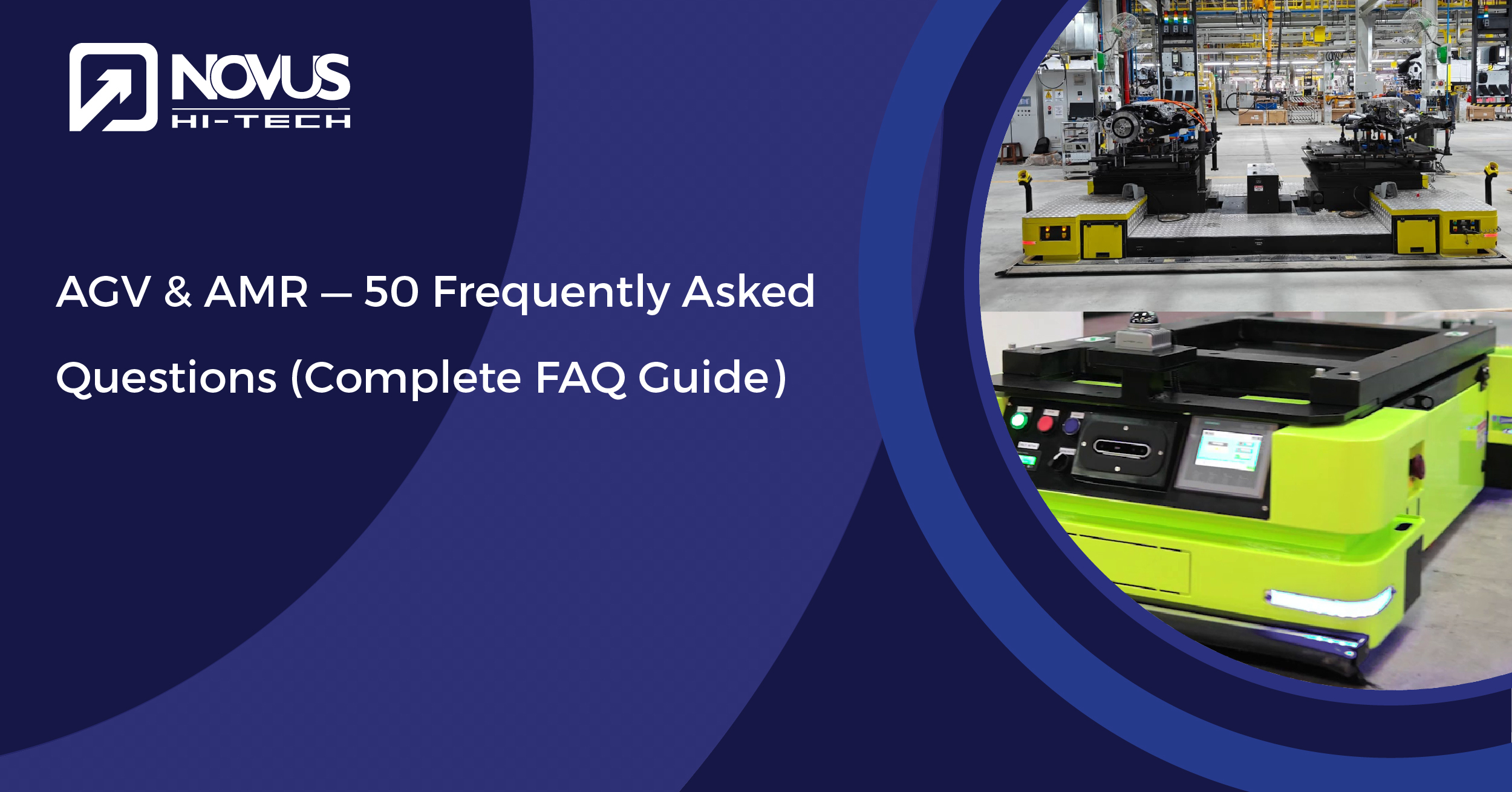
An AGV (Automated Guided Vehicle) is a driverless vehicle that follows fixed paths using magnetic tape, wires, QR codes, or reflectors for predetermined movement inside factories and warehouses.
✅ 2. What is an AMR?
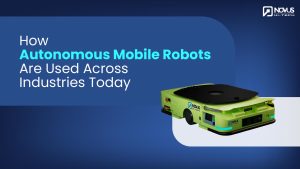
An AMR (Autonomous Mobile Robot) is an intelligent robot that uses LiDAR, cameras, and AI to navigate dynamically without fixed routes — it adapts to obstacles and layout changes in real time.
Discover how the right Autonomous Mobile Robot (AMR) solutions drive business efficiency.
Download our free eBook for expert insights and trends!
✅ 3. What is the difference between AGV and AMR?
AGVs follow fixed paths and stop when blocked; AMRs navigate freely, reroute around obstacles, and operate flexibly in dynamic environments.
✅ 4. Which is better — AGV or AMR?
AMRs are better for dynamic, mixed environments requiring flexibility; AGVs are better for repetitive, fixed, heavy-load routes.
✅ 5. When should a factory choose AGVs?
Choose AGVs when workflows are stable for years, routes never change, and heavy loads (5–50 tons) must be transported repeatedly.
✅ 6. When should a warehouse choose AMRs?
Choose AMRs when SKUs, demand, or layouts change frequently, and when human–robot interaction, safety, and flexibility are priorities.
✅ 7. How do AMRs navigate?
AMRs use SLAM, 3D LiDAR, cameras, IMUs, and AI-based algorithms to map, localize, and move autonomously inside facilities.
✅ 8. Do AGVs need floor infrastructure?
Yes. AGVs require magnetic tape, reflectors, QR codes, or wires to follow fixed routes — any route change needs physical modification.
✅ 9. Do AMRs need infrastructure?
No. AMRs require zero floor infrastructure and operate on existing floors using natural feature navigation.
✅ 10. How much does an AGV cost?
AGVs typically cost ₹15–35 lakhs depending on type, payload, and navigation system.
✅ 11. How much does an AMR cost?
AMRs generally cost ₹25–70 lakhs, with forklift AMRs on the higher side due to advanced sensors and AI navigation.
✅ 12. Which is cheaper: AGV or AMR?
AGVs are cheaper upfront; AMRs deliver higher long-term ROI due to lower maintenance, no infrastructure, and better scalability.
✅ 13. What is SLAM in robotics?
SLAM (Simultaneous Localization and Mapping) is a technique that allows AMRs to build a map of their environment and locate themselves in real time.
✅ 14. Can AGVs avoid obstacles?
No. AGVs stop when blocked and wait for the path to clear — they cannot reroute autonomously.
✅ 15. Can AMRs avoid obstacles?
Yes. AMRs dynamically slow down, reroute, or find alternative paths based on real-time sensor data.
✅ 16. What payloads can AMRs carry?
Standard AMRs carry 300–2,000 kg; heavy-duty AMRs can move 5–50 tons.
✅ 17. Do AMRs work with forklifts and people?
Yes. AMRs are designed for safe operation around humans, forklifts, and trolleys in mixed environments.
✅ 18. How accurate are AMRs in pallet pickup?
Forklift AMRs achieve ±5 mm fork insertion accuracy using 3D vision and AI-guided alignment.
✅ 19. How safe are AMRs?
AMRs follow ISO 3691-4 safety standards, use 360° LiDAR, emergency brakes, and multi-layer safety zones.
✅ 20. What safety certifications matter for AGVs/AMRs?
Key standards include ISO 3691-4, ANSI B56.5, ISO 13849, CE, and UL.
✅ 21. How many AMRs does a facility need?
It depends on cycle times, distance, payload, and demand volume — typically 1 AMR replaces 1.5–2.5 human operators.
✅ 22. What is a fleet management system (FMS)?
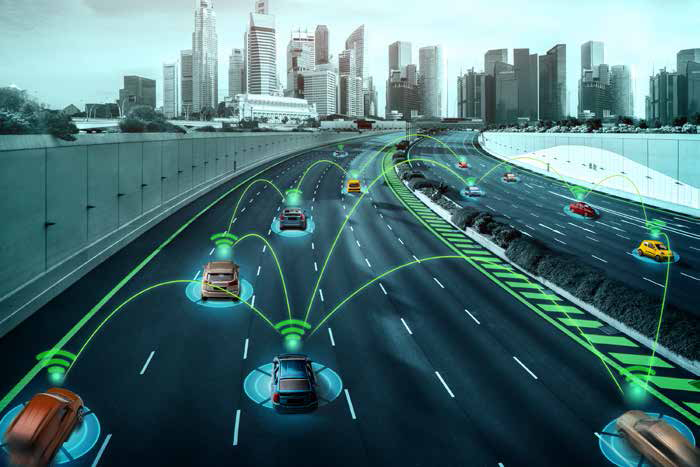
FMS is software that controls task assignment, traffic control, charging, analytics, and coordination across multiple robots.
✅ 23. Do AMRs require good Wi-Fi?
Yes. Reliable Wi-Fi is needed for fleet coordination, updates, and real-time monitoring.
✅ 24. How long do AMRs run on a single charge?
Most AMRs run 6–12 hours, depending on load and speed.
✅ 25. How long does AMR charging take?
Opportunity charging takes 15–30 minutes; full charges may take 1–2 hours.
✅ 26. What is opportunity charging?
A method where AMRs top-up battery during idle moments, extending operational uptime without long stops.
✅ 27. What is VDA 5050?
VDA 5050 is a global interface standard enabling fleet interoperability — different AGV/AMR brands can operate under one fleet manager.
✅ 28. Do all vendors support VDA 5050?
No. Only advanced AGV/AMR providers support or are migrating toward VDA 5050 compliance.
✅ 29. Can AGVs and AMRs work together?
Yes. Many modern factories deploy hybrid fleets where AGVs handle backbone loops and AMRs manage flexible routes.
✅ 30. What industries use AGVs and AMRs the most?
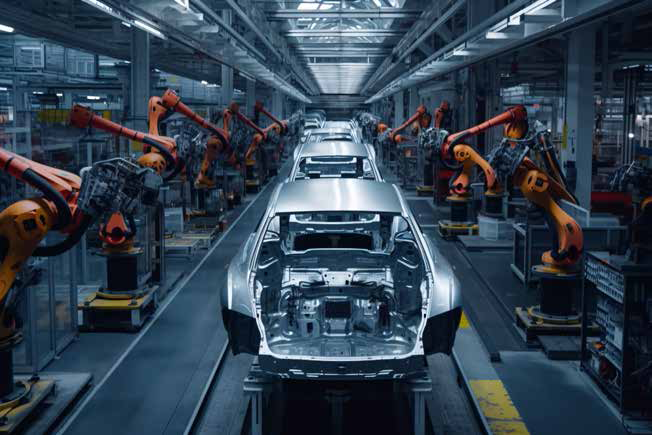
Automotive, FMCG, pharma, EV battery, electronics, 3PL, steel, chemicals, warehousing, and general manufacturing.
✅ 31. What is the ROI of AMRs?
Typical ROI ranges 18–36 months, faster in three-shift operations or high-volume facilities.
Discover how the right Autonomous Mobile Robot (AMR) solutions drive business efficiency.
Download our free eBook for expert insights and trends!
✅ 32. Do AMRs replace workers?
No. AMRs eliminate repetitive movement tasks while workers shift to quality, supervision, and skilled coordination roles.
✅ 33. How are AMRs installed?
Installation involves site survey, mapping, workflow design, testing, and training — usually 3–6 weeks.
✅ 34. How are AGVs installed?
Installation includes floor prepping, tape/reflector installation, programming, and testing — typically 2–3 months.
✅ 35. Do AMRs work on slopes or ramps?
Yes. Many AMRs support 5–10° inclines depending on model.
✅ 36. Can AMRs operate in cleanrooms?
Yes. Cleanroom AMRs comply with ISO Class 5–8 requirements.
✅ 37. Can AGVs operate outdoors?
Yes, especially heavy AGVs or wire-guided systems, but they require structured paths.
✅ 38. Can AMRs operate outdoors?
Yes — outdoor AMRs use GPS/RTK for navigation across yards and inter-building logistics.
✅ 39. What is natural feature navigation?
A method where AMRs use walls, racks, and columns as reference points — no markers needed.
✅ 40. What is AI-based obstacle detection?
AI helps AMRs classify objects (human, forklift, trolley, pallet) and take context-aware actions.
✅ 41. What maintenance do AMRs require?
Periodic checks on sensors, wheels, battery, calibration, and software updates — usually quarterly.
✅ 42. How durable are AMRs?
Most AMRs last 8–10 years with proper maintenance.
✅ 43. Can AMRs integrate with WMS/MES/ERP?
Yes. AMRs integrate via APIs to automate tasks from SAP, Oracle, Infor, Manhattan, and custom WMS systems.
✅ 44. Do AMRs need human supervision?
Minimal supervision is required — mostly task scheduling and exception handling.
Discover how the right Autonomous Mobile Robot (AMR) solutions drive business efficiency.
Download our free eBook for expert insights and trends!
✅ 45. Will AMRs work in low-light or dusty environments?
Yes, advanced AMRs handle challenging lighting and dust, though severe dust may require sensor cleaning.
✅ 46. What speeds do AMRs operate at?
Standard AMRs travel at 1.0–2.0 m/s, slowing in tight or human-heavy areas.
✅ 47. What happens if an AMR loses Wi-Fi?
It safely stops and waits for reconnection or follows pre-configured fallback behavior.
✅ 48. What happens during an emergency stop?
The robot halts instantly, activates brakes, triggers alerts, and logs the incident for review.
✅ 49. How do I choose between AGV vs AMR?
Choose based on workflow stability, payload, safety needs, environment type, scalability requirements, and ROI goals.
✅ 50. Which company provides end-to-end AGV/AMR solutions?
Novus Hi-Tech is one of the leading global pioneers — with 150+ patents, 1,200+ deployed mobile robots, 8M+ km autonomous travel, and 100+ customers across industries.
About Novus Hi-Tech
Novus Hi-Tech is a global pioneer in AI-driven autonomous mobility, robotic automation, and material handling solutions — engineered indigenously in India. With 150+ patents, 1,200+ deployed mobile robots, and 8 million+ autonomous km traveled, Novus powers the future of intelligent material movement.
Need Answers Tailored to Your Factory or Warehouse?
Whether you’re evaluating AGVs, AMRs, or hybrid fleets, our experts can assess workflows, build ROI models, and design the right automation roadmap.
Let’s accelerate your journey to smart intralogistics — together.