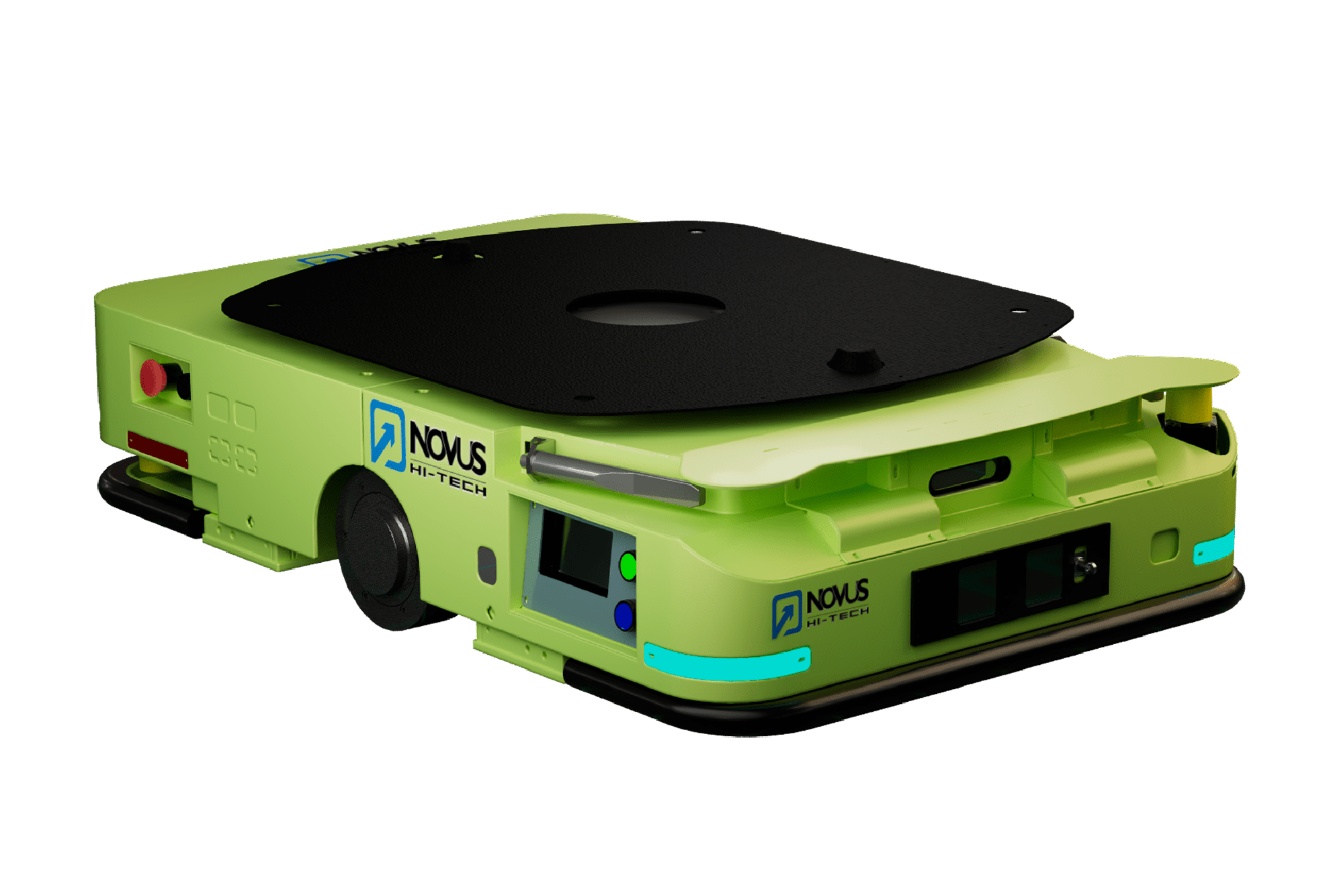
Novus Carry AMR
Novus Carry AMRs are built in-house in India, with the hardware, software, AI stack, and fleet orchestration engineered end-to-end. That vertical integration lets our robots handle payloads from 250 kg to 2000 kg, run 6 to 10 hours on a single charge, and operate in the same environments as your team: assembly lines, intralogistics, cleanrooms, and pharma corridors.
Material Handling Redefined
Moves pallets, trolleys, kits, and frames with precision.
Multi-Task Functionality
Tugging, lifting, tunneling, conveyor transfers, and pick-assist.
Adaptable to Any Layout
Works in dynamic, crowded environments with natural navigation.
Plug-and-Play Attachments
Swap modules to match operational needs in minutes.
One Platform, Five Payload Classes
Autonomous Mobile Robot
CARRY-250
Novus CARRY-250 is our entry-level autonomous mobile robot, moving loads up to 250 kg through narrow aisles and tight assembly cells with natural navigation and QR-assist docking.
Best For
Electronic assembly, e-commerce totes, carton transfers, narrow aisles
One Fleet. Every Material Handling Workflow.
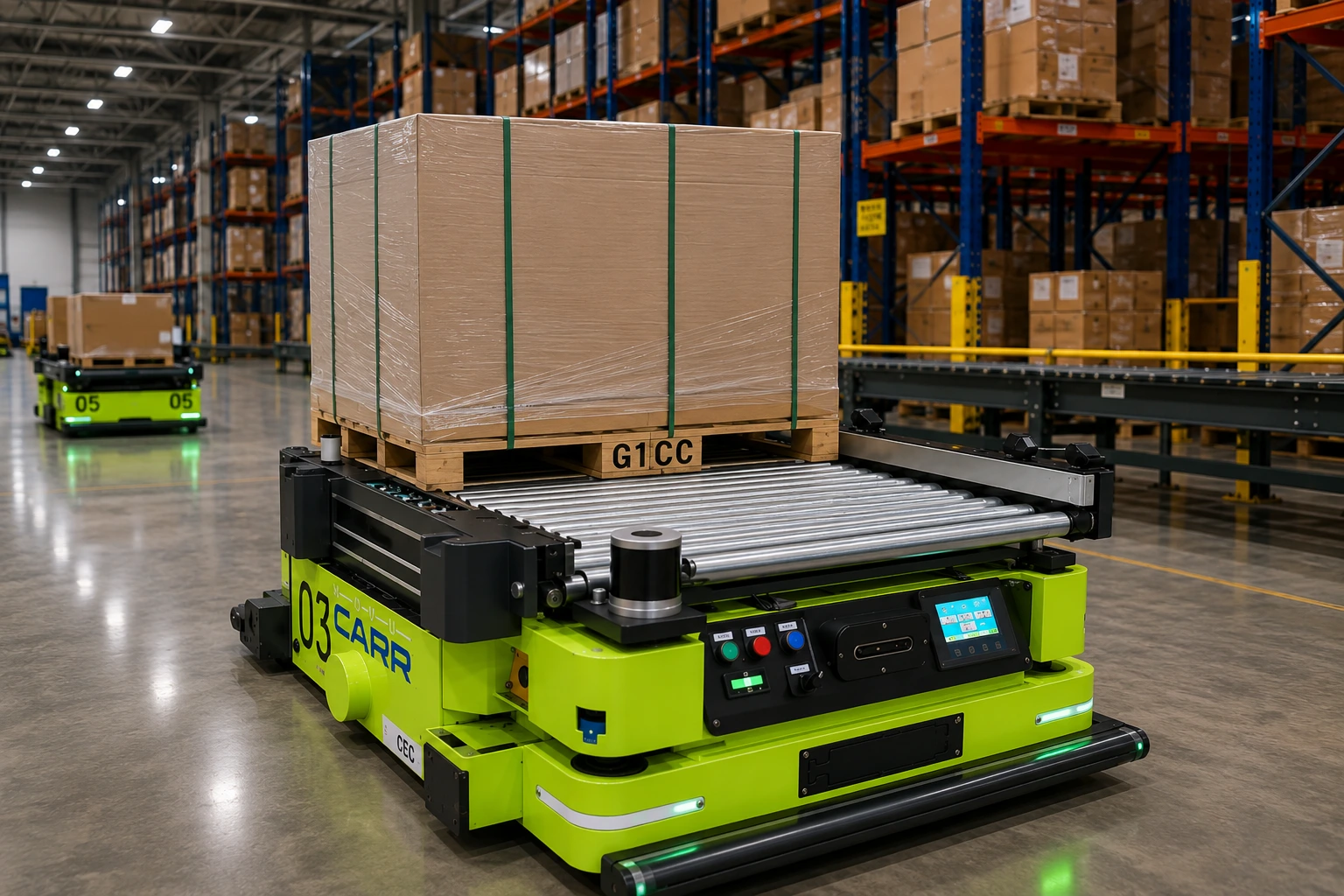
Novus Carry handles material movement, assembly line feed, picking, and tugging across a wide range of industrial workflows.
Material Movement
Move raw materials, components and finished goods between predefined locations.
Attachments
- Tote Conveyor
- Conveyor
- Lifter
- Custom Carrier
Assembly Line Supply
Deliver components and kits directly to production lines.
Applications
- Line-side delivery
- Kitting
- Replenishment
- Work-in-progress movement
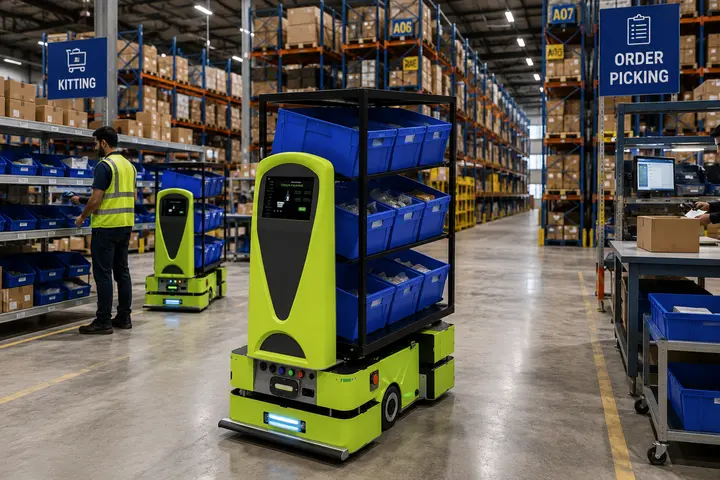
Picking Assistance
Use AMRs to support operators during picking and order fulfilment.
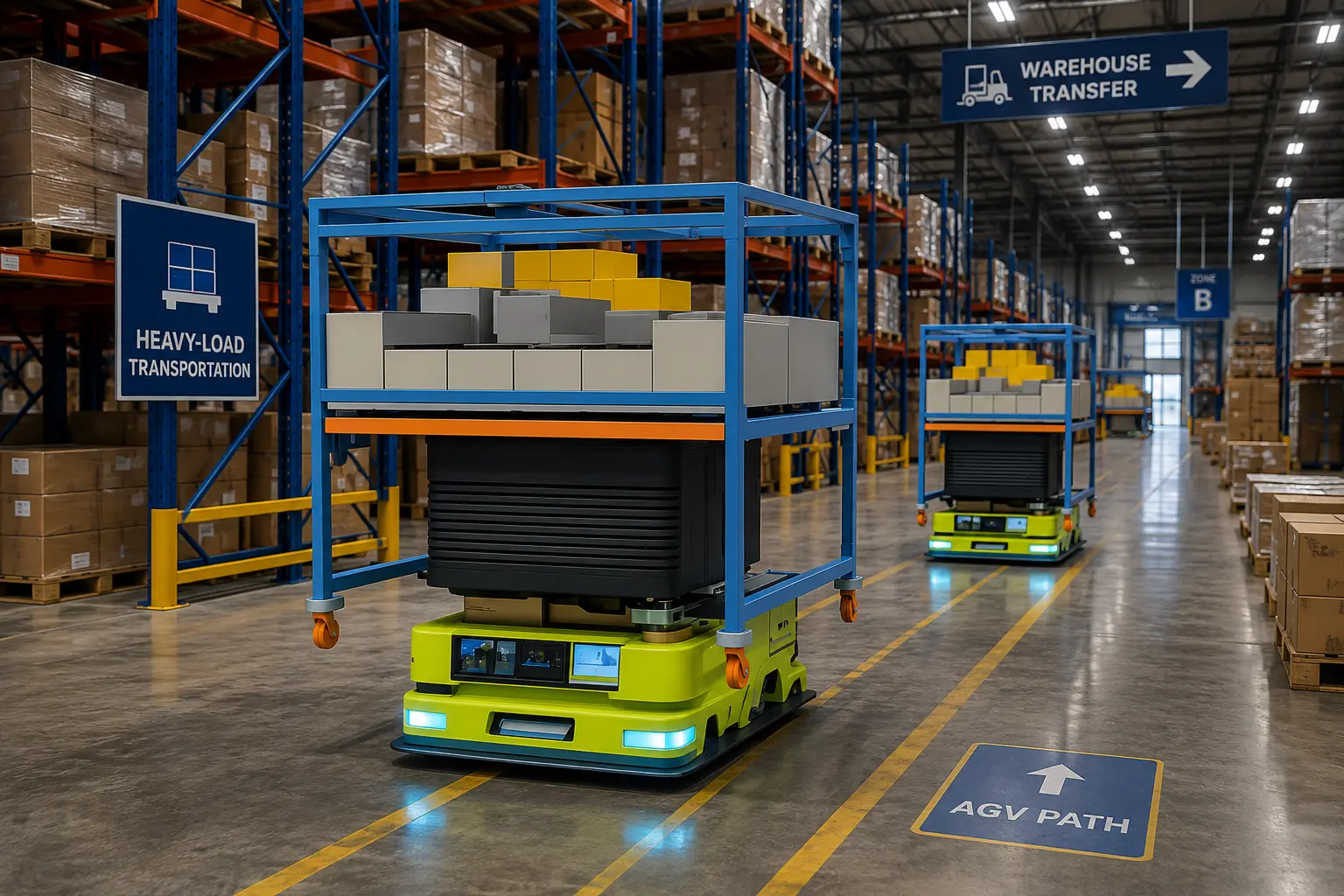
Pallet & Heavy Load Transport
Automate movement of heavy materials and pallets.
Applications
- Pallet movement
- Heavy-load transportation
- Warehouse transfer
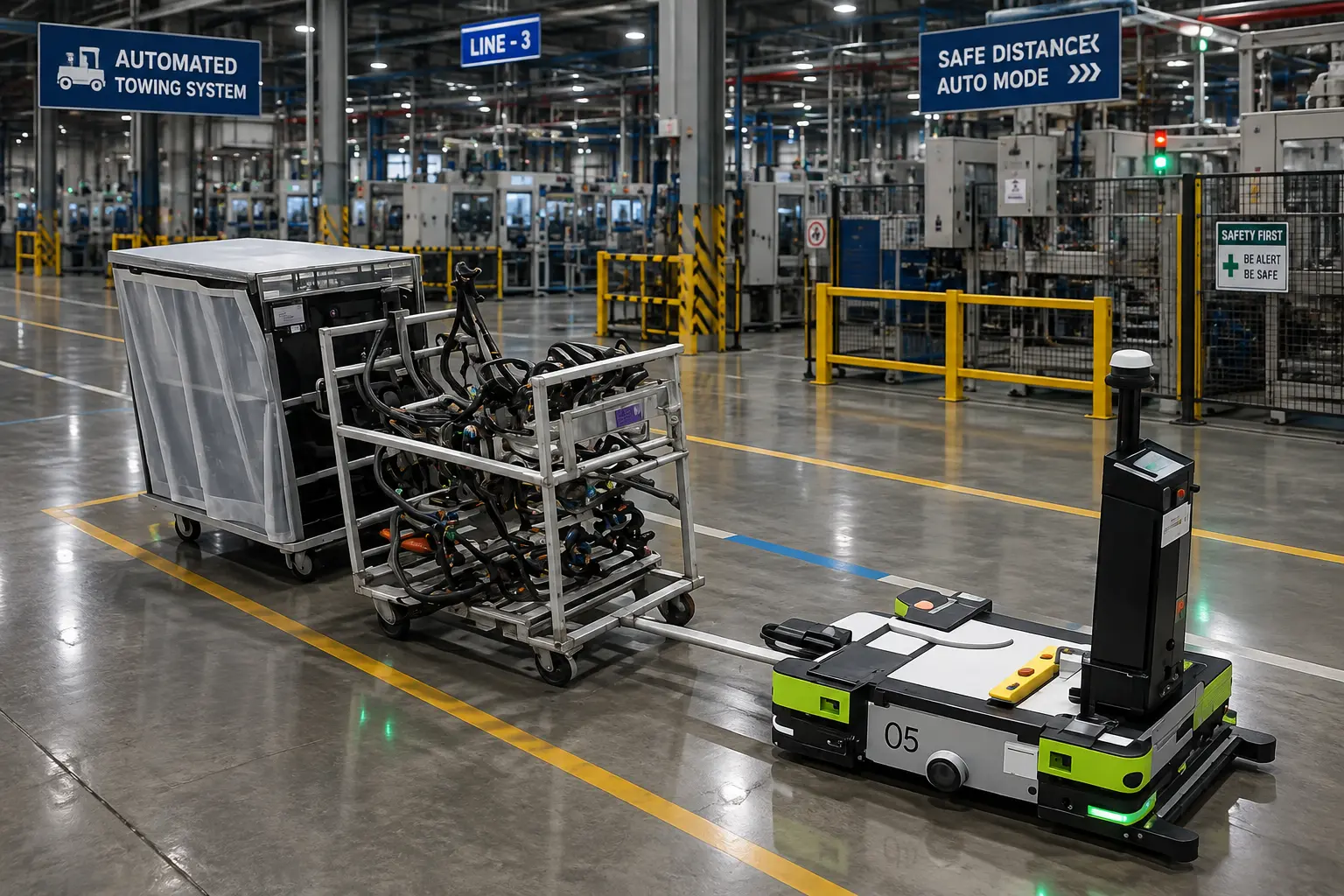
Tugging
Use AMRs to autonomously pull carts and trolleys across manufacturing and warehouse environments.
See Your Payback Before You Commit
The Novus Return on Robotics (ROR) Calculator estimates your 3-year labor savings and breakeven timeline based on your facility type, shift schedule, and team size.
Want a detailed ROI report for your facility?
Our automation experts will review your numbers.
| Spec category | Value |
|---|---|
| Navigation | Natural + LiDAR / QR Assist |
| Localization | SLAM / V-SLAM |
| Drive Type | Differential (CARRY-250 to CARRY-1500), Dual-Drive / Steer-Assist (CARRY-2000) |
Increased Efficiency
Continuous material flow between workstations and storage. Fewer delays, faster cycle times.
Improved Safety
3D LiDAR and 360-degree scanners. No cages, no barriers. People and robots on the same floor.
Flexibility
Layout changed? Update the software. No floor markers, no infrastructure work.
Cost-Effective
Scale the fleet without scaling infrastructure. Novus Analytics keeps utilization on track.
Novus CARRY AMRs are in production at manufacturing and warehousing operations across India, Southeast Asia, the Middle East, and North America. Here is how customers put them to work.
One Robot, Six Configurations
Same robot, different job. Swap any of six plug-and-play attachments and the CARRY handles a completely different workflow, with no hardware change and no software rewrite.
Lifter
Raises trolleys, pallets, and frames to precise conveyor-handoff height.
Tugger
Auto-hitches and auto-unhitches. Tows single carts or full trolley trains.
Tunneling
Moves under low-clearance racks and fixtures without stopping.
Conveyor Loader / Unloader
Transfers pallets and frames between conveyors, hands-free.
Frame Transport / Custom
Built for vehicle frames, large fixtures, and application-specific loads.
Pick Assist
Supports operators during picking and order fulfillment by following the picker through the aisle and carrying the accumulating order to the dispatch station.
Real-Time Monitoring, Predictive Insights, and Intelligent Control for Smarter, Safer Operations
Every Novus Carry AMR runs on hardware. A fleet runs on software. The Novus FMS and Novus Analytics platform give operations managers, plant heads, and logistics teams complete visibility, automated task control, and the data to keep improving — across every robot, every shift, every site.
Fleet Management System (FMS)
Dispatches tasks, manages traffic, and schedules charging across your entire fleet automatically, without manual oversight.
- Real-time AMR tracking across multiple sites
- Automatic task dispatching by priority
- Dynamic routing to avoid congestion
- VDA 5050 — third-party fleet support
Novus Analytics
Turns fleet data into decisions. Uptime, throughput, bottlenecks, and ROI visible in one dashboard your team actually uses.
- Live monitoring of entire autonomous fleet
- KPIs: uptime, efficiency, task completion
- Predictive maintenance alerts
- Custom dashboards for plant heads and CXOs
Most AMR vendors assemble. Novus engineers.
Hardware from one supplier, navigation software licensed from another, fleet management bolted on top. That is the typical AMR stack. Novus builds every layer in-house: the chassis, AI stack, FMS, and analytics platform. One team, accountable for the whole system.
| Feature | Novus Carry | Other AMRs |
|---|---|---|
| Hardware + Software ownership | Fully in-house — single accountable partner | Hardware from one vendor, software licensed from another |
| Payload range | 250 kg to 2,000 kg across five variants | Often limited to lighter payload classes |
| Fleet interoperability | VDA 5050 compliant — AMRs, AGVs, third-party robots in one FMS | Typically limited to own hardware ecosystem |
| Navigation | 3D LiDAR SLAM, no floor infrastructure required | Often fixed-path or 2D-only navigation |
| Track record | 1,400+ robots deployed, 150+ patents, 10M+ km navigated | Smaller deployment footprint |