
Autonomous Mobile Forklift
for Smarter Material Handling
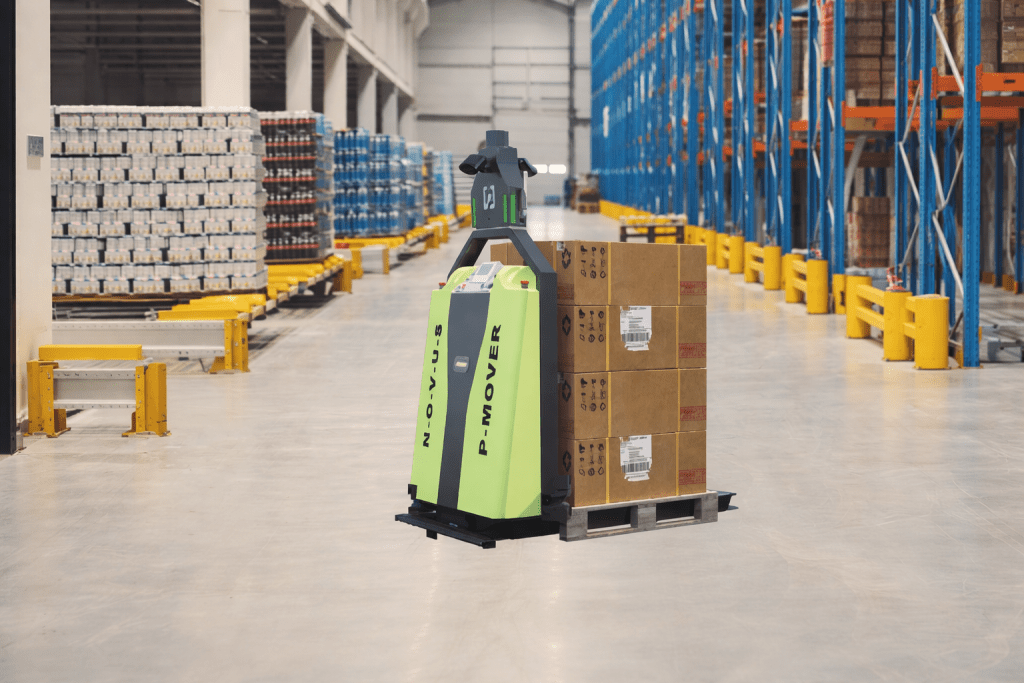
Material movement doesn’t have to be complicated. The Novus P-Mover is built to move standard bins and pallets with accuracy and confidence—without constant human intervention. Designed as a next-generation autonomous forklift, it combines laser SLAM and vision-based navigation to operate reliably in both ground-to-ground and ground-to-height applications.
From busy warehouses to high-throughput manufacturing floors, Novus P-Mover brings structure, safety, and autonomy to everyday logistics tasks.
Trusted by Global Leaders


Simplifying
Material Handling
Mobile Robot
Solutions Deployed
Enterprise
Customers
Patents
Robot Travelled
Globally
Why Novus
P-Mover?
Key Capabilities
Human-Centric Safety
360° sensing, safety scanners, visual & audio alerts for collaborative environments
Software-Defined Control
Centralised fleet management, workflow orchestration, and analytics via Novus software stack.
Autonomous Navigation
Natural navigation with real-time obstacle avoidance—no markers required.
Modular & Multi-Task Ready
Supports lifting, tugging, conveyor transfer, and frame transport through plug-and-play attachments.
Product Variants
Forklift Base Robots
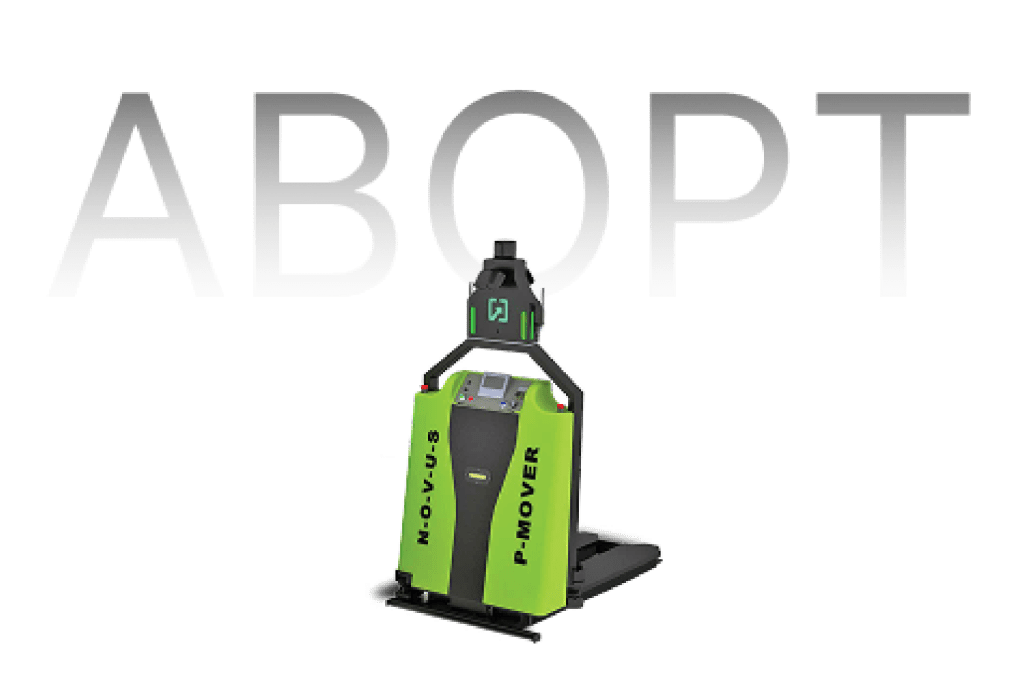
Designed for tight operational layouts, ABOPT delivers stable and accurate ground-to-ground movement. Ideal for facilities that require agility, compact turning radius, and dependable pallet transport.
Built for precision in confined spaces.
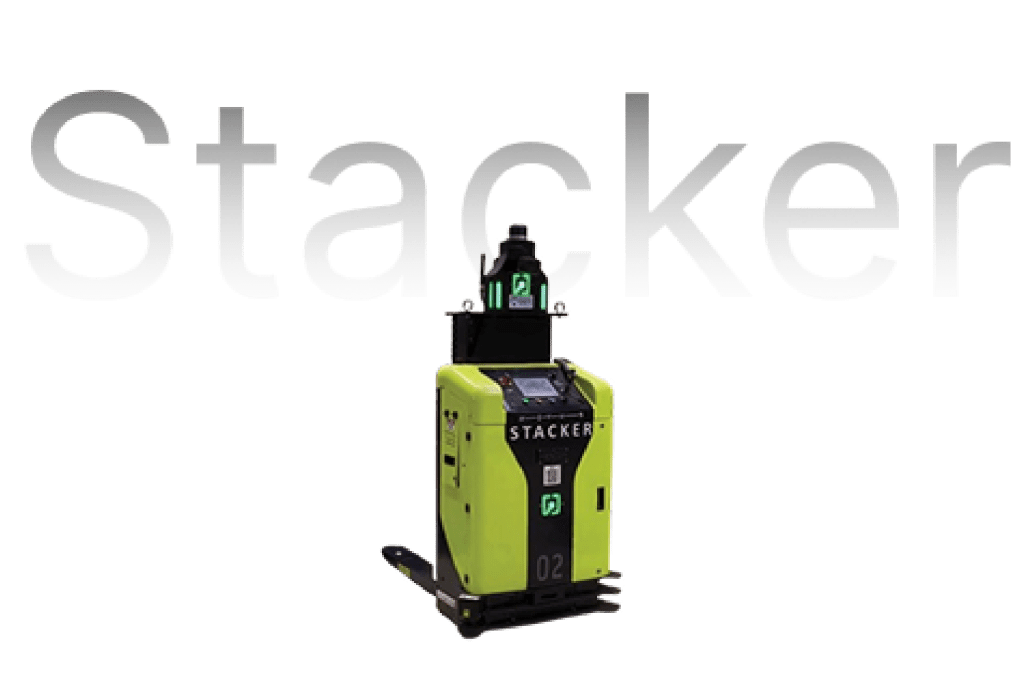
A versatile solution for both ground-level transfers and elevated storage tasks. Perfect for stacking, retrieval, and high-density storage areas where space efficiency matters.
Efficiency in compact spaces
See It in Action
Watch Novus P-Mover and its variants operate in real industrial environments—demonstrating intelligent navigation, improved safety, and measurable productivity gains.
Novus Analytics
Intelligence That Powers Autonomous Operations
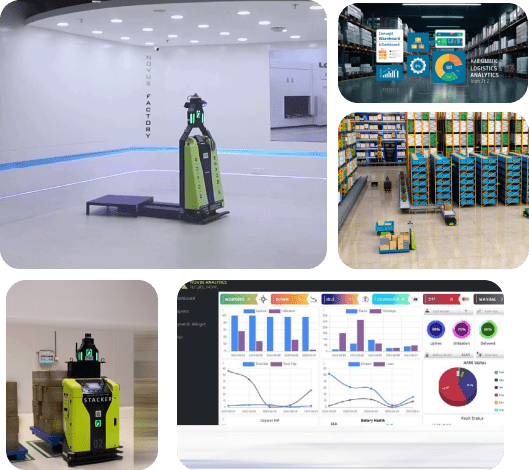
Automation becomes truly valuable when data drives decisions. Novus Analytics acts as the digital command center behind your fleet.
It captures operational data, tracks performance, and provides actionable insights—helping you improve uptime, optimize fleet usage, and move closer to continuous 24×7 operations.
Core Capabilities
Centralized Fleet Control
Manage all robots from a single interface.Track cycle times, throughput, travel distance, and system health in real time. Gain full transparency into performance metrics and productivity trends.
Traffic Supervision
Ensures controlled and efficient movement of every robot in your facility.
- Live Mapping: Real-time visibility of layout
and active missions - Custom Traffic Rules: Define speed limits,
pedestrian areas, and restricted zones for
safer navigation

Seamless Integration
Novus Analytics connects easily with your digital infrastructure:
- Detailed dashboards for operational insights.
- REST APIs, WebSocket, and PLC protocol support (Ignition-ready)
- Integration with ERP, WMS, conveyors, cobots, shelving systems, and smart attachments Your material handling ecosystem stays connected—without complexity.
Smart Job Management
Acts as an automated supervisor across your fleet. Battery levels, workload distribution, payload, and robot location are continuously monitored. Tasks and charging cycles are assigned dynamically— maintaining operational balance without manual oversight.

FAQ's
When people ask about prices, it really depends on the type and complexity of the robot you’re looking at. For a fully autonomous forklift — the kind that can lift, move, and stack pallets without a human driver — you’re typically looking at a range between about ₹40 lakh to ₹80 lakh or even higher for heavy-duty configurations. The exact price varies with payload capacity, navigation tech, software features, and how much integration you need. This range gives you an idea of what companies are spending on robotic forklifts designed for real industrial use.
Robotic forklifts are equipped with advanced sensors, cameras, and AI that constantly scan their surroundings. If a human walks into their path or an unexpected object appears, they slow down or reroute to avoid collisions. That real-time awareness reduces human error — which is one of the biggest causes of workplace accidents — and keeps both people and products safer. Since the robot doesn’t get tired or distracted like a human, you’ll also see fewer bumps, dropped loads, and damaged goods.
Autonomous forklifts bring a few big advantages to a smart warehouse:
● Consistent material movement: They work at predictable speeds all day without fatigue.
● Better safety: Built-in sensing prevents accidents and protects workers.
● Space optimization: Robots can navigate tight aisles more precisely than manual forklifts.
● Integration with systems: When connected with warehouse software, they streamline tasks and reporting.
Altogether, these benefits help smooth internal logistics and free up people to do more value-added work.
Novus autonomous forklifts use a combination of laser-based SLAM navigation, visual sensing, and onboard intelligence to understand where they are and how to get where they need to be without fixed tracks or tape on the floor. These robots continuously map their surroundings and make navigation decisions in real time — avoiding obstacles, adjusting routes, and safely executing material handling tasks. Their software also ties into broader fleet management tools that let operators assign jobs, monitor status, and track performance centrally.
Yes — safety around humans is a core part of how autonomous forklifts are designed. Modern robotic forklifts are fitted with a suite of sensors that detect people, other machines, and obstacles. If something suddenly appears in their path, they can stop or slow down automatically. They’re programmed with safety rules, like reduced speeds in pedestrian zones, which makes them suitable for mixed workspaces where people and robots share the floor.
Robotic forklifts are surprisingly precise when it comes to pallet handling. Thanks to their sensing systems and navigation software, they consistently position forks to pick up and place pallets with very little variation — far more reliably than manual operators under many conditions. This precision minimizes load shifts, reduces wall or rack impacts, and keeps stacking orderly. In fact, autonomous pallet robots from leading vendors can achieve picking accuracy of over 95% in normal operations.