
What are AGVs? AGV stands for Automated Guided Vehicle, a driverless industrial robot that transports materials along fixed or dynamic routes inside factories, warehouses, and distribution centres. AGVs use onboard sensors, navigation software, and fleet management systems to run continuously without human drivers, replacing manual forklifts and tugger routes across shifts.
In the ever-evolving landscape of industrial automation, AGV robots (Automated Guided Vehicles) stand as vital assets driving efficiency, safety, and productivity across various industries. From manufacturing floors to warehouses, the versatility and functionality of AGV mobile robots have revolutionized traditional material handling processes. Let’s delve into the world of AGVs, exploring what they are, their types, applications, benefits, operational mechanisms, considerations in choosing an AGV robot manufacturer, future trends, and why they are crucial for modern industries.
What are AGVs? Full Form and Meaning
AGV stands for Automated Guided Vehicle. An AGV robot is a driverless, self-propelled vehicle that transports materials along predefined or dynamically generated routes inside industrial environments — entirely without human operators.
AGVs rely on a combination of sensors (laser, camera, ultrasonic), navigation software, and guidance infrastructure (magnetic tape, reflectors, or virtual maps) to move safely around a facility. They communicate with a central Fleet Management System (FMS) that assigns tasks, monitors positions, and manages traffic.
AGV vs AMR: AGVs follow fixed or semi-fixed routes; AMRs (Autonomous Mobile Robots) use onboard intelligence to navigate freely in unstructured environments. AGVs are ideal for high-volume, repetitive routes; AMRs suit dynamic layouts.
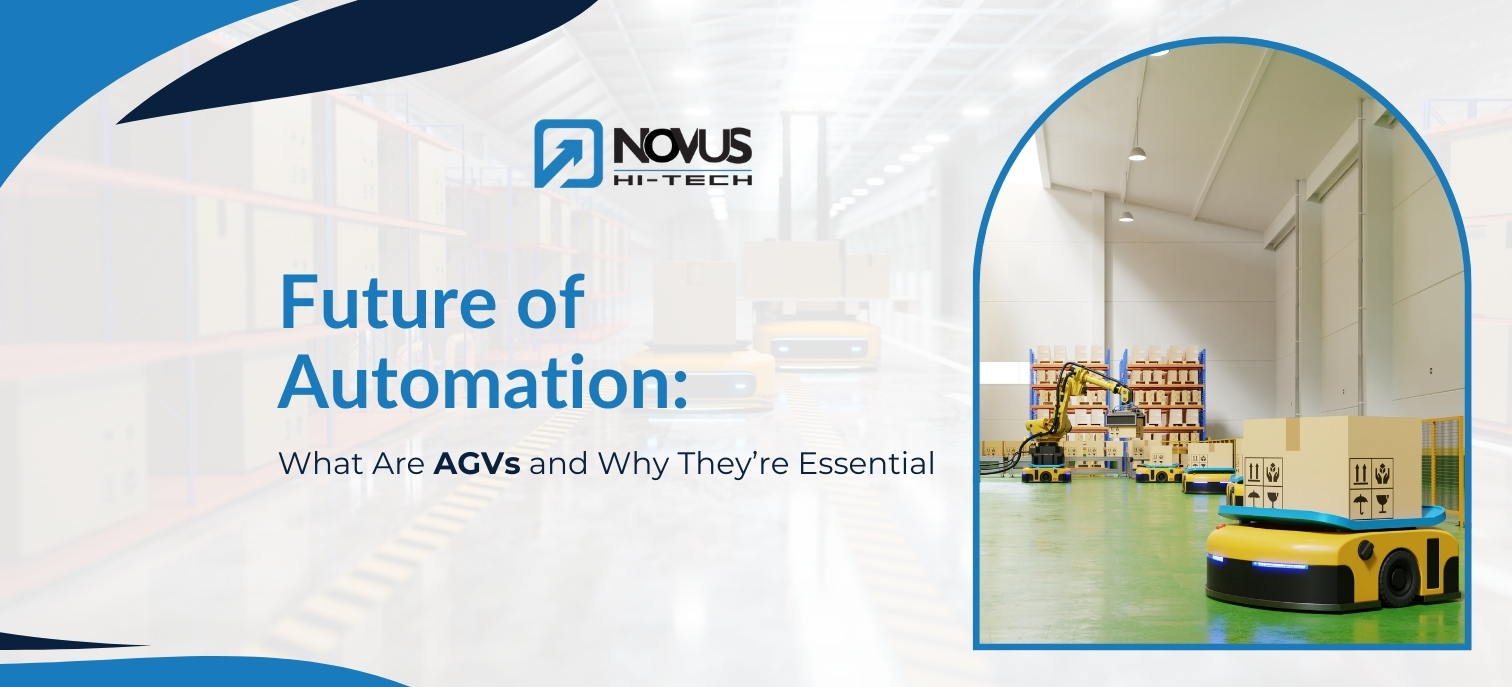
Discover how Automated Guided Vehicles (AGVs) drive the future of automation.
Download our free brochure for expert insights and trends!
Types of AGVs
Understanding the different types of AGVs helps you match the right vehicle to your operational needs.

- Towing / Tugger AGVs
Designed to pull one or more carts loaded with parts or finished goods, tugger AGVs are popular on assembly lines where regular milk-run deliveries are needed. They handle heavy payloads and reduce the number of trips required. - Unit Load AGVs
These carry a single pallet, tray, or bin directly on their platform. Unit load AGVs are the most common AGV type in warehousing — ideal for pallet-to-rack or pallet-to-conveyor transfers. - Forklift AGVs
Automated forklift AGVs replicate the function of a manned forklift: lifting, stacking, and retrieving pallets from racking systems. They suit facilities with existing pallet racking infrastructure and reduce dependence on licensed forklift operators. - Hybrid AGVs
Hybrid models combine capabilities from multiple AGV types, for example a unit load vehicle with fork attachments — providing flexibility when operations require varied material flows. Hybrid AGVs offer versatility and flexibility, adapting to diverse operational requirements within industrial settings.
How AGVs Work
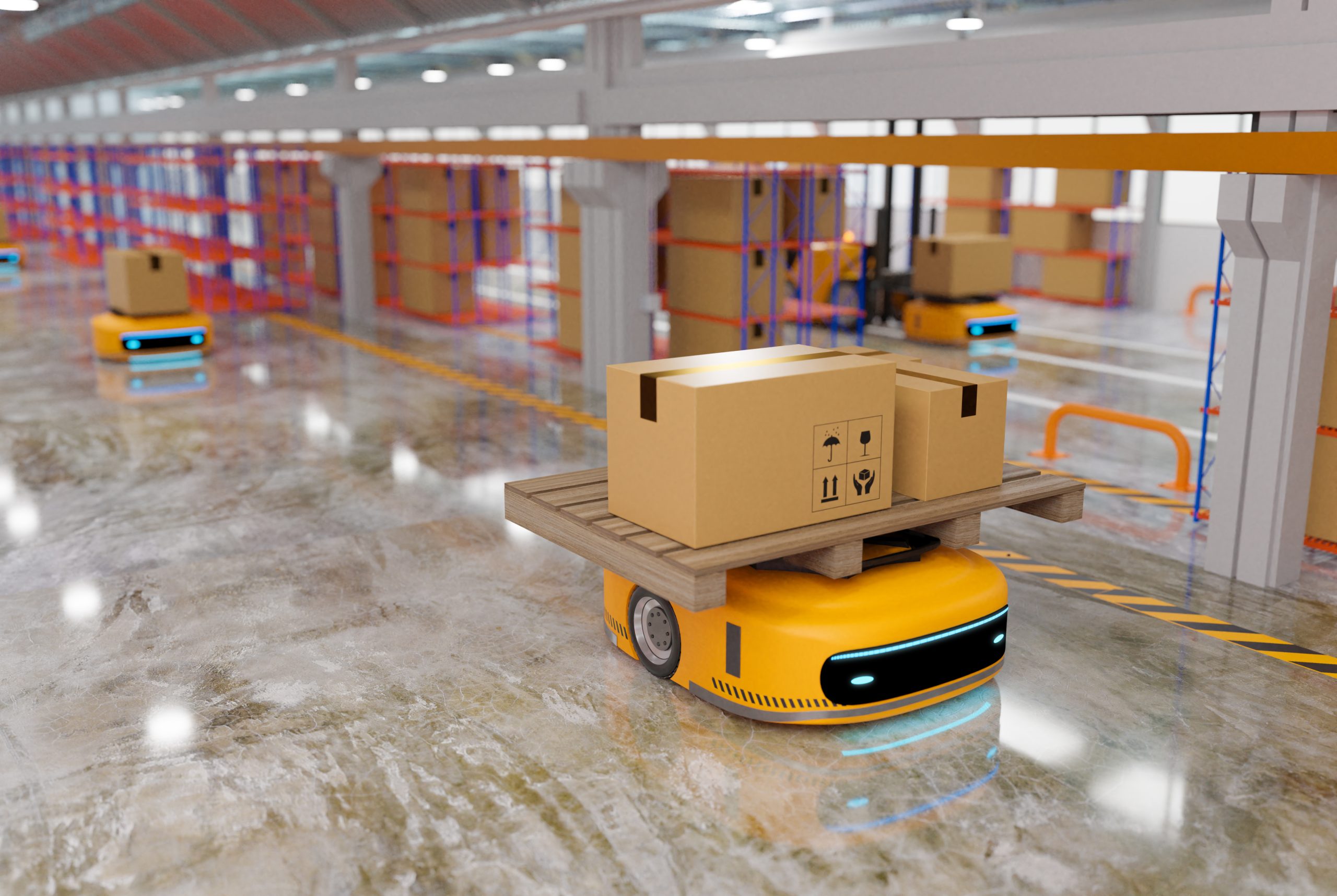
An AGV system operates through four integrated layers:
- Navigation — The vehicle uses laser scanners, magnetic sensors, or vision cameras to determine its precise location and follow a planned route.
- Obstacle Detection — Real-time sensors detect people, equipment, or unexpected objects. The AGV slows or stops automatically, then resumes when the path is clear.
- Fleet Management Software — The FMS coordinates multiple AGVs simultaneously: dispatching tasks, preventing collisions, managing charging schedules, and logging performance data.
- Integration with Facility Systems — AGVs connect via Wi-Fi to WMS, ERP, or conveyor control systems, triggering actions (e.g., opening a dock door, activating a conveyor) as they arrive at each station.
This architecture allows an AGV robot to operate 24/7 with minimal downtime and consistent cycle times.
Key Benefits of AGVs

The adoption of AGV robots offers numerous benefits across various industries:
- Enhanced Efficiency: AGVs operate 24/7, reducing material handling time and optimizing resource utilization, leading to increased productivity and throughput.
- Improved Safety: Equipped with advanced sensor technologies, AGVs navigate safely around obstacles, minimizing the risk of accidents and ensuring a safer working environment for employees.
- Cost-Effectiveness: By automating material handling tasks, AGVs reduce labor costs and increase operational efficiency, resulting in significant cost savings over time.
Common Applications of AGVs
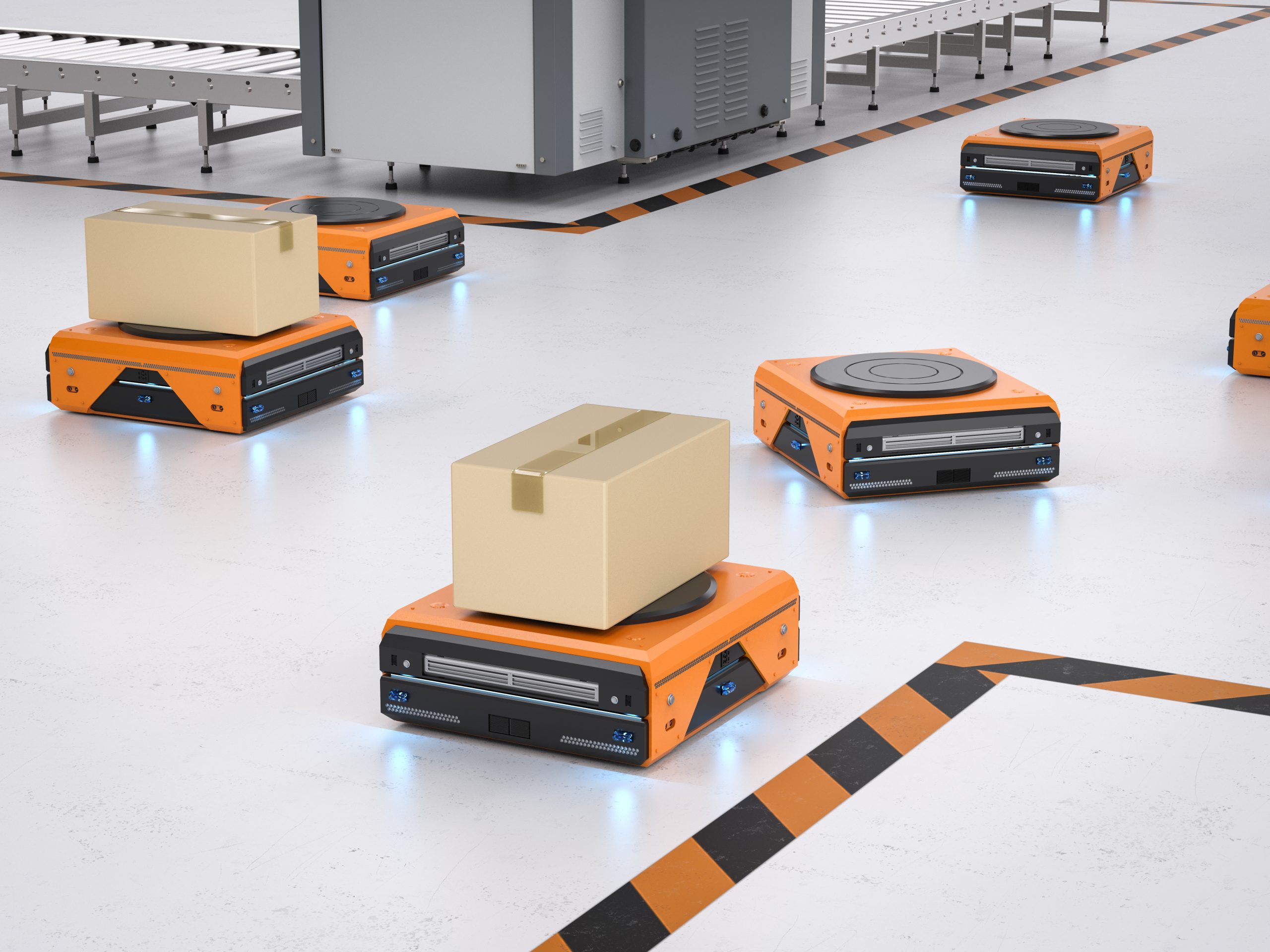
AGVs find extensive applications in industries such as manufacturing, warehousing, and logistics:
- Material Handling: AGVs efficiently transport raw materials, components, and finished products within production facilities, contributing to streamlined workflows and reduced cycle times.
- Transportation: They play a vital role in moving goods between different areas of a warehouse or distribution center, ensuring timely delivery and inventory management.
- Assembly Line Support: AGVs streamline assembly processes by delivering components to designated workstations, optimizing production efficiency, and minimizing downtime.
Choosing an AGV Robot Manufacturer
Selecting the right AGV robot manufacturer is as important as selecting the right vehicle. Evaluate partners on:
- Reputation: Choose a reputable AGV robot manufacturer with a proven track record of delivering high-quality products and reliable customer service.
- Customization Options: Look for an AGV robot manufacturer that offers customizable solutions tailored to meet your specific operational requirements and challenges.
- After-Sales Support: Ensure that the AGV robot manufacturer provides comprehensive after-sales support, including maintenance services, technical assistance, and training programs.
Novus Hi-tech stands out as a reliable partner in the field of industrial robotics, offering innovative AGV solutions designed to optimize material handling processes and drive operational efficiency. With our commitment to excellence and customer satisfaction, we empower businesses to embrace the future of automation with confidence.
Future Trends in AGVs
The future of AGV robots is marked by ongoing advancements and emerging trends in technology and innovation:
- AI Integration: AGVs are increasingly incorporating artificial intelligence (AI) technologies to enhance decision-making capabilities, optimize route planning, and improve operational efficiency.
- Enhanced Navigation: Future AGVs will feature advanced navigation systems, such as simultaneous localization and mapping (SLAM), enabling them to navigate more efficiently in dynamic and complex environments.
- Increased Efficiency: AGVs will continue to evolve to meet the growing demands for increased productivity, throughput, and flexibility, driving further automation and optimization in industrial operations.
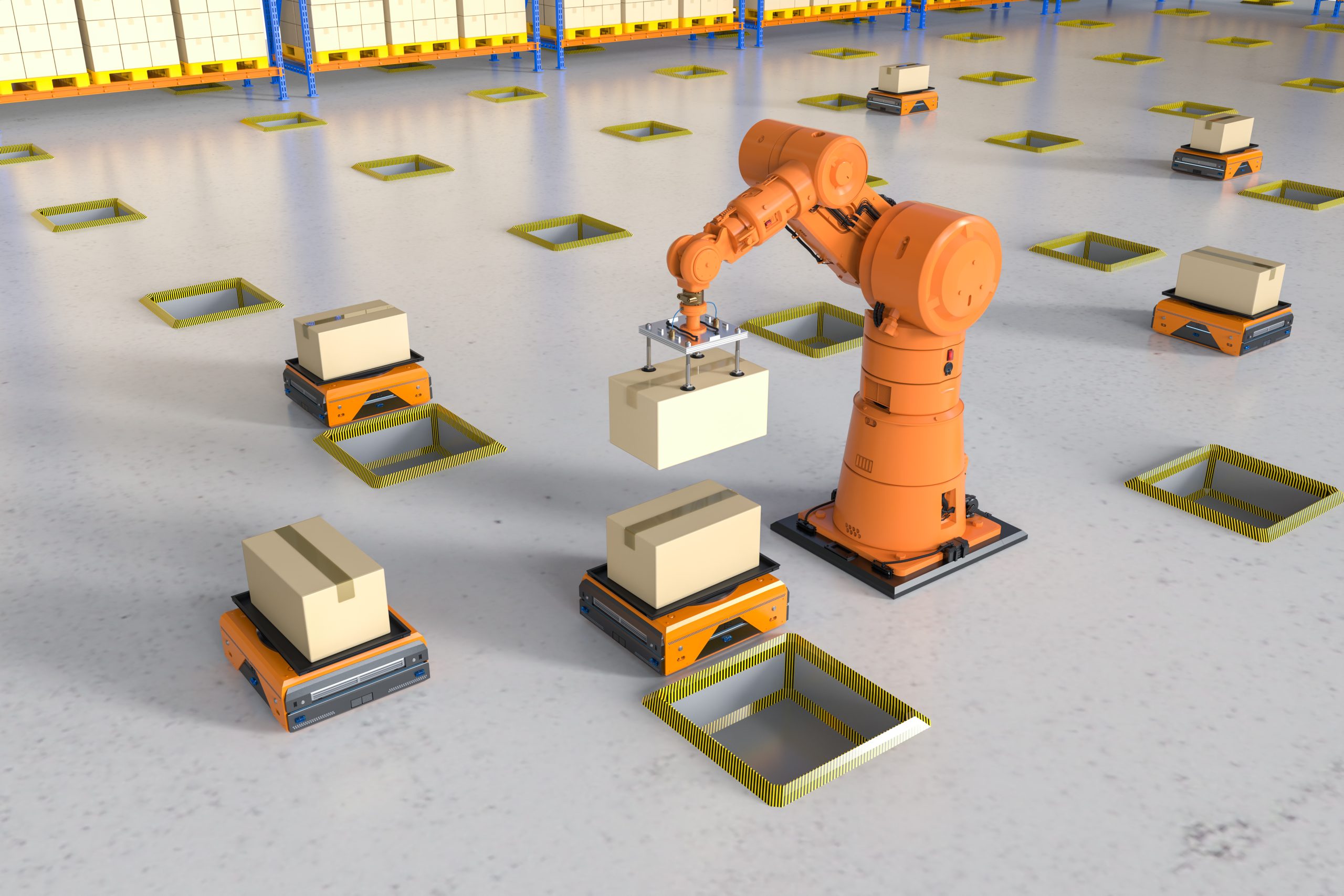
Novus Hi-tech remains at the forefront of innovation in AGV technology, continuously exploring new possibilities and pushing the boundaries of what is possible in industrial automation.
Conclusion
AGV robots have moved well beyond early factory automation — today they’re a core infrastructure decision, sitting at the intersection of fleet software, facility design, and operational throughput.
The right AGV system doesn’t just move materials faster. It reduces labour dependency, tightens cycle times, and gives your operations the kind of 24/7 consistency that manual handling simply can’t match.