

Driving today is challenging. In terms of navigation, traffic conditions and rash or distracted drivers as well as bad road conditions, it’s really difficult to predict what can happen when you are driving, but the modern experience of driving is full of problems. However, what is at the heart of it is not about simply going from point A to B; it’s doing it in a safe, efficient, and not-too-badly-to-environmental-effect manner.
Structured driving systems are becoming more common as an option for managing road and driving complex problems. The automated vehicles and AI-driven traffic management systems of the future may represent some of the most cutting-edge advancements in today’s roadways; however, there will also be many essential tools and systems necessary to deal with the current issues facing our roads.
The safest way possible to drive: Try the tested Smith System which will completely change the way you drive.
The Smith System provides an established method to increase drivers’ safety and awareness while driving. The five main driving principles of the Smith System enable drivers to identify potential risks, maintain better vehicle control, and decrease their chances of an accident occurring.
With its emphasis on defensive driving techniques, the Smith system not only enhances safety for the driver but also for everyone on the road, it’s a valuable tool for industries that are looking for solutions to manage their fleet operations.
What is the Smith System?

The Smith System came into action in 1952 by Harold Smith as a response to increasing road accidents and the need for improved driver safety. Designing on extensive research into driving behaviour and accident causes, Smith devised a set of 5 major principles focused on preventing collisions and promoting advanced, defensive driving techniques.
These principles focus on enhancing a driver’s awareness, anticipation, and decision-making skills, creating a comprehensive approach to safer and advanced driving. Over the decades, the Smith System has evolved and been adopted by various industries, mostly those managing fleets of vehicles, to reduce accidents and elevate safety on the road.
Explore how Advanced Driver Assistance Systems (ADAS) revolutionize driving.
Download our Brochure for expert insights and trends!
Five Keys of Smith System Driving
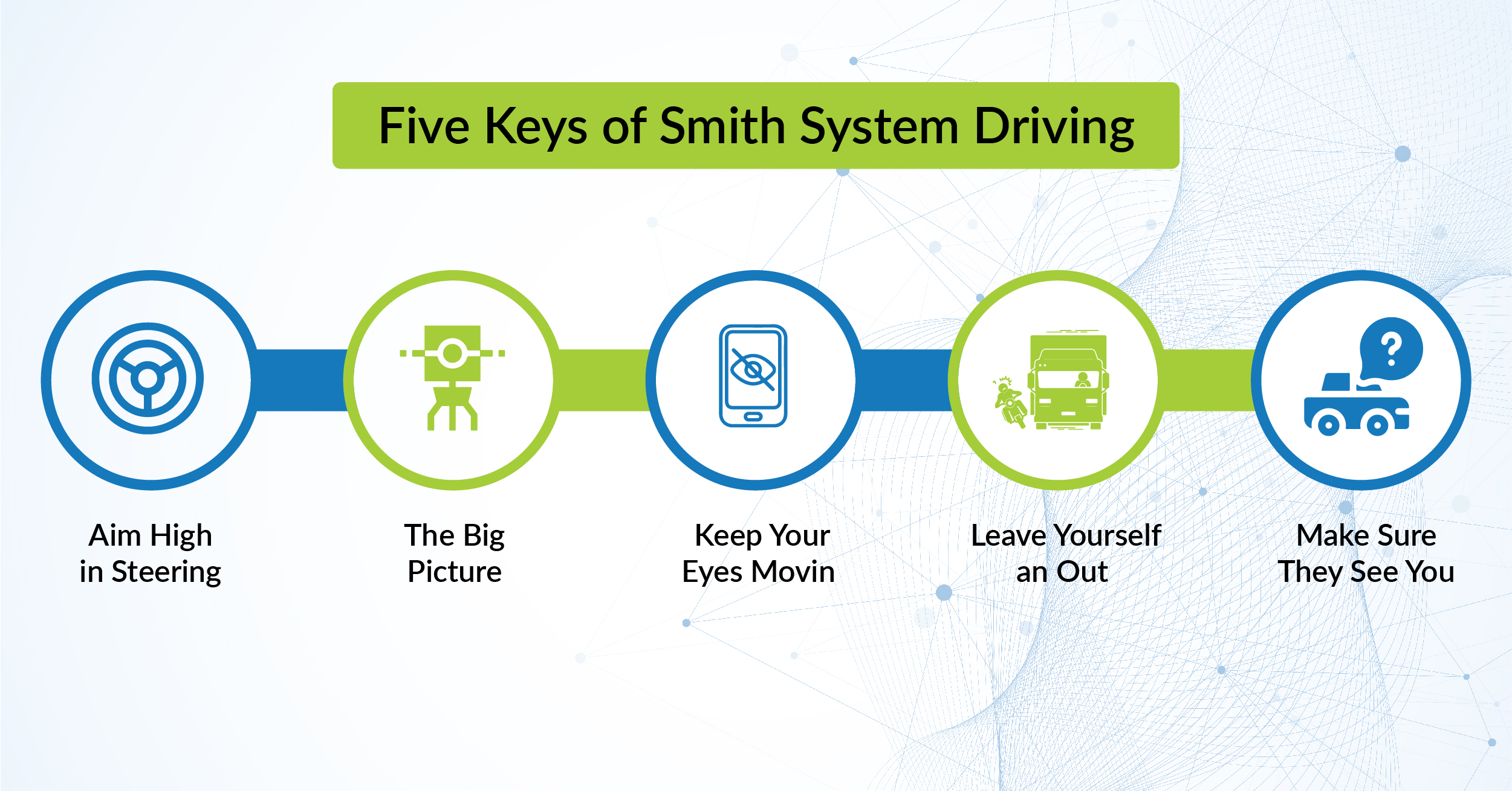
- Aim High in Steering: To drive more safely, you must always look much farther ahead of your vehicle than the immediate road in front of you. If your attention is mostly directed toward steering, then you are able to anticipate the possibility of a hazard that may occur, such as another vehicle coming to a sudden stop, or an obstruction on the road, or a rash driver. If you can anticipate something before it happens, then there will be more time to respond, and you will be less likely to be in an accident by executing a sudden manoeuvre.
- The Big Picture: The Smith System specifies that it’s crucial to maintain a broader perspective of your surroundings, not just focus on the vehicle in front of you but continuously monitor other cars, pedestrians, and changing traffic behaviours. Understanding the full road environment helps to prevent accidents and lets you be more cautious.
- Keep Your Eyes Moving: Constantly scanning the road, mirrors, and surrounding areas ensures you don’t miss critical changes in traffic or potential hazards. Avoid tunnel vision or fixed stares, which can reduce reaction time. Keeping your eyes moving helps maintain awareness of all driving conditions leading to quicker reaction time.
- Leave Yourself an Out:Always maintain a safe distance between your vehicle and others to ensure room for unexpected stops and emergencies. Having an out means creating escape routes, whether to change lanes or brake suddenly so that you aren’t hit by the traffic. This space cushion allows you for smoother, faster reach to your destination and maximizes risk of collisions.
- Make Sure They See You:Communication with other drivers is key to preventing collisions. With the help of the Smith System, use your signals, headlights and even eye contact to ensure other drivers see and understand your intentions. Being visible and predictable reduces the chances of being another driver’s blind spot.
These Smith principles encourage defensive driving habits that increase safety and reduce the risk of accidents.
Beyond the Smith System: Quick Tips to Ensure Your Safety While Driving
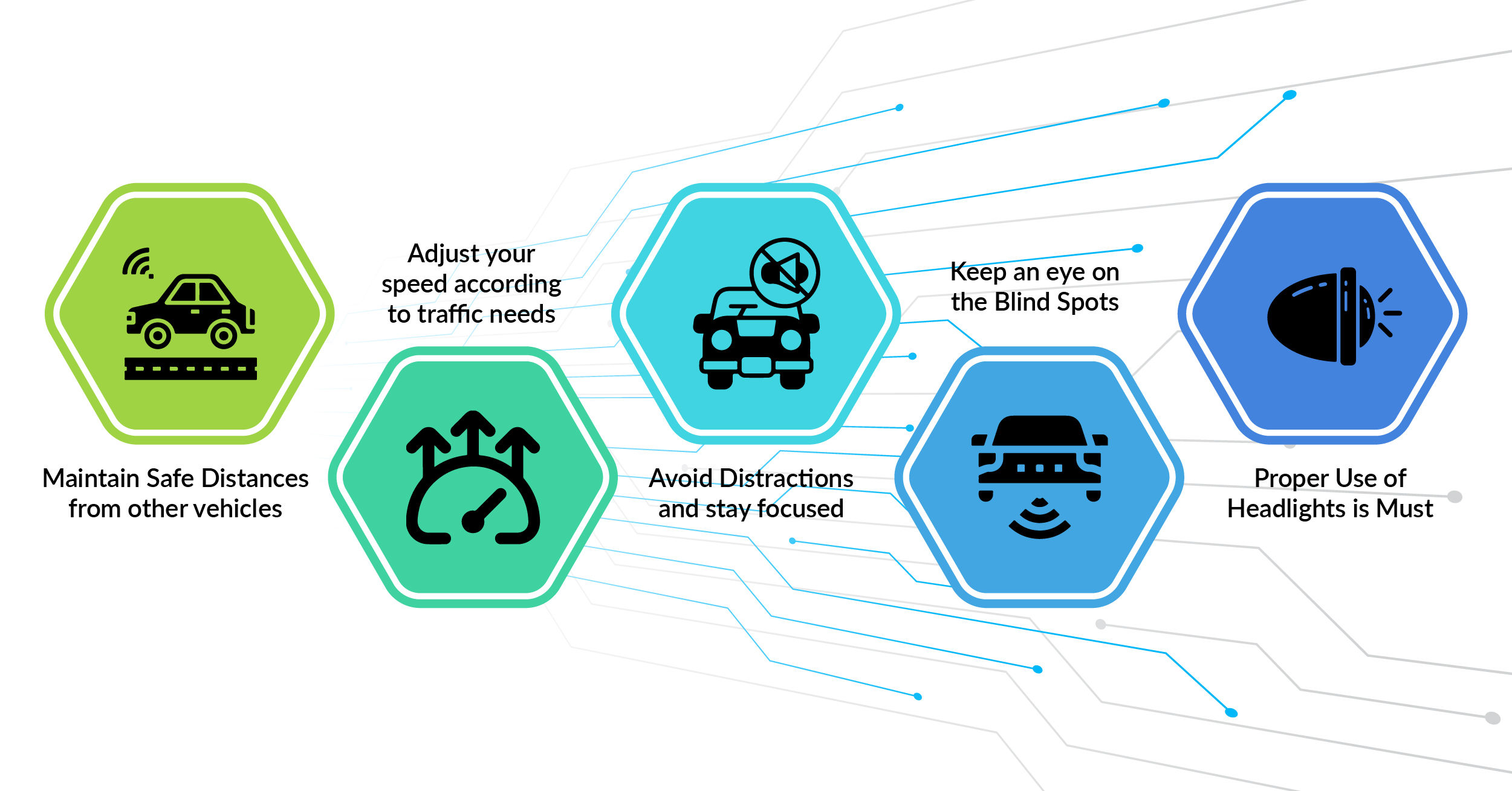
Fleets can lower accident or collision rates through use of the Smith System which also increases driver safety and attentiveness allowing quick decision-making as well as shows the overall financial value of being a safe driver. While the Smith System provides drivers with an excellent foundation to creating a safe environment on roadways; including additional quick tips will help build an even stronger driving set of habits and provide you with the means to develop comprehensive driving strategies that will allow for you to increase your overall safety while providing you with the ability to see and adapt rapidly based upon ever-changing roadway conditions.
- Maintain Safe Distances from other vehicles: Always leave 2-3 feet gap between your and other vehicles. That gives you enough time to react and stop, for unpredictable conditions.
- Adjust your speed according to traffic needs: Whether it’s rainy weather, fog, night driving, traffic or empty lanes, always maintain and watch your speed to reduce the chances of accidents and risk of losing control
- Avoid Distractions and stay focused: Keep your all focus on the road, don’t use your phone, eat or work while you are driving. Staying focused while driving will avoid your chances of getting collided.
- Keep an eye on the Blind Spots:Don’t completely rely on mirrors, take a complete view of your surroundings as well. Make sure you see left, right, front & back while changing one lane to another along with the side indicators.
- Proper Use of Headlights is Must: Even in daylight, turning on your headlights in low visibility mostly in rainy & foggy weather is very important as it alarms other drivers and reduces your chance of accidents.
These quick tips, when combined with the Smith System’s principles of defensive driving, offer a comprehensive approach to changing road safety. Together, they can help drivers remain aware, cautious and attentive to create safer driving conditions for everyone.
Conclusion
Using the Smith System has various benefits for both new drivers and experienced drivers. One can lower the chances of accidents and enhance/upscale their skills of driving with awareness by focusing on these 5 principles: Aim high in steering, The Big Picture, Keep your Eye Moving, Leave Yourself an Out & Make Sure They See You.
The Smith System gives new drivers a solid framework to develop proactive driving habits but allows experienced drivers to hone their skills so they can remain alert and responsive to the constantly changing conditions of the road. In all, these defensive driving techniques encourage safer roads, fewer accidents, and a more positive experience for each driver. Proactive driving is not only good for the person but good for everyone driving on the roads.
Novus Hi-Tech taking these principles to amp up fleet solutions, integrating with AI-driven systems and automated safety features, are designed to ensure driver safety at the highest level. By merging these proactive techniques with cutting-edge innovations, we are committed to creating a safer, smarter and better future.