

Whenever companies explore automation, one question always comes up first:
“How much do AGVs and AMRs cost?”
Cost matters — but automation is not just an equipment purchase.
It’s a long-term investment that impacts safety, throughput, manpower planning, quality, and business continuity.
This guide provides a clear, transparent, and practical cost breakdown of AGVs and AMRs, covering:
- Hardware cost
- Software & fleet management
- Integration
- Charging & infrastructure
- IT requirements
- Annual operating cost
- Hidden costs companies overlook
- Real-world ROI expectations
- Cost comparison: manual vs AGV vs AMR
Let’s break down all the numbers and factors that determine the true cost of mobile robotics.
Discover how the right Autonomous Mobile Robot (AMR) solutions drive business efficiency.
Download our free eBook for expert insights and trends!
1. What Impacts the Cost of an AGV or AMR?
Multiple factors shape the total cost:
- Robot Type
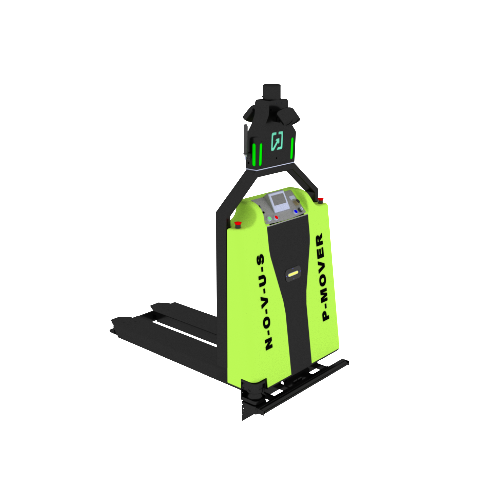
- Pallet Truck AMR
- Forklift AMR
- Tugger AMR
- Shelf-Carrying AMR
- Unit-load AGV
- Heavy-duty AGV
- Conveyor-Top AMR
Higher payload = higher cost.
More sensors = higher cost.
More intelligence = higher cost.
- Payload Capacity
- 300–500 kg
- 1,000–1,500 kg
- 2,000+ kg
- 10,000+ kg (AGVs)
- Navigation Technology
- AGV: tape, wire, QR, reflector
- AMR: SLAM, LiDAR, cameras, multi-sensor fusion
- Integration Complexity
- WMS, ERP, MES
- Conveyor systems
- Pick-to-light
- Auto-docking mechanisms
- Application Complexity
- Straight-line movement = cheaper
- Multi-stop routes = mid-range
- Dynamic environments = higher
- Scale of Deployment
- Single robot vs 10+ fleet
- Multi-floor or multi-building movement
2. Typical Cost Range for AGVs & AMRs
These ranges vary by manufacturer, payload, sensors, and software capabilities. Below is a global reference range:
AGV Pricing
| AGV Type | Typical Cost Range |
|---|---|
| Unit-load AGV | $25,000 – $50,000 |
| Tugger AGV | $40,000 – $70,000 |
| Pallet AGV | $40,000 – $80,000 |
| Heavy-duty AGV (5–50 tons) | $80,000 – $250,000+ |
AGVs are generally lower in hardware cost but may require physical infrastructure.
AMR Pricing
| AMR Type | Typical Cost Range |
|---|---|
| Shelf-Carrying AMR | $20,000 – $40,000 |
| Conveyor-Top AMR | $30,000 – $60,000 |
| Pallet Truck AMR | $50,000 – $90,000 |
| Forklift AMR | $70,000 – $150,000 |
| Heavy-Duty AMRs | $100,000 – $250,000 |
AMRs tend to cost more upfront because of advanced sensing, computing, and navigation capabilities.
3. Software & Fleet Management Costs
Software can be structured as:
- One-time license
- Annual subscription
- Per-robot license
- Enterprise (fleet) license
Typical ranges:
Fleet Management Software
- $3,000 – $10,000 per robot (one-time)
or - $1,000 – $4,000 per robot/year (subscription)
Fleet software includes:
- traffic control
- path planning
- job assignment
- charger scheduling
- health analytics
- dashboard & operations visibility
4. Integration Costs
Integration varies widely based on the level of automation.
Light Integration (Basic Tasks)
- $2,000 – $5,000
Moderate Integration (WMS, conveyors, scanners)
- $8,000 – $20,000
Deep Integration (ERP, MES, custom architecture)
- $20,000 – $50,000+
Integration ensures a truly autonomous, touch-free workflow instead of isolated robot movement.
5. Charging & Infrastructure Costs
Charging Docks
- $1,000 – $5,000 each
Battery Options
- Standard battery included
- Optional fast-charging or high-capacity battery = additional cost
Network Infrastructure
- Wi-Fi system upgrades
- Router access points
- Uptime redundancy
Typical cost:
$3,000 – $15,000 depending on facility size.
6. Annual Operating Cost (OPEX)
AGVs and AMRs typically require:
- preventive maintenance
- software upgrades
- battery replacements (after 3–5 years)
- occasional spare parts
Annual OPEX Estimate
- AMRs: $1,000 – $3,000 per robot
- AGVs: $800 – $2,500 per robot
OPEX is significantly lower than labor cost for equivalent movement.
7. Hidden Costs Companies Forget to Evaluate
- Downtime Cost During Manual Movement
Replacing forklifts, trolleys, and manual carriers reduces unplanned downtime.
- Material Damage
Forklift and trolley damage can account for 2–5% of product value.
- Hiring & Training
Labor turnover raises annual costs.
- Safety Incidents
Forklift accidents create:
- insurance claims
- medical costs
- production losses
- compliance issues
- Rework or Line-Stoppage Costs
Delayed material → line stoppage → exponential losses.
Automation reduces these drastically.
8. Manual vs AGV vs AMR Cost Comparison
Manual Movement
- Highly inconsistent
- High labor cost
- Low predictability
- Safety risks
- No data visibility
AGVs
- Lower capex
- Perfect for repetitive loops
- High stability
- Limited flexibility
- Moderate upkeep (tape/reflector maintenance)
AMRs
- Higher flexibility
- Lower lifetime cost
- Perfect for dynamic environments
- Faster scaling
- Zero infrastructure
Over 3–5 years, AMRs tend to deliver higher ROI due to reduced maintenance and better optimization.
9. What Is the ROI for AGV & AMR Deployment?
ROI typically comes from:
- reduced labor cost
- reduced training & attrition
- reduced forklift damage
- increased throughput
- fewer line stoppages
- fewer errors
- improved safety
- 24×7 operation capability
General ROI Benchmarks
- AGVs: 18–30 months
- AMRs: 12–24 months
- Hybrid Fleets: 15–25 months
Multi-shift operations often see the fastest returns.
10. How to Build an Accurate Costing Model
- Evaluate Annual Material Movement Volume
Higher volume = stronger ROI.
- Map Movement Frequency
Trips/hour × hours/day × shifts/year.
- Evaluate Manual Movement Cost
Include hidden costs.
- Estimate Automation Utilization
Robot utilization should be ≥ 50–70%.
- Include Maintenance & Battery Costs
Real-world budgeting is critical.
- Evaluate Multi-Year Impact
AMRs and AGVs often run for 7–10+ years, improving ROI over time.
11. When Does Automation Become Cheaper Than Manual Movement?
Automation becomes cheaper when:
- you operate 2–3 shifts
- monthly movement volume is high
- you face safety issues
- you have layout changes (AMRs)
- labor availability is inconsistent
- product damage is rising
- line-stoppage cost is high
In most cases, AMRs win in dynamic workflows.
AGVs win in heavy, repetitive routes.
Discover how the right Autonomous Mobile Robot (AMR) solutions drive business efficiency.
Download our free eBook for expert insights and trends!
Conclusion
The cost of AGVs and AMRs depends on several factors — robot type, payload, environment, integration, and fleet size. But cost should never be evaluated in isolation.
The real question is:
What is the cost of NOT automating?
Manual movement brings safety risks, unpredictability, downtime, and long-term operational inefficiency.
AGVs and AMRs transform intralogistics by enabling:
- predictable movement
- consistent throughput
- safer operations
- lower lifetime cost
- scalable automation
- data-driven decision-making
With the right approach, automation pays for itself — and then continues delivering value for years.
How Novus Hi-Tech Helps You Build a Cost-Effective Automation Roadmap
Novus Hi-Tech supports customers in making smart, financially sound decisions for AGV/AMR deployment. As a global pioneer in AI-driven AGV & AMR systems — fully engineered in India — we offer:
- 150+ patents
- 1,200+ robots deployed
- 8M+ km autonomous travel
- 100+ enterprise customers
Our experts help with:
- movement studies
- cost modeling
- ROI analysis
- solution architecture
- phased deployment plans
📩 To calculate a custom AGV/AMR cost model for your facility:
marketing@novushitech.com
Let’s build automation that makes financial and operational sense — from day one.