


Modern economies depend heavily on digital infrastructure. From artificial intelligence and cloud computing to financial transactions and streaming services, nearly every digital interaction relies on data centers operating continuously in the background.
As global demand for digital services grows, data centers are expanding rapidly in size, scale, and complexity. Large facilities now host thousands of servers, networking devices, storage systems, cooling infrastructure, and power management equipment that must operate reliably around the clock.
Managing such large infrastructure environments using manual processes is becoming increasingly challenging.
To address this challenge, operators are adopting data center automation powered by robotics, artificial intelligence, and intelligent monitoring systems.
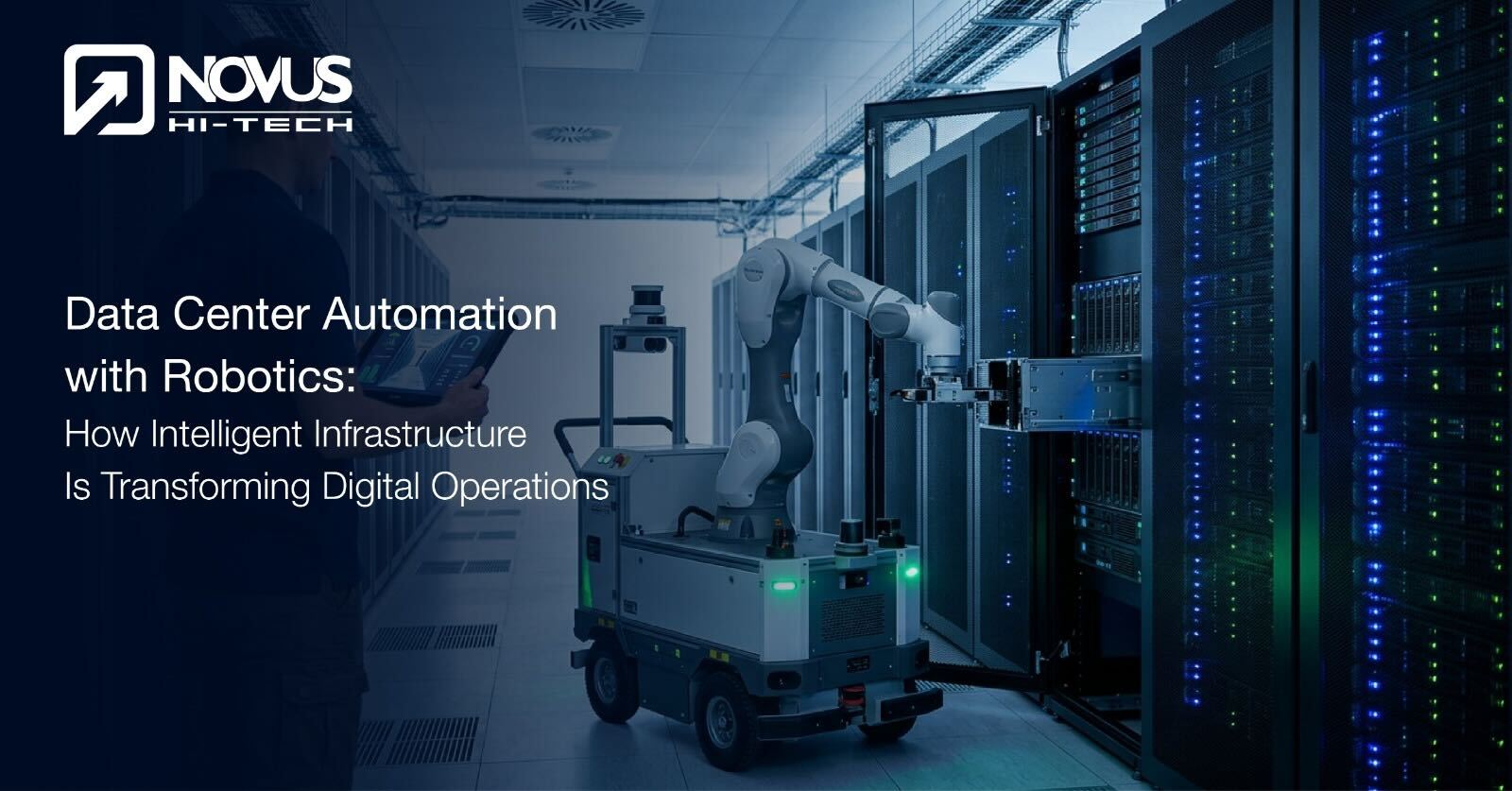
Robotics-driven automation enables data centers to perform routine inspection, equipment handling, monitoring, and maintenance tasks more efficiently while reducing operational risks.
By integrating mobile robotics and intelligent software platforms, operators can build the next generation of autonomous and resilient digital infrastructure.
What Is Data Center Automation?
Data center automation refers to the use of advanced technologies such as robotics, artificial intelligence, sensors, and automation software to manage and optimize infrastructure operations with minimal human intervention.
Automation systems continuously monitor infrastructure performance and can perform physical tasks that were traditionally carried out by technicians.
These tasks may include:
- infrastructure inspection
- environmental monitoring
- server equipment handling
- maintenance support
- internal logistics management
By automating these processes, data centers can operate more efficiently while improving reliability and reducing operational complexity.
Robotics plays a crucial role in this ecosystem because robots can move autonomously through facilities and perform physical tasks consistently and safely.
Download the Robotics Automation Brochure to see how intelligent systems improve data center efficiency.
Why Is Robotics Important for Data Center Operations?
As data center infrastructure expands, operators face several operational challenges.
Facilities must maintain high availability, ensure infrastructure reliability, and manage thousands of devices operating simultaneously.
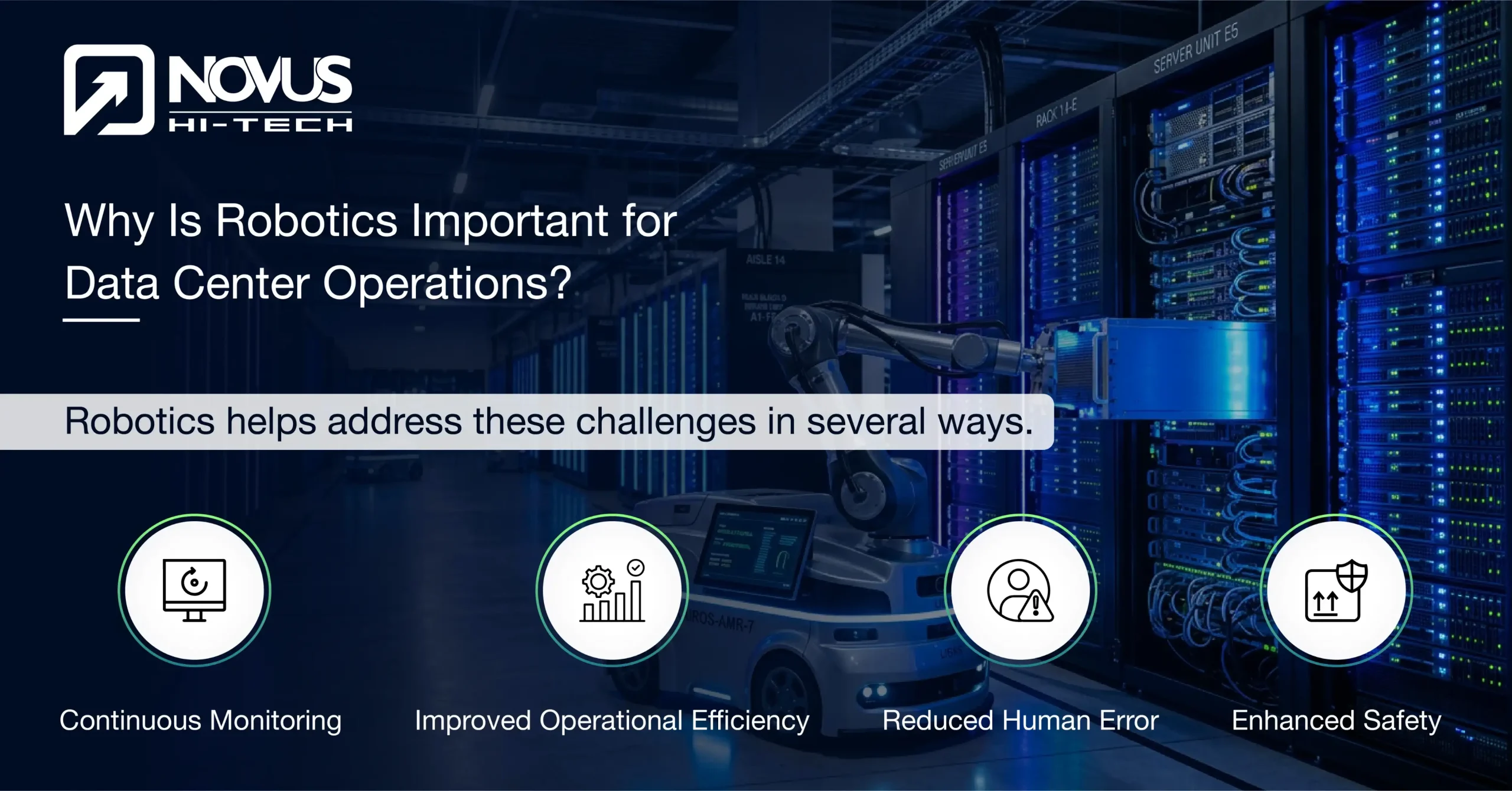
Manual operations alone are often insufficient to manage this level of complexity. Robotics helps address these challenges in several ways.
Continuous Monitoring
Robots equipped with sensors and cameras can monitor infrastructure conditions continuously without fatigue.
Improved Operational Efficiency
Automation reduces the time technicians spend performing repetitive tasks such as inspections and equipment transportation.
Reduced Human Error
Automated monitoring and robotics-assisted maintenance reduce the risk of human mistakes that could affect infrastructure performance.
Enhanced Safety
Robots can perform physically demanding or hazardous tasks, reducing the need for technicians to handle heavy equipment.
How Do Robots Automate Data Center Operations?
Robotics systems combine autonomous navigation, sensors, artificial intelligence, and intelligent software platforms to automate operational tasks.
These robots can move independently through data center environments and perform specific functions.
The automation process typically involves several stages.
Robots navigate server halls using technologies such as:
- LiDAR sensors
- cameras and vision systems
- simultaneous localization and mapping (SLAM) algorithms
- obstacle detection systems
These technologies allow robots to move safely around equipment racks and infrastructure. Data Collection
Robots gather operational data using cameras, thermal sensors, and environmental monitoring tools.
This data includes:
- temperature readings
- airflow conditions
- equipment status indicators
- environmental anomalies
Data Analysis
Artificial intelligence systems analyze the collected data to identify potential operational issues. This analysis supports predictive maintenance and infrastructure optimization. Task Execution
Robots can perform specific tasks such as inspection, equipment transport, or monitoring activities based on predefined workflows.
Where Are Robots Used Inside Data Centers?
Robotics can support multiple operational areas within data center facilities.
Server Hall Monitoring
Robots patrol server halls to inspect infrastructure and collect environmental data.
These inspections help operators identify issues such as temperature fluctuations or equipment failures.
Infrastructure Inspection
Robots monitor critical infrastructure components including:
- cooling systems
- power distribution units
- server racks
- cabling infrastructure
Continuous inspection helps detect early signs of equipment malfunction.
Equipment Transportation
Server racks and IT hardware can be heavy and difficult to move manually.
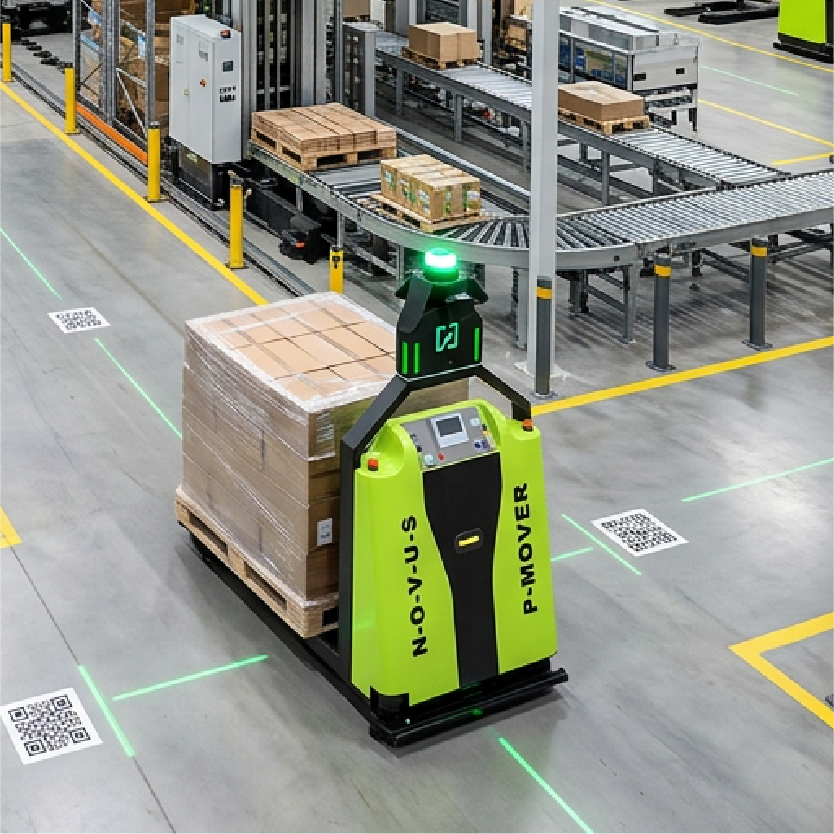
Robots assist with transporting equipment between storage areas, maintenance zones, and installation locations.
Spare Parts Logistics
Large facilities often require frequent replacement of components.
Robots can transport spare parts across facilities to support maintenance teams.
Facility Monitoring
Robots equipped with cameras and sensors can patrol facilities to detect environmental anomalies or security concerns.
When Should Data Centers Adopt Robotics Automation?
Data centers may consider robotics automation when operational complexity begins to increase. Typical triggers include:
- expansion of facility size
- increased infrastructure density
- growing maintenance requirements
- demand for improved operational efficiency
- workforce constraints
Automation becomes particularly valuable in hyperscale facilities where manual monitoring becomes impractical.
Who Benefits from Robotics-Based Data Center Automation?
Several stakeholders within the digital infrastructure ecosystem benefit from robotics-enabled automation.
Data Center Operators
Operators gain improved operational efficiency and infrastructure reliability.
Infrastructure Engineers
Engineers can focus on system optimization rather than routine inspection tasks. Maintenance Teams
Robotics systems assist technicians by performing repetitive tasks and transporting equipment. Cloud Service Providers
Improved infrastructure reliability helps maintain uninterrupted digital services.
Which Technologies Enable Data Center Robotics?
Several advanced technologies enable robots to operate effectively inside data centers.
Artificial Intelligence
AI systems analyze operational data collected by robots and sensors.
This enables predictive maintenance and infrastructure optimization.
Robots rely on navigation technologies such as LiDAR sensors, cameras, and mapping algorithms to move safely through facilities.
Environmental Sensors
Sensors measure temperature, humidity, airflow, and other environmental parameters critical to infrastructure performance.
Digital Twin Platforms
Digital twins create virtual models of physical infrastructure.
These models help operators simulate operational scenarios and monitor facility conditions in real time.
Robotics Fleet Management Systems
Fleet management platforms coordinate multiple robots operating within a facility. These systems optimize task allocation and ensure efficient robot utilization.
How Robotics Improves Data Center Efficiency
Robotics-based automation offers several operational advantages.
Increased Operational Efficiency
Robots perform routine tasks continuously without interruption.
Improved Infrastructure Reliability
Continuous monitoring helps identify potential issues before they escalate into major failures. Reduced Manual Workload
Technicians spend less time performing repetitive tasks.
Enhanced Workplace Safety
Robots handle heavy equipment and physically demanding activities.
Data-Driven Operations
Robotics systems generate valuable operational data that can improve infrastructure management strategies.
The Future of Robotics in Data Center Automation
The next generation of data centers will increasingly rely on intelligent automation technologies. As infrastructure continues to expand, robotics will support tasks such as:
- autonomous infrastructure inspection
- robotics-assisted maintenance
- AI-driven environmental optimization
- predictive infrastructure management
Future facilities may evolve toward self-monitoring and self-maintaining data centers, where robotics and intelligent software systems collaborate to maintain infrastructure reliability.
Explore how Novus Hi-Tech is transforming industrial automation with advanced Mobile Robotics, AMRs, AGVs, ADAS, Fleet Safety Systems, and intelligent automation solutions designed for modern manufacturing, warehouse, and logistics environments. Visit our homepage to learn more about our complete range of robotics and automation technologies built for safety, efficiency, and smart operations.
Conclusion
Data center automation is becoming essential for managing modern digital infrastructure.
As facilities grow in scale and complexity, robotics technologies provide a powerful solution for improving operational efficiency, infrastructure reliability, and maintenance workflows.
By integrating robotics, artificial intelligence, and intelligent monitoring platforms, operators can build data centers that are more resilient, efficient, and scalable.
As the digital economy continues to expand, robotics-driven automation will play a key role in shaping the future of intelligent data center operations.
Looking for the right automation or robotics solution for your facility? The Novus Hi-Tech team can help you select and implement the ideal AMR, AGV, Fleet Safety, ADAS, or industrial automation system based on your operational needs. Contact us today to discuss your requirements and get expert guidance for your automation project.