


Deploying AGVs (Automated Guided Vehicles) and AMRs (Autonomous Mobile Robots) is not a plug-and-play decision. It’s a strategic transformation of how materials move inside your factory or warehouse.
The most successful deployments follow a structured, phased, and validated approach — from planning to integration to continuous improvement.
This guide breaks down exactly how companies implement AGVs and AMRs, what each stage involves, who should participate, and how to avoid common pitfalls.
Whether you are installing your first 2 robots or scaling to a fleet of 100+, this step-by-step roadmap will help you build a predictable, safe, and high-ROI automation program.
Why Implementation Matters More Than Technology
You can buy the world’s best AMR or AGV — but without the right implementation strategy:
- robots underperform
- workflows break
- operators lose trust
- traffic congestion increases
- ROI takes longer
- safety concerns arise
- scaling becomes difficult
Strong implementation ensures that automation drives flow, stability, and efficiency from day one.
Discover how the right Autonomous Mobile Robot (AMR) solutions drive business efficiency.
Download our free eBook for expert insights and trends!
The 10-Step Implementation Blueprint
Below is the industry-standard, best-practice implementation framework used by leading manufacturing and warehousing organizations worldwide.
Step 1: Define Clear Automation Objectives
Start by answering foundational questions:
What problem are we solving?
– Labor shortage?
– Safety risks?
– Inconsistent line feeding?
– Slow picking?
– High movement cost?
What metrics will define success?
– Cost per movement
– Throughput improvement
– Safety incidents
– Line stoppages
– Picking productivity
– On-time replenishment
Clear goals drive the entire project and ensure alignment across teams.
Step 2: Conduct a Detailed Material Movement Study
This is the most important step — and the most ignored by companies.
Study includes:
- Movement frequency (pallets/hr, totes/hr)
- Peak vs off-peak traffic
- Route distance & complexity
- Loading/unloading delays
- Replenishment cycles
- WIP transfer behavior
- Manual inefficiencies
- Pedestrian–forklift interactions
- Travel time vs idle time
This data reveals which movements are ideal for AGVs and AMRs.
Step 3: Select the Right Use Cases
Based on movement study, identify workflows where automation will create the highest impact.
Common AMR Use Cases
- Line-side delivery
- Replenishment
- Bin/tote movement
- Warehouse putaway & picking
- Cross-department transfer
- Sorting
Common AGV Use Cases
- Fixed shuttle routes
- Engine, block, and heavy part movement
- Conveyor-replacement loops
- High-volume pallet cycles
Choosing the correct use case ensures high utilization and predictable performance.
Step 4: Map Layout, Traffic Flow & Infrastructure Readiness
A detailed facility evaluation includes:
- Aisle width
- Turning radius
- Rack/shelf positions
- Charger placement
- Pedestrian paths
- Speed zones
- Safety zones
- No-go zones
- Dock areas
- Intersections & bottleneck points
AMRs depend heavily on good layouts.
AGVs depend on consistent paths.
This step ensures smooth movement before deployment.
Step 5: Choose the Right Robot Type
Depending on payload, distance, environment, and workflow complexity, you select:
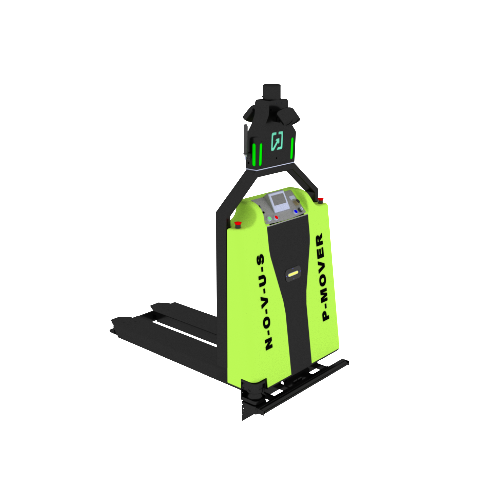
- Pallet Truck AMR
- Forklift AMR
- Tugger AMR
- Shelf-Carrying AMR
- Sorting AMR
- Conveyor-Top AMR
- Heavy-Duty AGV
- Towing AGV
- Unit-load AGV
Robot selection impacts:
- throughput
- safety
- speed
- efficiency
- ROI
- scalability
Choosing the right category is a make-or-break decision.
Step 6: Create a Digital Map & Configure Routes
For AMRs
- SLAM-based mapping
- Dynamic routes setup
- Virtual lanes
- Avoidance strategy
- One-way/governed paths
- Speed zones
- Safety fields
- Charging triggers
For AGVs
- Tape/reflector mapping (if needed)
- Waypoint design
- Loop configuration
- Traffic governance rules
This becomes the operational foundation of the fleet.
Step 7: Integrate with WMS, ERP, MES or Production Systems
AGVs/AMRs deliver maximum value when integrated digitally.
Examples:
- WMS triggers putaway/picking tasks
- ERP triggers movement jobs
- MES triggers line-side deliveries
- Scanner confirmations update inventory
- Auto-docking with conveyors
- Automated pallet verification using camera/QR
Integration ensures fully autonomous workflows instead of isolated movements.
Step 8: Pilot Deployment (Phase 1 Rollout)
Always start small.
A pilot includes:
- 1–3 robots
- 1–2 workflows
- Limited operational window
- Controlled environment
Pilot validates:
- speed
- docking accuracy
- pickup/drop consistency
- safety reactions
- impact on existing traffic
- operator acceptance
- IT reliability
A successful pilot builds confidence and establishes operational baselines.
Step 9: Train Teams & Set Operating Guidelines
Automation works best when people know how to work with robots.
Training includes:
- Traffic rules
- Safety rules
- Material loading/unloading guidelines
- Priority protocols
- Exceptions handling
- Maintenance basics
- Dashboard usage
Empowered teams → smoother adoption → fewer incidents.
Step 10: Scale to Full Fleet Deployment
Once the pilot is successful, scale gradually:
Scaling Includes:
- Adding more robots
- Adding new routes
- Increasing operational areas
- Cross-department movement
- Multi-floor or multi-building movement
- 24×7 operations
- Tightening cycle time targets
Scaling unlocks the true ROI — especially in multi-shift operations.
Traffic Management & Optimization
After deployment, advanced fleet management ensures:
- collision-free movement
- prioritized task allocation
- battery scheduling
- congestion control
- peak-time load balancing
- real-time visualization
- autonomous rerouting
This is what differentiates amateur deployments from world-class mobile robot programs.
Common Mistakes to Avoid During AGV/AMR Implementation
- Automating low-frequency movements
Leads to low ROI.
- Poor Wi-Fi or network coverage
AMRs perform poorly in weak connectivity.
- No clear owner or champion
Internal responsibility is critical.
- Deploying too many routes at once
Start small and scale.
- Assuming AGVs/AMRs work like forklifts
Different logic, different flow.
- Ignoring change management
People must be trained and aligned.
- Not planning for future scalability
Design for today AND tomorrow.
Discover how the right Autonomous Mobile Robot (AMR) solutions drive business efficiency.
Download our free eBook for expert insights and trends!
Best Practices for Successful Deployment
- Begin with movement data, not assumptions
- Start with high-volume repetitive tasks
- Prefer multi-shift workflows for faster ROI
- Keep pilot small and focused
- Build cross-functional automation teams
- Use a phased scaling strategy
- Revisit routes every quarter
- Maintain chargers in optimal zones
- Integrate with digital systems from day one
Conclusion
Implementing AGVs and AMRs is a journey — not a single event.
But when done correctly, it transforms intralogistics by enabling:
- safer movement
- predictable throughput
- consistent line feeding
- lower cost per movement
- fewer manual interventions
- smoother cross-department flow
- fully autonomous operations
Whether you deploy AGVs for fixed-loop movement or AMRs for dynamic workflows, the right implementation blueprint ensures maximum ROI and long-term scalability.
How Novus Hi-Tech Helps You Implement Successfully
Novus Hi-Tech partners with factories and warehouses to execute end-to-end AGV/AMR deployments with precision and predictable outcomes.
As a global pioneer in AI-driven AGV & AMR systems — engineered indigenously in India — Novus brings:
- 150+ patents
- 1,200+ robots deployed
- 8M+ km autonomous travel
- 100+ enterprise customers
Our implementation teams support you with:
- movement studies
- ROI modeling
- solution architecture
- pilot deployment
- system integration
- training & ramp-up
- full-scale fleet expansion
📩 To plan a step-by-step AGV/AMR implementation for your facility:
marketing@novushitech.com
Let’s build autonomous intralogistics the right way — from day one.