


Industrial automation is entering a new era where organizations are increasingly turning to intelligent robotics to improve operational efficiency, reduce costs, and enhance productivity.
Among the technologies driving this transformation are Autonomous Mobile Robots (AMRs) and Automated Guided Vehicles (AGVs). These mobile robotics systems are rapidly becoming essential components of modern factories, warehouses, and logistics operations.
However, traditional robotics deployment often requires significant upfront capital investment, long implementation timelines, and specialized technical expertise.
This is where Robotics-as-a-Service (RaaS) is reshaping the automation landscape.
Robotics-as-a-Service allows organizations to deploy mobile robots through flexible subscription-based service models. Instead of purchasing robotic systems as capital equipment, companies can access robotics technology as a managed service that includes hardware, software, deployment, and maintenance.
This approach enables companies to implement automation faster while minimizing financial risk and operational complexity.
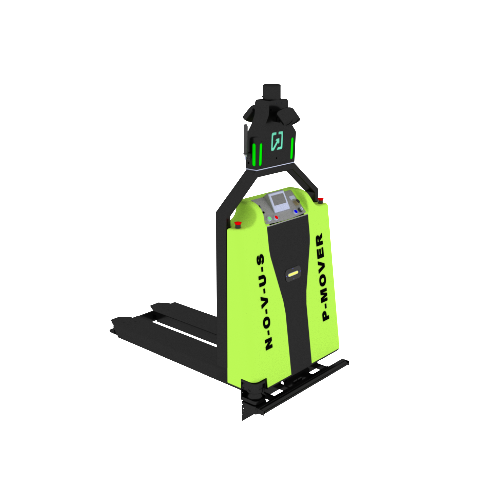
Technology providers such as Novus Hi-Tech are enabling organizations to adopt mobile robotics through scalable Robotics-as-a-Service solutions that support smart manufacturing, intelligent logistics, and next-generation industrial automation.
What is Robotics-as-a-Service (RaaS)?
Robotics-as-a-Service (RaaS) is a service-based robotics deployment model that allows companies to use robots without purchasing them as capital equipment.
Instead of investing heavily in robotics infrastructure, organizations subscribe to a robotics solution that includes the necessary hardware, software, and services required to operate the system effectively.
A typical RaaS deployment includes:
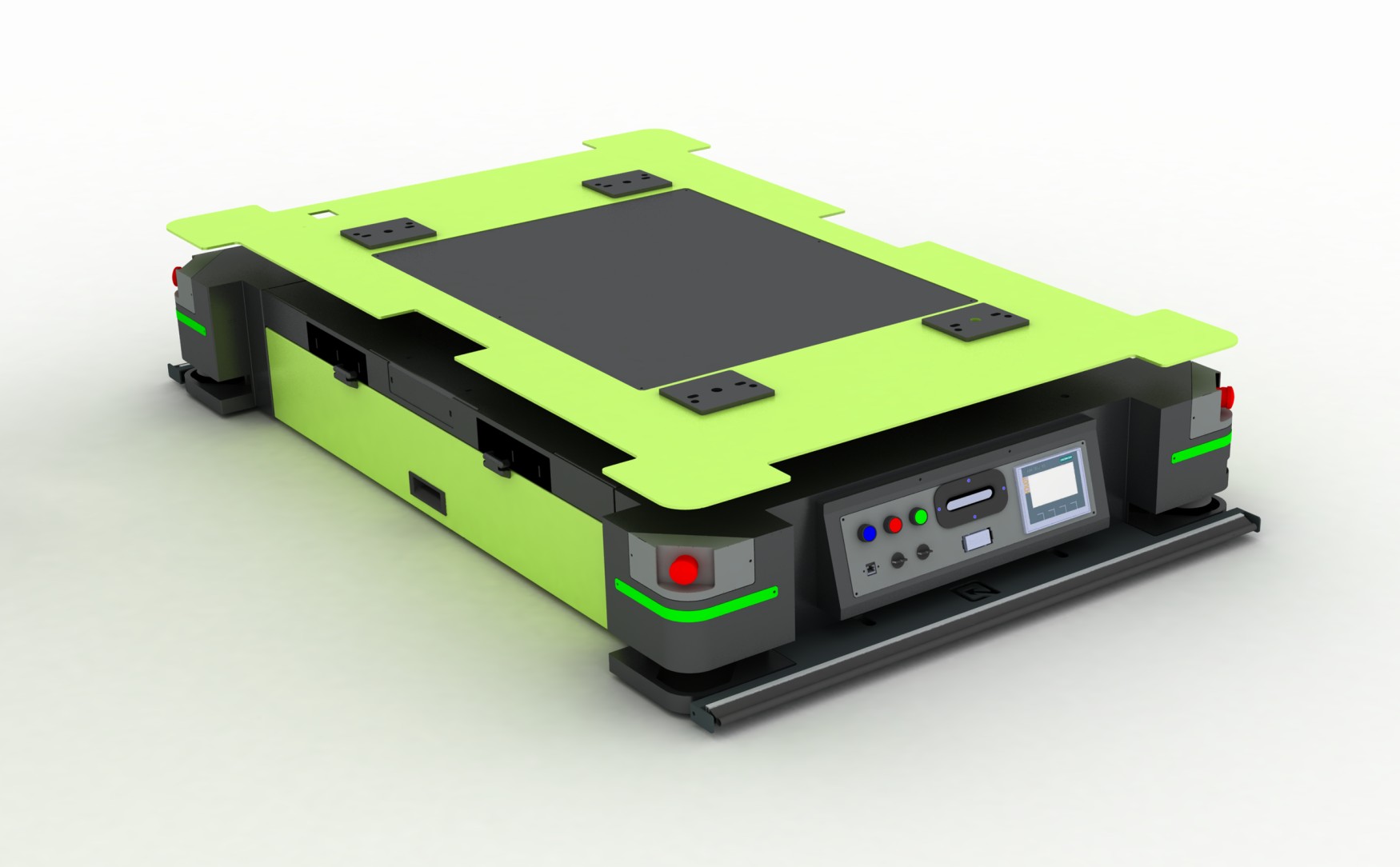
- Mobile robot hardware such as AGVs or AMRs
- Navigation technologies and sensors
- Intelligent fleet management software
- Deployment and commissioning services
- Integration with enterprise systems
- Maintenance and upgrades
- Performance monitoring and analytics
The RaaS model converts automation investment from capital expenditure (CAPEX) into operational expenditure (OPEX), allowing organizations to adopt robotics in a financially flexible and scalable way.
Discover how Robotics-as-a-Service (RaaS) makes AGV and AMR automation easier to deploy and scale.
Download our free brochure to explore real solutions, applications, and industry insights.
Why Robotics-as-a-Service is Transforming Industrial Automation
Industries across the world are facing new operational challenges including labor shortages, supply chain disruptions, and increasing production demand.
To remain competitive, organizations must improve efficiency and scalability while managing costs.
Robotics-as-a-Service helps address these challenges by lowering barriers to automation adoption.
Reduced Capital Investment
Traditional robotics deployments require significant upfront investment in hardware, infrastructure, and system integration. RaaS allows companies to access robotics through subscription-based models.
Faster Automation Deployment
Since robotics providers manage deployment and integration, organizations can implement automation significantly faster.
Flexible Scalability
Companies can scale robot fleets up or down depending on operational demand. Predictable Operational Costs
Subscription models allow companies to plan automation costs more effectively.
Continuous Technology Upgrades
Robotics providers ensure systems are continuously updated with the latest navigation, AI, and software improvements.
Learn how Robotics-as-a-Service (RaaS) helps businesses adopt AMR and AGV automation.
Download our free brochure for expert insights and real-world use cases.
How Robotics-as-a-Service Works
The Robotics-as-a-Service model follows a structured deployment lifecycle designed to ensure successful automation implementation.
-
Operational Assessment
Automation experts evaluate facility workflows and material movement processes to identify automation opportunities.
-
Solution Design
Robotics engineers design a solution based on factors such as facility layout, payload requirements, travel distances, and safety requirements.
-
Deployment and Commissioning
Mobile robots are deployed within the operational environment and configured according to the designed workflow.
-
System Integration
Robots integrate with enterprise platforms such as:
- Enterprise Resource Planning (ERP) systems
- Manufacturing Execution Systems (MES)
- Warehouse Management Systems (WMS)
-
Monitoring and Optimization
Fleet management software continuously monitors robot performance and optimizes workflows to improve operational efficiency.
Discover how AMR and AGV automation with Robotics-as-a-Service can improve operational flexibility.
Download our free brochure to explore the latest automation solutions.
Where Are Mobile Robots Used in Industry?
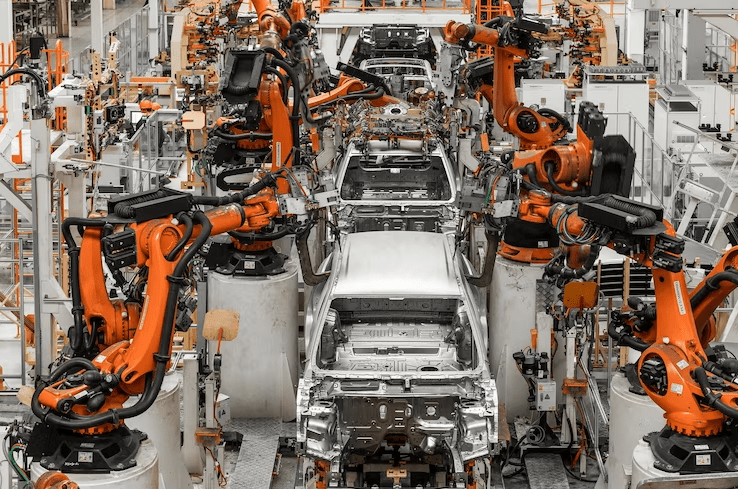
Mobile robots are increasingly deployed across industries where efficient internal logistics and material movement are critical.
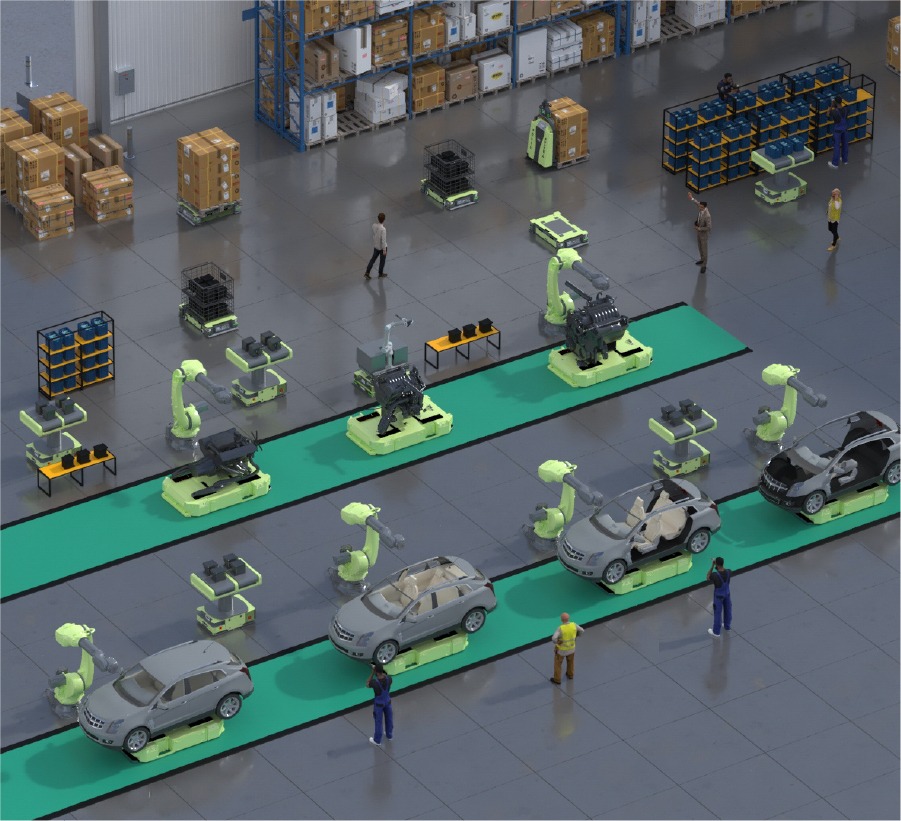
Manufacturing Plants
Factories deploy mobile robots to automate internal logistics operations including:
- assembly line material supply
- component transportation
- finished goods movement
- production line replenishment
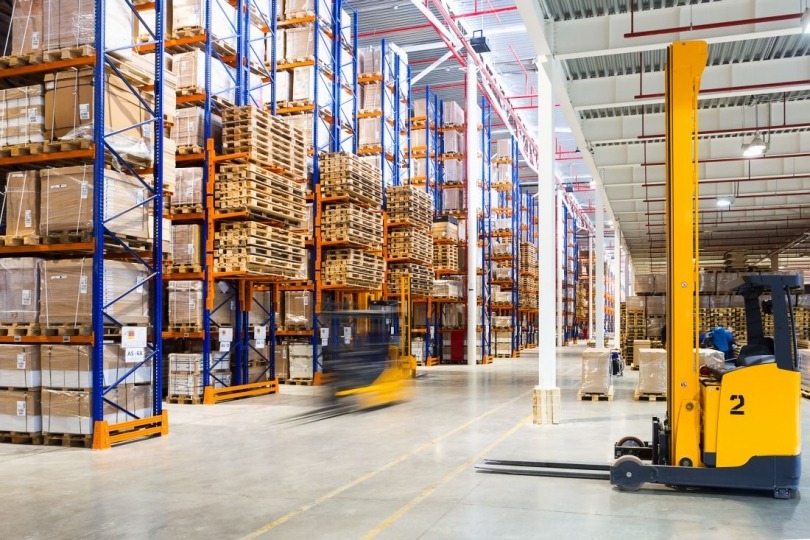
Warehousing and Logistics
Mobile robots are widely used in warehouse automation for:
- order fulfillment
- pallet transportation
- goods-to-person systems
- internal inventory movement
Solar PV Manufacturing
Solar manufacturing environments require highly controlled cleanroom conditions. Mobile robots support:
- wafer transfer automation
- contamination-free material movement
- cleanroom logistics operations
Electronics Manufacturing
Electronics production facilities deploy mobile robots for precision logistics including:
- component transportation
- cleanroom material handling
- production line supply
Data Centers
Modern hyperscale data centers operate on a massive scale and require efficient infrastructure management.
Mobile robots are increasingly being explored to support operations such as:
- transporting server racks and IT equipment
- spare parts logistics across facilities
- assisting technicians within large server halls
- infrastructure inspection and monitoring
- automating repetitive logistics workflows
As cloud computing, artificial intelligence infrastructure, and hyperscale data centers continue to expand globally, robotics is expected to play a key role in improving data center operational efficiency.
Robotics-as-a-Service enables data center operators to deploy automation without large upfront investment while ensuring continuous system upgrades and maintenance.
Which Mobile Robots Are Used in RaaS Deployments?
Two major mobile robotics technologies are commonly used in Robotics-as-a-Service deployments.
Automated Guided Vehicles (AGVs)
AGVs operate using predefined navigation routes supported by technologies such as:
- magnetic tape navigation
- QR code guidance
- reflector navigation
- laser guidance systems
AGVs are ideal for structured industrial environments where routes remain consistent.
Autonomous Mobile Robots (AMRs)
Autonomous Mobile Robots represent the next generation of mobile robotics. These robots use sensors, artificial intelligence, and real-time mapping to navigate dynamically. AMR capabilities include:
- dynamic route planning
- obstacle detection and avoidance
- real-time mapping
- intelligent fleet coordination
AMRs are particularly suited for dynamic environments such as warehouses and smart factories.
The Role of Fleet Management in Robotics as-a-Service
The efficiency of mobile robotics systems depends heavily on intelligent fleet management platforms.
Fleet management software enables:
- coordination of multiple robots
- traffic management within facilities
- route optimization
- predictive maintenance
- real-time performance monitoring
These capabilities ensure reliable and efficient automated operations.
See how RaaS is transforming mobile robot automation across modern factories and warehouses.
Download our free brochure for detailed insights, applications, and technology trends.
How Novus Hi-Tech Enables Robotics-as-a Service
Novus Hi-Tech combines expertise in industrial robotics, artificial intelligence, and automation engineering to deliver scalable mobile robotics solutions.
Through its Robotics-as-a-Service model, Novus enables organizations to deploy:
- Autonomous Mobile Robots (AMRs)
- Automated Guided Vehicles (AGVs)
- intelligent fleet orchestration platforms
- factory automation integration
- predictive maintenance and analytics
This approach enables organizations to adopt automation faster while minimizing operational and financial risk.
The Future of Robotics-as-a-Service
Service-based robotics models are expected to play a central role in the future of industrial automation.
As industries adopt Industry 4.0, smart factories, and AI-driven logistics systems, Robotics as-a-Service will become a critical enabler of scalable automation.
Organizations that adopt RaaS today will gain advantages in:
- operational efficiency
- productivity improvement
- automation scalability
- long-term competitiveness
Conclusion
Robotics-as-a-Service represents a major shift in how organizations deploy automation technologies.
By transforming robotics from capital investment into a scalable service model, RaaS allows companies to adopt automation faster while reducing operational risk.
As mobile robotics continues to evolve, Robotics-as-a-Service will play a key role in enabling the next generation of smart factories, intelligent logistics systems, and digital infrastructure operations.