





Introduction: Why AGV in BESS Manufacturing Is No Longer Optional
This blog is written for teams who are building, scaling, or operating battery manufacturing and BESS integration facilities and are facing one common challenge that does not always show up in reports.
Material movement is not under control.
In most battery plants today, a significant amount of investment goes into cell processing, assembly lines, welding, and testing infrastructure. These systems are designed with precision and perform as expected.
However, the movement between these systems is often managed manually.
Cells move from testing to assembly based on availability. Modules wait between stations because the next process is not ready. Battery packs miss formation slots because they did not arrive on time. At the final stage, container integration slows down because movement and placement depend on coordination between multiple teams.
Nothing appears broken. Production continues.
But the system is not optimized.
In BESS manufacturing, this gap directly affects three things that define plant performance. Safety. Scalability. Traceability.
This is where AGV in BESS manufacturing becomes critical.
What AGV Means in BESS Manufacturing in Practical Terms
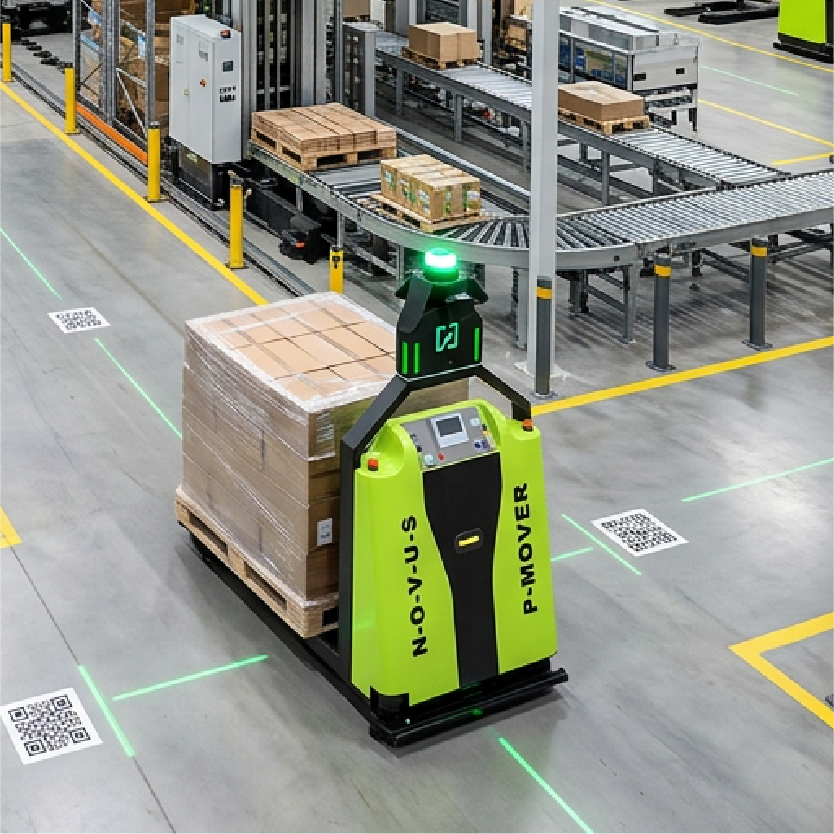
AGV in BESS manufacturing refers to Automated Guided Vehicles that are used to move battery materials across the production and integration flow.
On paper, this sounds simple.
In reality, the role of AGV is much larger.
It is not just about moving materials. It is about controlling how materials move. In a battery plant, materials include:
Cells that have been tested and sorted.
Components that are being assembled into modules or packs.
Finished battery packs that are heavy and sensitive.
Integrated systems that are ready to be installed into containers.
Each of these movements must happen in sequence, at the right time, and without damage.
AGV systems take over this responsibility and make movement part of the production system instead of a separate activity.
Understanding BESS Manufacturing Flow and Why AGV Becomes Central
To understand the importance of AGV, it is important to look at how BESS manufacturing actually works.
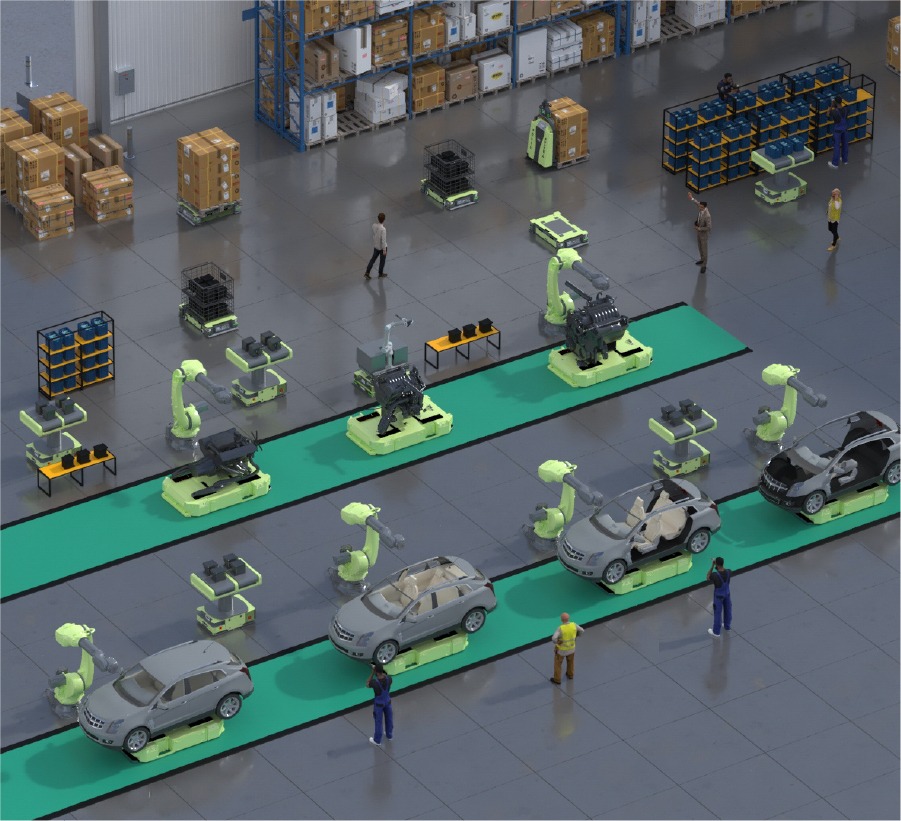
A typical production flow includes:
Cell processing, including testing and sorting.
Assembly, where cells are arranged into modules or directly into packs in advanced architectures.
Pack processing, including welding, integration, and inspection.
Formation and testing, where battery packs are validated.
Container integration, where packs are installed into energy storage systems. Dispatch and logistics.
Each stage is precise and dependent on timing.
If cells do not reach assembly on time, lines slow down.
If packs do not reach formation on time, testing capacity is wasted.
If packs are not positioned correctly during container integration, installation is delayed.
This is not a production issue. It is a flow issue.
AGV systems sit at the center of this flow and ensure continuity.
Power Your Solar Manufacturing with Intelligent Automation
Explore how Novus delivers turnkey solutions for BESS, Ingot, Wafer, Cell, and Module production.
Download the Solar Automation Brochure
Why AGV in BESS Manufacturing Is Critical for Safety
Safety in battery manufacturing is not limited to compliance. It is built into how materials are handled.
Battery cells and packs carry energy. Mishandling may not always result in immediate failure, but it increases long-term risk.
In areas such as pack handling and container integration, the risk is higher due to:
Heavy loads.
High energy density.
Limited space for movement.
Manual handling in such environments depends on operator skill and coordination. AGV systems reduce this dependency.
They follow predefined paths. They operate at controlled speeds. They do not deviate based on urgency or pressure.
More importantly, they reduce human presence in areas where handling risk is high. This creates a more controlled and safer environment.
Why AGV in BESS Manufacturing Is Essential for Scalability
Scaling a battery plant is not just about adding more equipment.
It is about maintaining consistency as production increases.
In manual systems, scaling introduces more complexity.
More forklifts are added. More operators are involved. More coordination is required. This does not improve efficiency. It increases variability.
AGV systems scale differently.
They operate based on system logic. They perform the same way regardless of shift or load. They can handle increased demand without increasing complexity.
This allows production to grow without creating operational instability.
Why AGV in BESS Manufacturing Is Critical for Traceability
Traceability in battery manufacturing is a requirement, not an option.
Every battery pack must be traceable back to the cells used in it.
This requires visibility across all stages of production.
While most plants implement systems to track processes, the movement between processes often remains untracked.
This creates gaps.
AGV systems close these gaps by recording every movement.
Cells moving to assembly. Packs moving to formation. Finished units moving to container integration.
Each step is logged.
This creates a continuous record that supports quality control, compliance, and analysis.
Explore how Novus delivers turnkey solutions for BESS, Ingot, Wafer, Cell, and Module production.
Download the Solar Automation Brochure
Where AGV Is Used Across BESS Manufacturing and Container Integration
AGV in BESS manufacturing is applied across the entire production chain.
In the early stage, it supports cell movement after testing and sorting. This ensures that only qualified cells move forward and that batch integrity is maintained.
During assembly, AGVs connect different stations and ensure that materials arrive in sequence. This improves synchronization and reduces waiting time.
At the pack stage, AGVs handle heavier loads and ensure smooth movement between welding, inspection, and final assembly.
During formation, AGVs ensure that packs reach testing infrastructure on time. This improves utilization and reduces idle capacity.
At the final stage, container integration, AGVs play a critical role.
Battery packs must be moved and positioned accurately into racks or enclosures. This requires precision and stability.
AGV systems enable controlled placement, reducing reliance on manual coordination and improving both speed and safety.
Beyond production, AGVs support internal logistics, including storage and dispatch of finished systems.
How AGV in BESS Manufacturing Works in Real Operations
AGV systems operate based on predefined routes and integration with production systems. When a process requires material, a task is generated.
An AGV is assigned automatically. It moves along a defined path to pick up the material. It delivers the material to the required station.
The entire movement is recorded.
This creates a closed-loop system where movement is synchronized with production and fully visible.
When BESS Plants Should Move to AGV Systems
The need for AGV becomes visible through operational challenges.
Material delays begin to affect production.
Formation slots are not fully utilized.
Container integration takes longer than expected.
Forklift movement increases but efficiency does not improve.
These are signals that the system is no longer balanced.
At this stage, continuing with manual handling increases complexity rather than solving the problem.
Who Drives AGV Decisions in BESS Manufacturing
AGV adoption is not driven by a single team.
It starts with operations identifying flow issues. Engineering evaluates feasibility. Management assesses long-term impact.
The decision is not about adopting technology. It is about stabilizing the system.
What Changes After Implementing AGV in BESS Manufacturing
The changes are not always immediate, but they are clear.
Material movement becomes predictable.
Delays between processes reduce.
Formation utilization improves.
Container integration becomes more efficient.
Dependency on manual coordination decreases.
Over time, the plant becomes easier to manage and scale.
What Happens If AGV in BESS Manufacturing Is Delayed
Delaying structured material handling increases operational complexity.
More resources are required to manage movement. Coordination becomes difficult. Risks increase.
Eventually, the system becomes harder to optimize.
Early adoption allows for a smoother transition.
The Future of AGV in BESS Manufacturing
Battery manufacturing is moving toward fully integrated systems where production and material flow are connected.
AGV systems will continue to play a central role in enabling this shift.
They will not just support movement. They will define how plants operate.
Conclusion: Why AGV in BESS Manufacturing Defines Plant Performance
In BESS manufacturing, performance is not defined only by production capacity. It is defined by how well the system operates as a whole.
Material movement connects every stage, from cell processing to container integration. AGV systems bring control to this movement.
They enable safer operations, support scalable production, and provide intelligent traceability.
As the industry grows, this level of control will define which plants perform consistently and which struggle to scale.
Looking for automation that actually delivers ROI? Speak with Novus experts to explore the right robotics solution for your operations.
Get in Touch
If you are evaluating AGV in BESS manufacturing, start by understanding your current material flow and bottlenecks.