

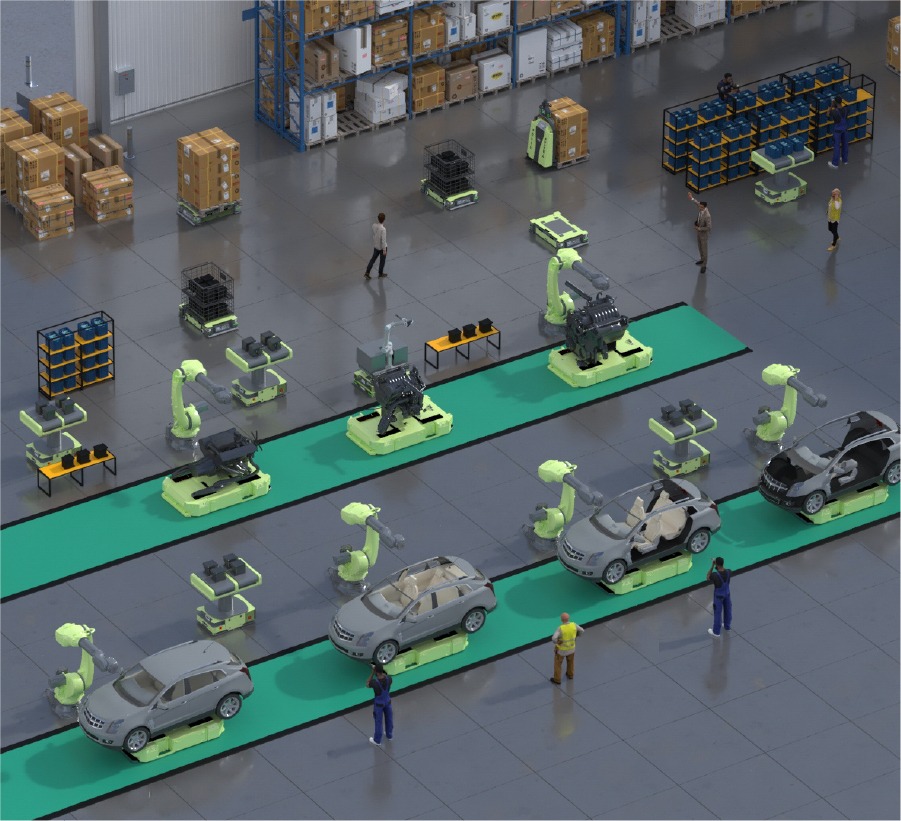
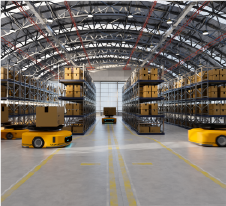
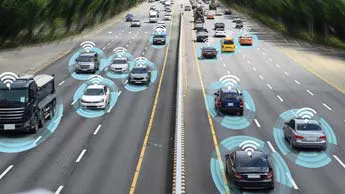




Robotic automation is transforming industries everywhere, and two of the most active technologies for logistics and manufacturing include both Automated Guided Vehicles (AGV) and Autonomous Mobile Robots (AMR). While AGVs and AMRs serve the same function of material handling and transportation, they operate very differently in terms of environmental adaptability and value for business. AGV and AMR are important concepts for many organizations that are looking for efficiencies to improve operations.
In this blog we will look at AGVs and AMRs, their functions, and the differences between AGV and AMR, and then discuss which robot solution will fit your business.
AGVs vs. AMRs: What’s the Difference?
Picture yourself in a huge warehouse, seeing robots speed by, moving products from one location to another. These aren’t ordinary robots—they’re intelligent assistants programmed to streamline work. But they’re not all alike.
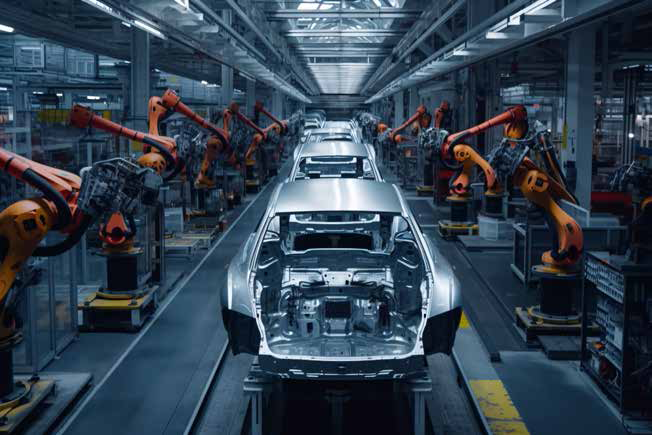
AGVs (Automated Guided Vehicles) are similar to trains on a magnetic rail. They move along predetermined paths, with magnetic strips, sensors, or rails laid on the floor providing the guidelines. They are perfect for organized spaces where consistency is necessary, such as warehouses and factories.
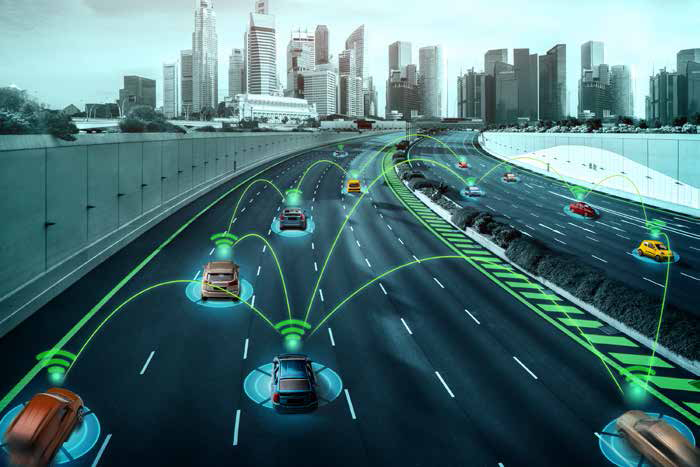
AMRs (Autonomous Mobile Robots), however, are closer to self-driving vehicles. They don’t require predetermined routes; rather, they rely on sensors, cameras, and AI to dynamically navigate around obstacles and change their paths in real-time. This makes them best suited for more dynamic environments, from crowded manufacturing floors to even hospitals and shopping areas.
Both AGVs and AMRs are revolutionizing industry operations—one through stringent precision, the other with flexible intelligence.
Discover the key differences between AGVs and AMRs and find the best fit for your needs.
Download our free brochure for expert insights and trends!
Key Differences Between AGVs and AMRs

Although AGVs and AMRs serve related functions, the specifications of the two differ with respect to navigation, flexibility, and cost.
Let’s explore some of the differences:
AGVs: Follow predefined routes and require physical infrastructure (e.g. QR codes, magnetic strips, tracks)
AMRs: Use AI-based path planning to allow for dynamic navigation without relying on a guide or body.
2. Obstacle avoidance and adaptability
AGVs: They come to a halt when they run into an obstacle, requiring an operator to intervene.
AMRs: Can dynamically detect, define, and avoid obstacles with more advanced decision-making sensors.
3. Safety features
AGVs: Do have basic safety features, such as an emergency stop, and collision avoidance through pre-planned routes.
AMRs: Will have advanced safety sensors, such as LiDAR and 360-degree visual cameras that can help collision avoidance in complex environments.
4. Cost of Ownership and ROI
AGVs: Lower initial costs but higher infrastructure investments.
AMRs: Higher upfront investment but lower operational costs due to adaptability and reduced downtime.
5. Deployment and Scalability
AGVs: Require structured pathways, making scalability challenging and cost-intensive.
AMRs: Can be deployed in existing environments without major modifications, offering greater scalability.
6. Applications in Different Industries
AGVs: Manufacturing, automotive assembly, and large-scale warehousing.
AMRs: E-commerce, retail, healthcare logistics, and dynamic warehouses.
7. Flexibility and Customization
AGVs: Best for repetitive, structured workflows.
AMRs: Ideal for multi-tasking and handling variable operations.
Use Cases: When to Choose AGVs or AMRs?

Choosing between AGVs and AMRs depends on operational needs, industry requirements, and budget constraints. Here’s when to opt for each:
When to Choose AGVs?
- Highly structured environments with minimal layout changes.
- Repetitive, high-volume material transport in manufacturing and logistics.
- Lower upfront costs but the willingness to invest in infrastructure modifications.
When to Choose AMRs?
- Dynamic environments requiring flexible navigation.
- Industries with high variability, such as e-commerce and healthcare logistics.
- Long-term cost savings through reduced setup and maintenance costs.
Challenges and Limitations
While AGVs and AMRs offer significant operational advantages, they also come with challenges.
Challenges of AGVs
- Limited flexibility due to fixed paths.
- High installation costs for infrastructure modifications.
- Manual intervention required for obstacle handling.
Challenges of AMRs
- Higher initial investment due to advanced technology.
- Complex AI-driven navigation may require integration expertise.
Final Thoughts: Should You Implement AMRs or AGVs?
The selection of AGVs or AMRs comes down to your aspirations, restrictions, and budget. If your opportunity lies with reliable operations in a structured area, you’ll benefit from AGVs.
If your opportunity is scalable and adaptable with the benefit of long-term automation, AMRs might be the more viable option. With improvements in autonomous mobile robotics, AMRs have gained popularity, especially in industries needing immediate decision-making and adaptability.
However, for a business geared towards designed environments, AGVs are a cost-effective technique. Ultimately, the best for each business is going to be dictated by your need for operational needs and your logistics or manufacturing requirements for automation.
Revolutionize Your Operations with Novus Hi-Tech!
At Novus Hi-tech, our focus is designing leading-edge autonomous mobile robotics solutions for the contemporary industry. From structured AGVs to more situational AMRs, we can help your organization find the right automation solution for cost savings and efficiency.
Ready to move to smart automation? Reach out to Novus Hi-Tech to transform your logistics and manufacturing operations with proven world-class robotics solutions!
FAQs
1. How accurate is AGV & AMR?
Automated Guided Vehicles (AGVs) and Autonomous Mobile Robots (AMRs) offer high accuracy in material handling, navigation, and task execution. AGVs typically follow predefined paths using magnetic strips, QR codes, or laser guidance, ensuring precision within a few millimeters. However, they are less flexible when obstacles are encountered. AMRs, powered by advanced sensors, LiDAR, and AI, dynamically adjust routes, achieving similar or higher accuracy while offering more adaptability in complex environments.
2. How much does AGV cost compared to AMR?
AGVs generally require infrastructure modifications like tracks or markers, making them more structured but potentially limiting flexibility. AMRs, on the other hand, navigate freely using sensors and mapping technology, which can reduce infrastructure costs but may have higher initial investment. The choice between them depends on operational needs, scalability, and adaptability.
3. What is the difference between AGV and RGV?
AGV (Automated Guided Vehicle): Moves autonomously along predefined paths using sensors, QR codes, or magnetic strips. Commonly used in warehouses and manufacturing for transporting goods.
RGV (Rail-Guided Vehicle): Runs on fixed tracks or rails, providing precise and high-speed transport between specific points, often used in automated storage and retrieval systems (AS/RS).
4. Can AMRs and AGVs efficiently operate in both smart intralogistics and warehouse environments?
Yes, Autonomous Mobile Robots (AMRs) and Automated Guided Vehicles (AGVs) can perform multiple functions in both smart intralogistics and warehouse operations. Their versatility and automation capabilities make them essential in modern supply chains.