



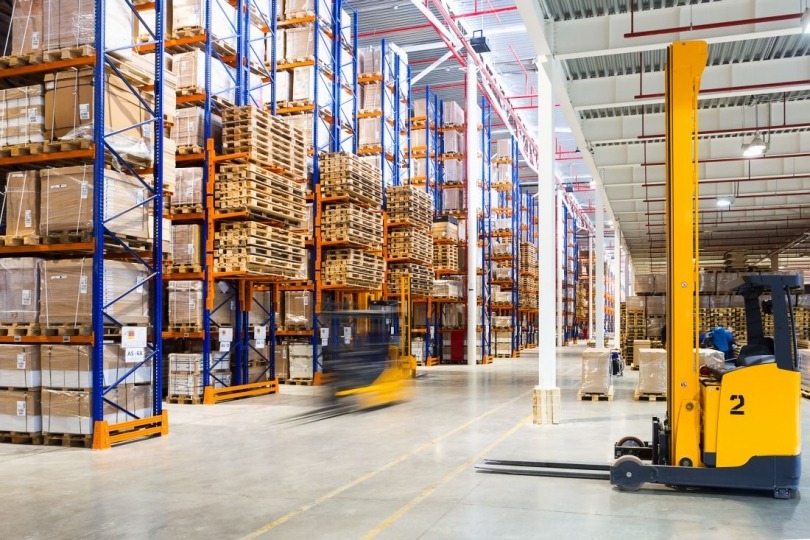




The global robotics industry is revolutionising modern manufacturing, and as we head towards 2026, factories (as well as warehouses and automotive industries) are relying more heavily on robots than ever before. There is one undeniable fact about this change and its effect on the growth of the global economy, as factory robots are responsible for the greatest portion of the growth of all economies in the world.
The resurgence of manufacturing in large economies and the explosion of the global eCommerce market are examples of how quickly today’s world of industrial and warehouse environments are changing. The introduction of smart technologies, advanced sensors, and highly integrated systems, adds to this volume of change, allowing robots to become integrated into the daily operations of businesses in a manner that is far easier than it used to be.
There are many examples of companies from India that are making a name for themselves as leaders in automation for the fastest-growing segments of the economy, such as Novus Hi-Tech.
Global Robotics Market Outlook to 2026
The global robotics market is on a steep upward climb, with analysts projecting the sector to surpass USD 70–80 billion by 2026. What’s even more interesting is where most of this growth is coming from.
Across 2025–2026, both the industrial robotics market and the warehouse robotics market are set to dominate global adoption. Industrial and logistics robots alone are expected to contribute nearly 60–65% of the total market growth, making factory automation the epicentre of the robotics revolution.
Whether it’s automotive assembly lines, large fulfilment centres, or even mid-sized manufacturers, the shift towards robots is happening at every scale.
Why Factory Robots Are Dominating Growth
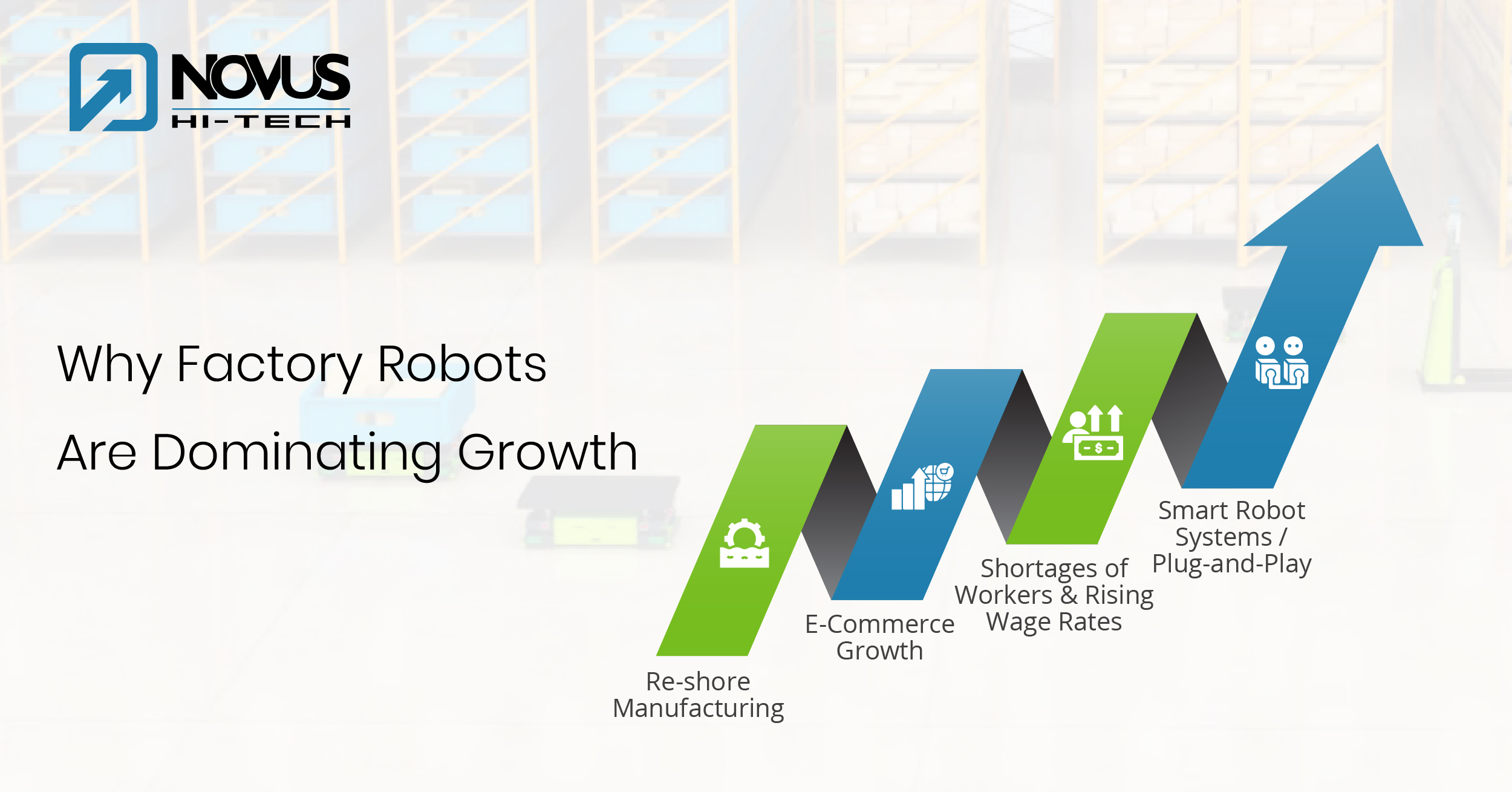
So, what is the reason for the rapid growth of robot sales? Below are four reasons for the continuing increase in demand for robots and these reasons are all linked to some major trends affecting the robotics industry.
1. Re-shore Manufacturing
Countries want to reduce their dependence on international supply disruptions. Therefore, re-shoring is occurring. With this increase in manufacturing activities comes additional demand for expanding factories. The fastest method for doing this is by using robots.
2. E-Commerce Growth
As more consumers use e-commerce to shop online, there is also an associated increase in the number of orders being shipped, leading to the growth of the warehouse robotics market. Due to the growing popularity of same-day or next-day delivery services, robotic sortation systems ( robots ) and Industrial Robot ( IR ) manipulators are now considered to be essential operating tools for all warehouses.
3. Shortages of Workers & Rising Wage Rates
Finding qualified workers is now a major global issue and the solution to this issue is through increased Automation use by companies. Automation does not replace workers, it fills the gaps that cannot be filled by workers and assists companies to complete monotonous, dangerous, or detail-oriented activities that require a rapid response time.
4. Smart Robot Systems / Plug-and-Play
There are many new technologies available for robots today that will allow a manufacturer to implement a new robotic system without good design of a robotic cell. In addition, internal navigation systems and AI-powered perception enable the installation of robots in as little as one week and can lower the overall cost of installing a robotic system.
Key Segments Driving the 2026 Surge
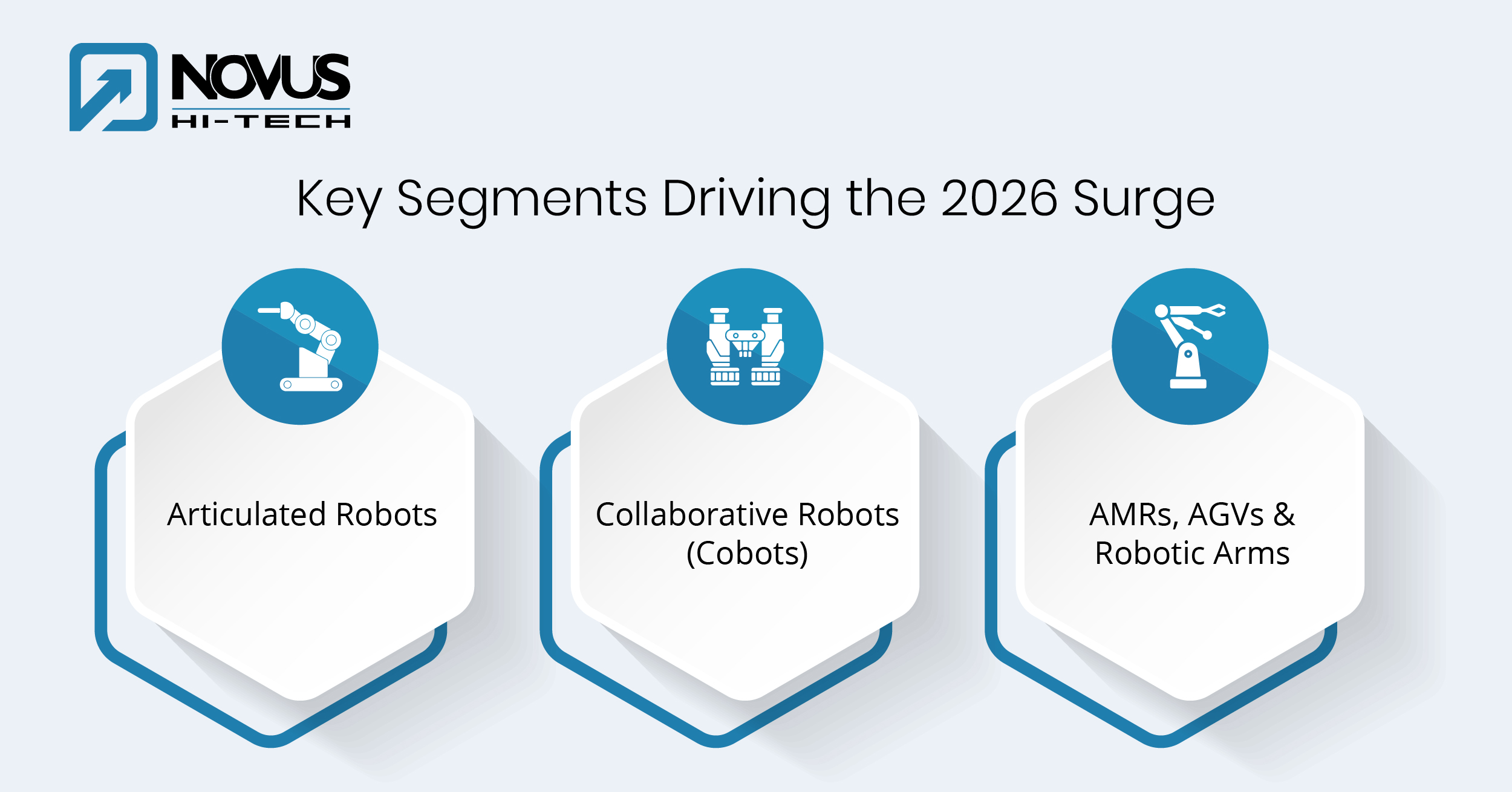
Several categories inside the industrial robotics market and automotive robotics market are growing at record speed. Here are the standouts:
1. Articulated Robots
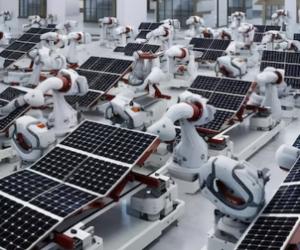
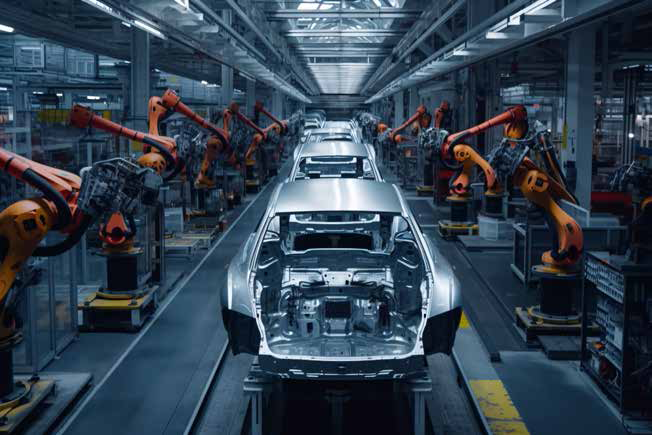
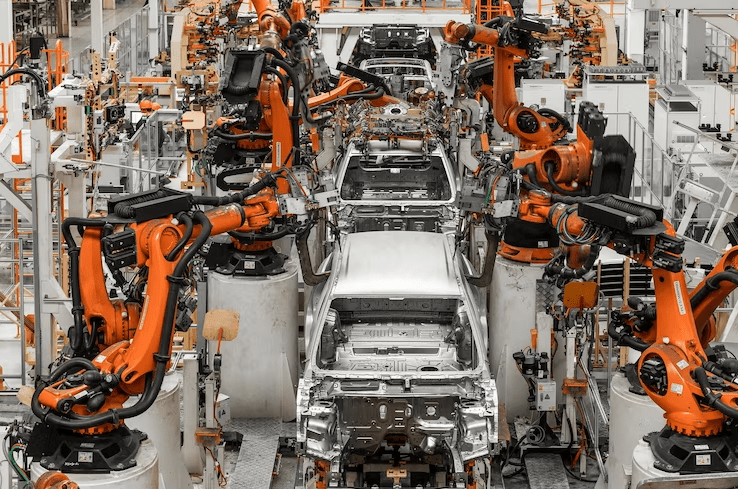
These remain the workhorses of automotive, electronics, and metal industries—ideal for welding, assembly, polishing, and material handling.
2. Collaborative Robots (Cobots)
Cobots are becoming popular with SMEs because:
- They don’t need fenced-off areas
- They work alongside humans safely
- They can be deployed quickly with minimal programming
3. AMRs, AGVs & Robotic Arms
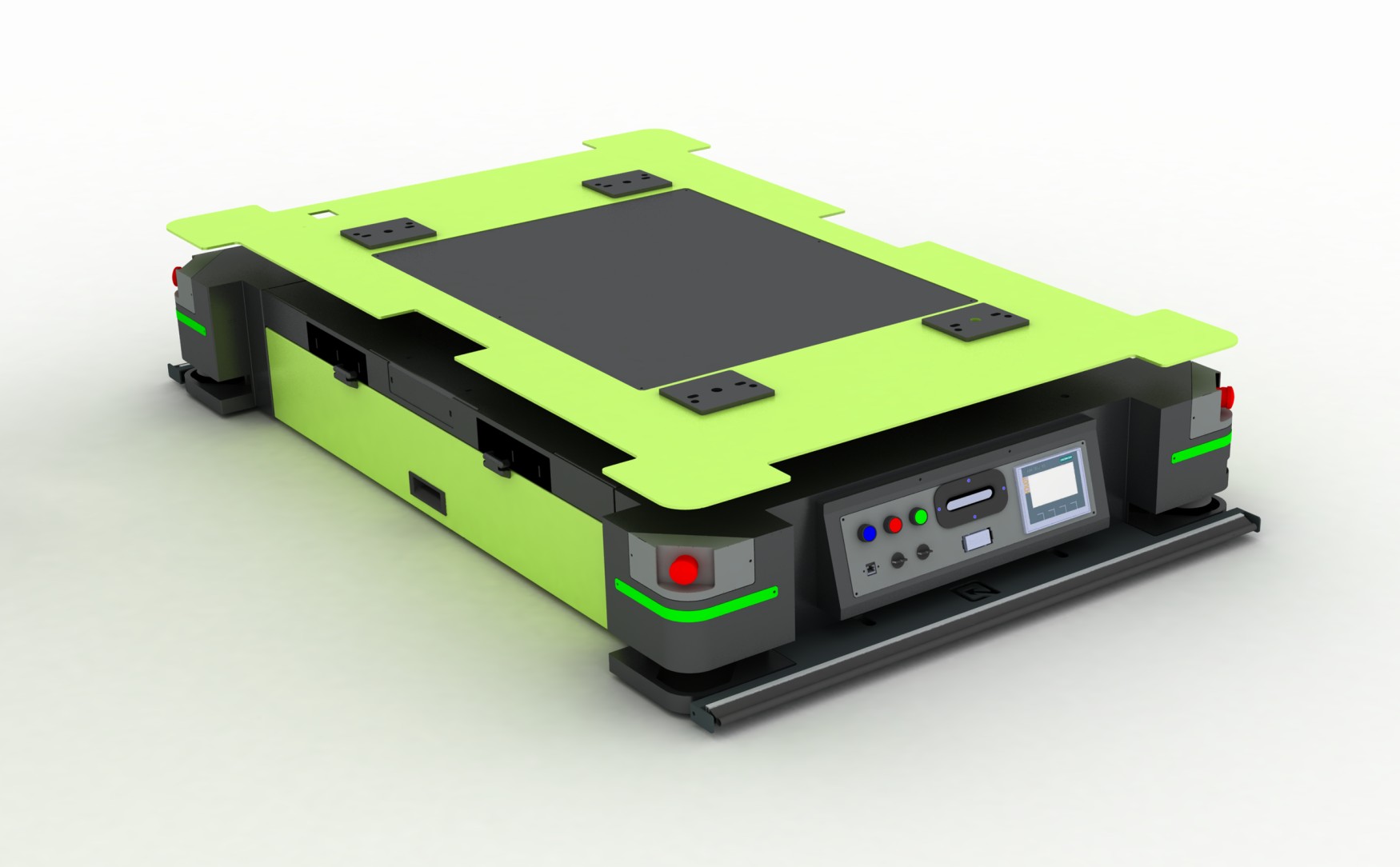
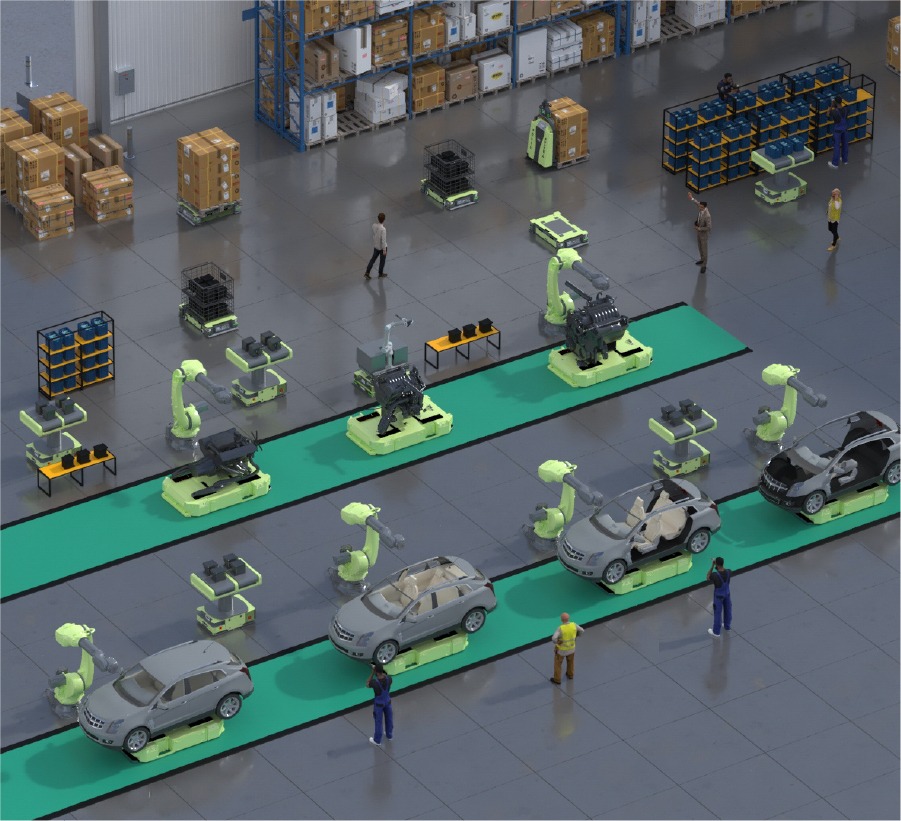
Mobile robots are taking over warehouse aisles, while robotic arms are now used from piece picking to packaging. This is entirely reshaping the warehouse robotics market and pushing it into the fastest-growing category of factory automation.
Regional Leaders in Factory Robotics Adoption
The global rise of factory robots is not evenly spread—some regions are setting the pace faster than others.
Asia-Pacific Leads the Race
China remains the world’s biggest adopter, followed by South Korea and Japan. India is rising fast, backed by:
- Government incentives
- PLI (Production-Linked Incentive) schemes
- The ‘Make in India’ manufacturing push
Europe & North America Stay Dominant
Germany remains a powerhouse in the industrial robotics market, and the USA leads adoption in automotive, warehousing, and high-tech sectors.
India’s Rapid Rise
India is becoming a serious contender, not just as a buyer but also as an automation innovator. More factories are embracing AMRs, robotic arms, and cobots to meet global demand—and this shift is only accelerating.
Novus Hi-Tech’s Role in the Factory Robotics Revolution
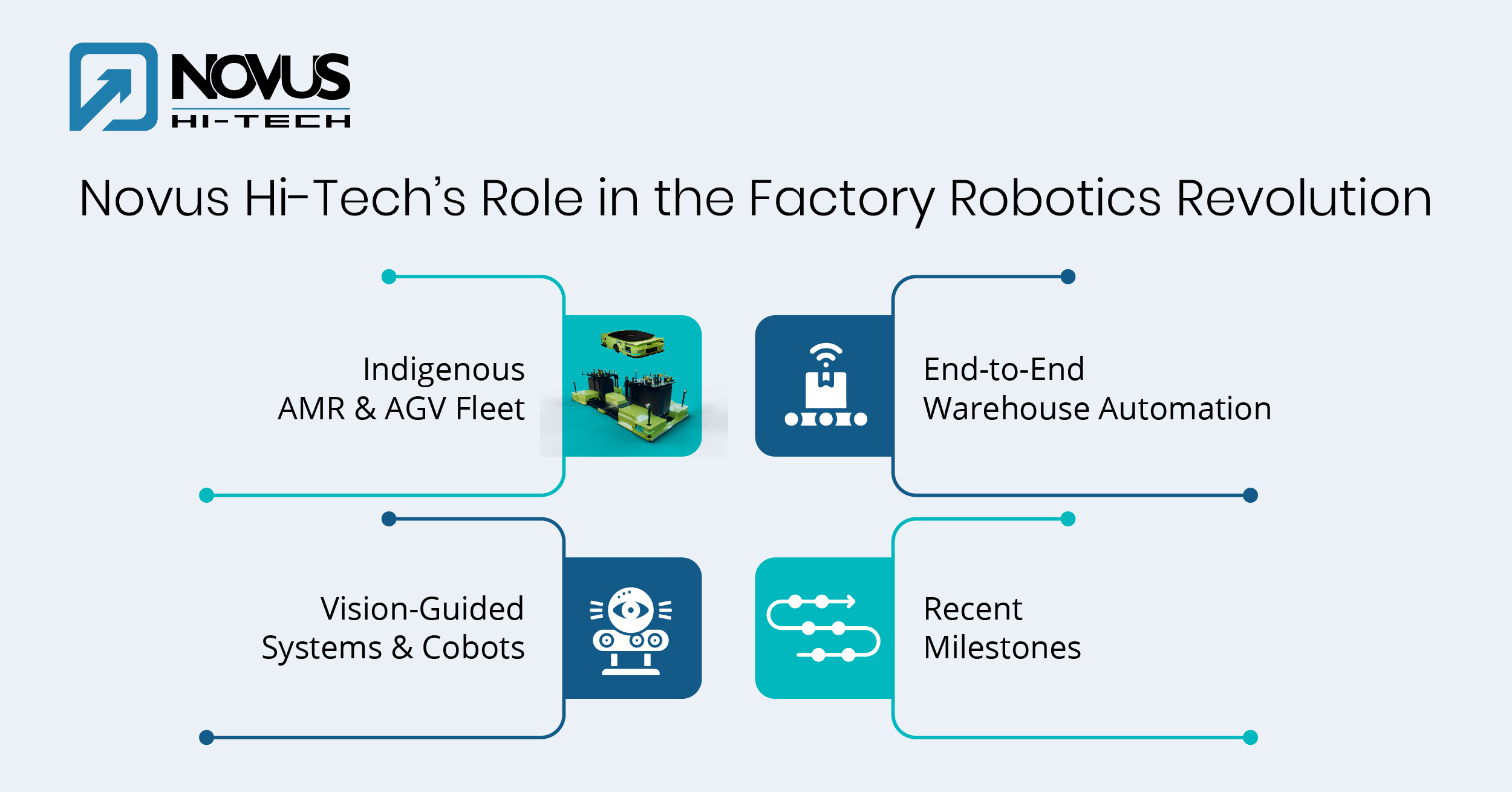
As India’s manufacturing landscape evolves, Novus Hi-Tech is emerging as a major catalyst for change. With a strong focus on R&D and real-world deployment experience, the company is steadily carving its space in both the industrial robotics market and the automotive robotics market.
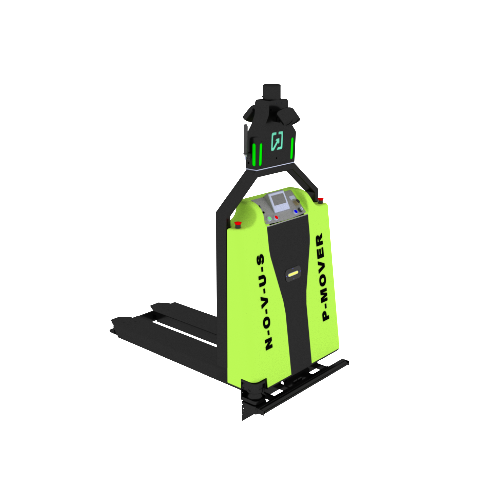
1. Indigenous AMR & AGV Fleet
Novus Hi-Tech has developed a robust portfolio of Autonomous Mobile Robots and Automated Guided Vehicles that are already being deployed across:
- Automotive plants
- E-commerce fulfilment centres
- Consumer goods facilities
These robots deliver high throughput with 99.99% uptime and consistently low error rates.
2. End-to-End Warehouse Automation
From inbound to dispatch, Novus designs warehouse systems that operate with precision, intelligence, and minimal manual touchpoints.
3. Vision-Guided Systems & Cobots
Their cobots and AI-powered systems can manage tasks like vision picking, quality inspection, and assembly even in dynamic Indian factory environments.
4. Recent Milestones
Some of their notable achievements include:
- Large-scale AMR deployments in automotive hubs
- Partnerships with global logistics giants
- Rapid expansions into electronics and FMCG sectors
Future Outlook Beyond 2026
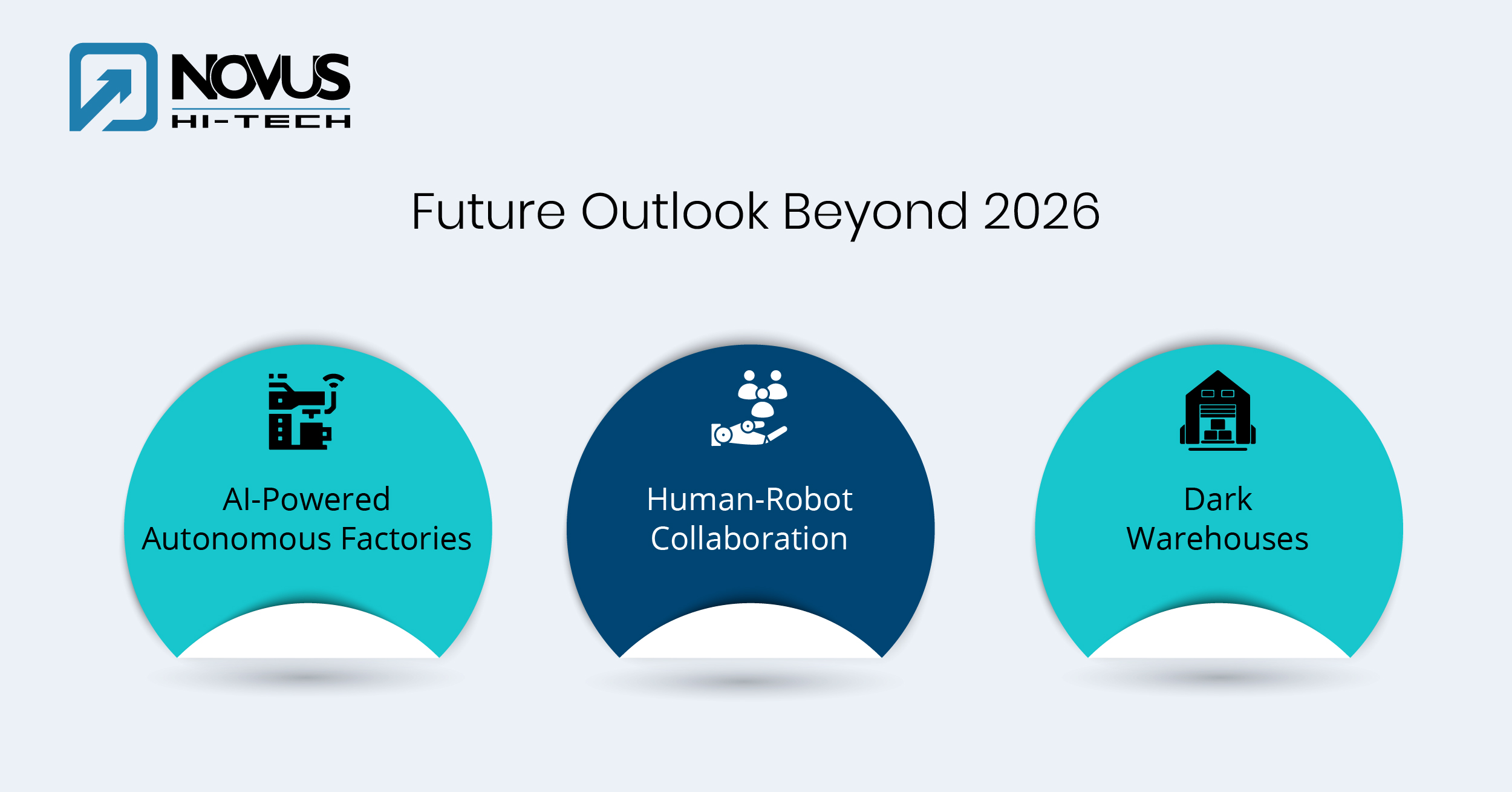
While 2026 is set to mark a defining moment for the global robotics market, the story doesn’t end there. A far more intelligent, autonomous future lies ahead.
AI-Powered Autonomous Factories
By 2030, factories will be capable of running end-to-end operations with minimal human intervention.
Human-Robot Collaboration
Cobots will move beyond assistance—they’ll truly collaborate. They’ll understand context, anticipate issues, and adapt just like human co-workers.
Dark Warehouses
These 24/7, zero-light facilities will become a norm as businesses chase maximum efficiency and minimum operational costs.
Conclusion
In 2026, the Key contributors are planning to reshape the worldwide automation market with Industrial robotics market, warehouse robotics market, and automotive robotics market. Global companies are taking quick steps to implement modernisation through agile, innovative and cost-efficient partnerships. Novus Hi-Tech sets itself apart in this area.
Novus provides the technology, experience and dependability for your robot-first era, from production expansion and material handling automation to implementing the next generation of fulfillment operations.
Are you ready to implement automation at your facility?
Contact the Novus Hi-Tech team to set up a custom online demonstration.