
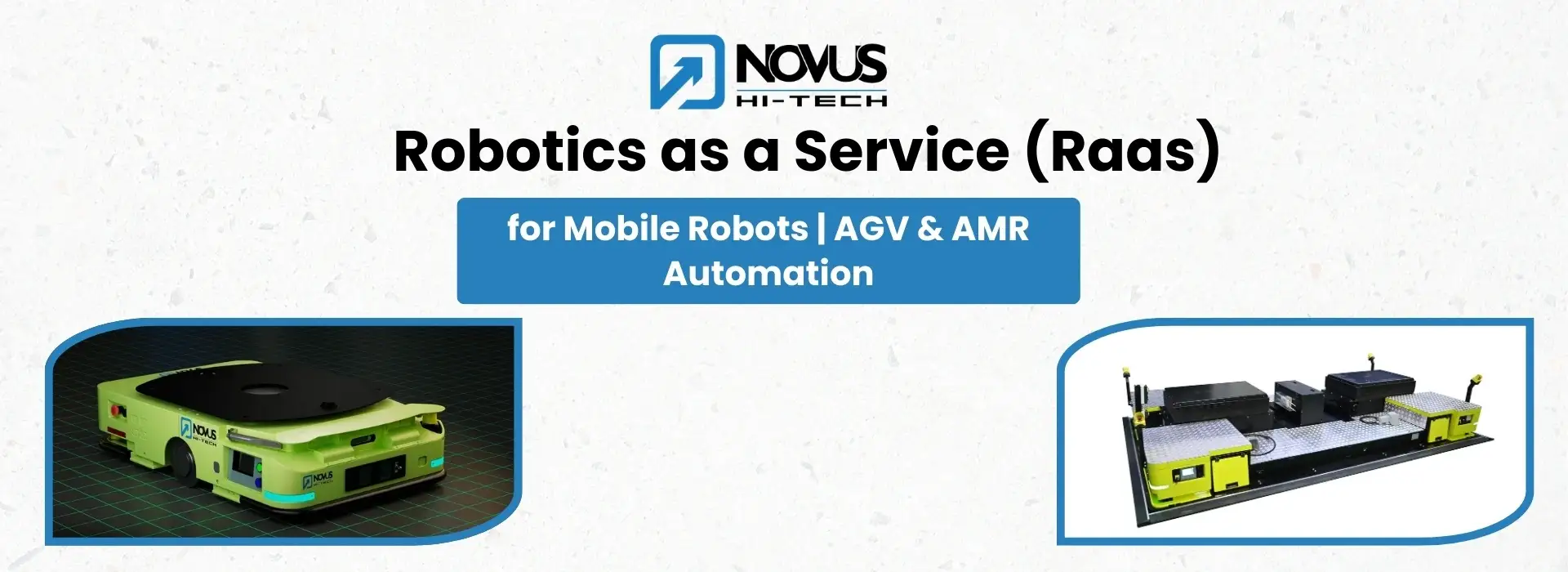
If you’ve priced out a mobile robot fleet recently, you’ve likely encountered RaaS alongside traditional purchase quotes and wondered whether a subscription model actually makes sense for your operation.
Robotics as a Service (RaaS) is now the default deployment model for organisations that want to move fast, avoid large capital commitments, and stay on current-generation hardware without carrying depreciation on their books.
This guide covers how RaaS works, what’s typically included in a subscription, how AMRs and AGVs are deployed under this model, and what to look for in an SLA before you sign.
Technology providers such as Novus Hi-Tech are among the robotics as a service companies enabling organizations to adopt mobile robotics through scalable RaaS solutions that support smart manufacturing, intelligent logistics, and next-generation industrial automation.
What is Robotics as a Service (RaaS)?
Robotics as a Service is a subscription-based deployment model where businesses pay a recurring fee — typically per robot, per hour, or per task — to access robotic systems, software, maintenance, and support as a bundled service. Rather than purchasing hardware outright, companies lease operational capacity.
Think of it as the difference between buying a company car and using a ride-sharing fleet. You get the functionality without the depreciation, insurance, and repair headaches.
What a typical RaaS subscription includes:
- Robotic hardware (AMRs, collaborative arms, inspection drones)
- Fleet management and navigation software
- Ongoing maintenance, calibration, and part replacement
- Remote monitoring and performance reporting
- Upgrades to newer hardware generations at contract renewal
Typical pricing range: RaaS contracts for mobile robots commonly run between $3,000–$8,000 per robot per month depending on payload, autonomy level, and SLA terms. Many organizations are now evaluating how Robotics as a Service automation costs compare with traditional automation investments.
According to MarketsandMarkets, the global Robotics as a Service (RaaS) market was valued at USD 1.8 billion in 2023 and is projected to reach USD 4.0 billion by 2028, growing at a CAGR of 17.4%, driven by e-commerce fulfilment demand and labour cost pressures across manufacturing and logistics.
Discover how Robots as a Service (RaaS) makes AGV and AMR automation easier to deploy and scale.
Download our free brochure to explore real solutions, applications, and industry insights.
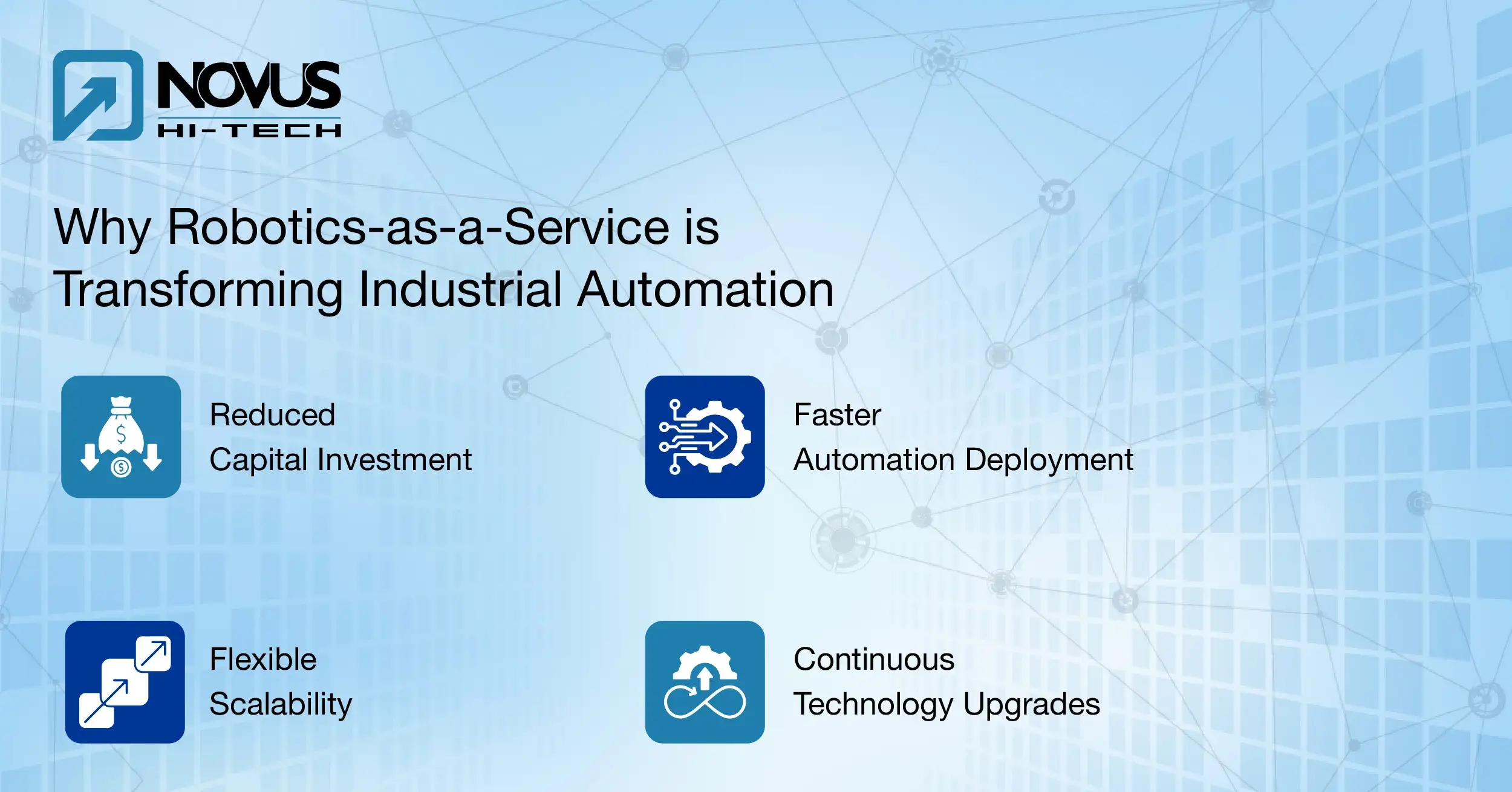
Why Robotics as a Service is Transforming Industrial Automation
Industries across the world are facing new operational challenges including labor shortages, supply chain disruptions, and increasing production demand.
To remain competitive, organizations must improve efficiency and scalability while managing costs. This is why more businesses are investing in solutions that help industrial robots improve cost efficiency across manufacturing and warehouse operations.
RaaS helps address these challenges by lowering barriers to automation adoption.
Reduced Capital Investment
Traditional robotics deployments require significant upfront investment in hardware, infrastructure, and system integration. RaaS allows companies to access robotics through subscription-based models.
Faster Automation Deployment
Since robotics providers manage deployment and integration, organizations can implement automation significantly faster.
Flexible Scalability
Companies can scale robot fleets up or down depending on operational demand. Predictable Operational Costs
Subscription models allow companies to plan automation costs more effectively.
Continuous Technology Upgrades
Robotics providers ensure systems are continuously updated with the latest navigation, AI, and software improvements.
Learn how Robots as a Service (RaaS) helps businesses adopt AMR and AGV automation.
Download our free brochure for expert insights and real-world use cases.
How Robotics as a Service Works
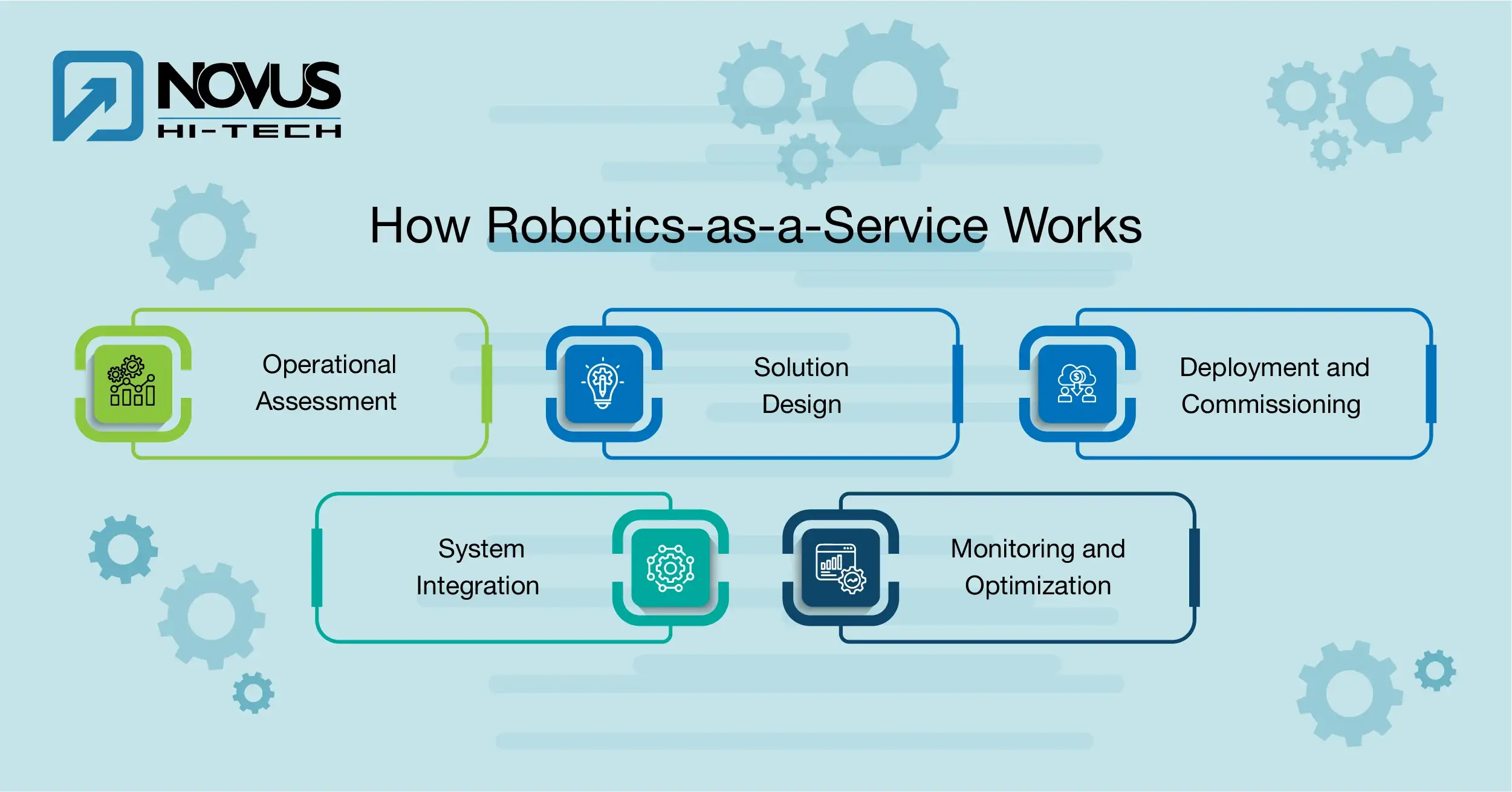
The Robotics as a Service model follows a structured deployment lifecycle designed to ensure successful automation implementation.
-
Operational Assessment
Automation experts evaluate facility workflows and material movement processes to identify automation opportunities.
-
Solution Design
Robotics engineers design a solution based on factors such as facility layout, payload requirements, travel distances, and safety requirements.
-
Deployment and Commissioning
Mobile robots are deployed within the operational environment and configured according to the designed workflow.
-
System Integration
Robots integrate with enterprise platforms such as:
- Enterprise Resource Planning (ERP) systems
- Manufacturing Execution Systems (MES)
- Warehouse Management Systems (WMS)
-
Monitoring and Optimization
Fleet management software continuously monitors robot performance and optimizes workflows to improve operational efficiency.
Discover how AMR and AGV automation with Robotics as a Service can improve operational flexibility.
Download our free brochure to explore the latest automation solutions.
Where Are Mobile Robots Used in Industry?
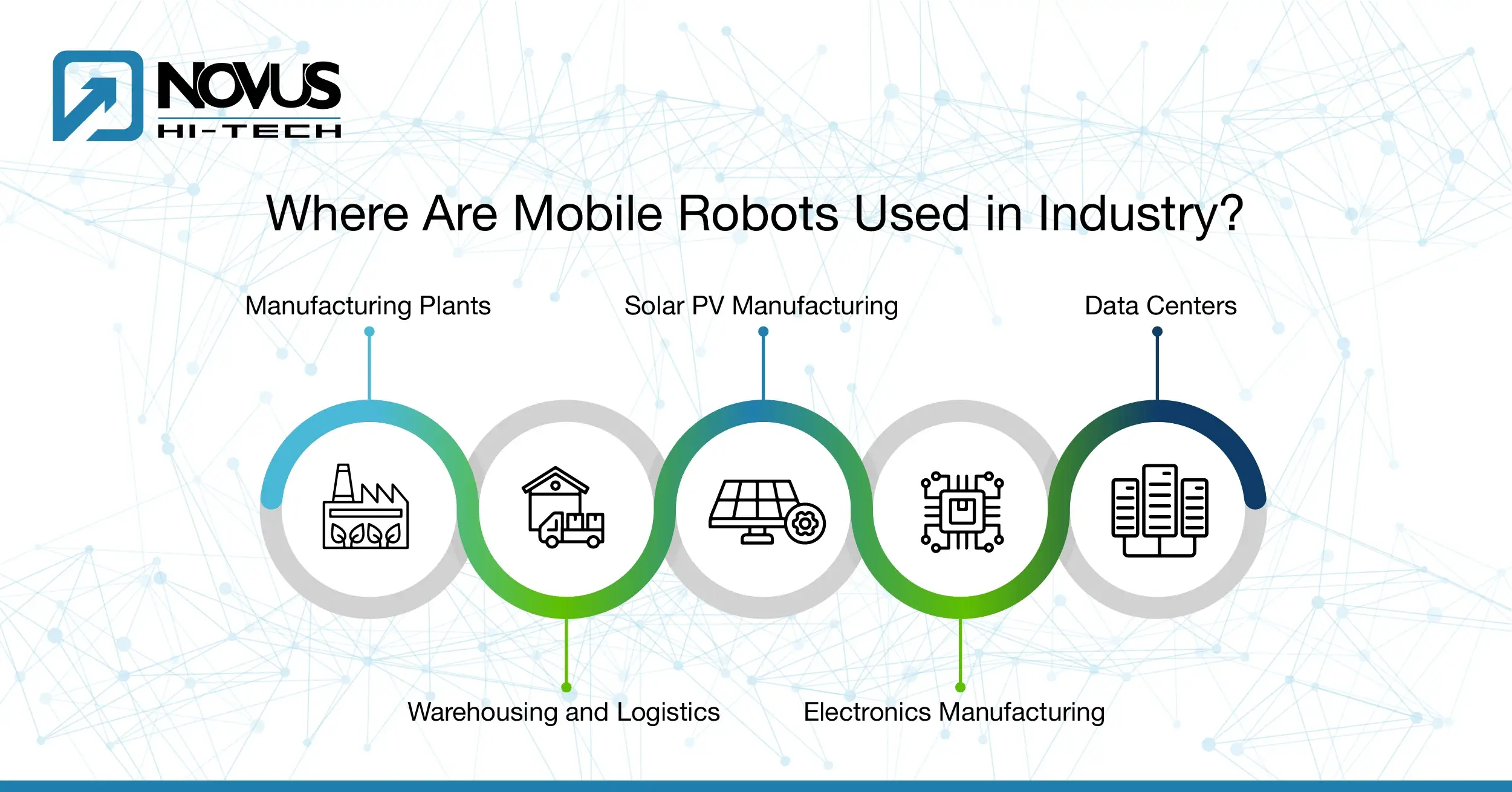
Mobile robots are increasingly deployed across industries where efficient internal logistics and material movement are critical.
Manufacturing Plants
Factories deploy mobile robots to automate internal logistics operations including:
- assembly line material supply
- component transportation
- finished goods movement
- production line replenishment
Warehousing and Logistics
Mobile robots are widely used in warehouse automation for:
- order fulfillment
- pallet transportation
- goods-to-person systems
- internal inventory movement
Solar PV Manufacturing
Solar manufacturing environments require highly controlled cleanroom conditions. Mobile robots support:
- wafer transfer automation
- contamination-free material movement
- cleanroom logistics operations
Electronics Manufacturing
Electronics production facilities deploy mobile robots for precision logistics including:
- component transportation
- cleanroom material handling
- production line supply
Data Centers
Modern hyperscale data centers operate on a massive scale and require efficient infrastructure management.
Mobile robots are increasingly being explored to support operations such as:
- transporting server racks and IT equipment
- spare parts logistics across facilities
- assisting technicians within large server halls
- infrastructure inspection and monitoring
- automating repetitive logistics workflows
As cloud computing, artificial intelligence infrastructure, and hyperscale data centers continue to expand globally, robotics is expected to play a key role in improving data center operational efficiency.
Robotics as a Service enables data center operators to deploy automation without large upfront investment while ensuring continuous system upgrades and maintenance.
Which Mobile Robots Are Used in RaaS Deployments?
Two major mobile robotics technologies are commonly used in Robotics as a Service deployments.
Automated Guided Vehicles (AGVs)
AGVs operate using predefined navigation routes supported by technologies such as:
- magnetic tape navigation
- QR code guidance
- reflector navigation
- laser guidance systems
AGVs are ideal for structured industrial environments where routes remain consistent.
Autonomous Mobile Robots (AMRs)
Autonomous Mobile Robots represent the next generation of mobile robotics. These robots use sensors, artificial intelligence, and real-time mapping to navigate dynamically. AMR capabilities include:
- dynamic route planning
- obstacle detection and avoidance
- real-time mapping
- intelligent fleet coordination
AMRs are particularly suited for dynamic environments such as warehouses and smart factories.
The Role of Fleet Management in Robotics as a Service
The efficiency of mobile robotics systems depends heavily on intelligent fleet management platforms.
Fleet management software enables:
- coordination of multiple robots
- traffic management within facilities
- route optimization
- predictive maintenance
- real-time performance monitoring
These capabilities ensure reliable and efficient automated operations.
How Novus Hi-Tech Enables Robotics as a Service
Novus Hi-Tech delivers managed RaaS deployments for manufacturers and logistics operators across India and international markets. Our solutions combine AMR and AGV hardware with intelligent fleet orchestration, ERP/WMS integration, and a full-lifecycle service model so your team operates the robots, not the infrastructure behind them.
We work across manufacturing, warehousing, solar PV production, electronics, and data centre environments where internal logistics performance directly affects throughput.
Clients typically deploy within 8–12 weeks of scoping, with zero upfront hardware cost under our subscription model. Maintenance, calibration, software updates, and performance monitoring are included.
Download our RaaS brochure for deployment examples, fleet configurations, and pricing guidance.
The Future of Robotics as a Service
Service-based robotics models are expected to play a central role in the future of industrial automation.
As industries adopt Industry 4.0, smart factories, and AI-driven logistics systems, Robotics as-a-Service will become a critical enabler of scalable automation.
Organizations that adopt RaaS today will gain advantages in:
- operational efficiency
- productivity improvement
- automation scalability
- long-term competitiveness
Conclusion
Ss RaaS matures from a niche option to the standard deployment model for mobile robots, the question for operations teams is no longer whether to automate — it’s which service structure fits your throughput requirements, growth timeline, and integration environment. If you’re at that decision point, our team can walk you through what a deployment scoped to your facility would look like.