
Introduction: Why 2026 Is Not “Just Another Robotics Year”
Every few years, the automation industry claims a “breakthrough year.” Most of the time, it’s marketing optimism. But 2026 is different—and people working on factory floors know it.
The conversation around Robotics Trends has shifted. It’s no longer about whether robots can do the job. The real questions now are: How fast can they adapt? How safely can they work around people? And how easily can businesses scale them without burning capital?
There are three influential factors driving this development across manufacturing and distribution centers globally, with AMR’s (Autonomous Mobile Robots), AGV’s (Automated Guided Vehicles), and the rise of Robotics-as-a-Service (RaaS) all working together to transform the way organizations plan, finance and deploy automation at scale throughout their enterprises.
1. Autonomous Mobile Robots Are Making Layouts Irrelevant
A few years ago, changing a factory layout meant weeks of reprogramming. In 2026, that assumption no longer holds.
AMRs don’t care much about fixed layouts. They move based on what’s happening right now, not what was designed six months ago.
Navigating Real, Messy Environments
Factories are rarely clean or predictable. People walk through aisles. Pallets shift. Temporary storage pops up. AMRs handle this reality far better than traditional systems because they’re designed to react, not follow.
Where AMRs Are Actually Being Used
Most AMRs today are not doing flashy tasks. They’re quietly moving components between workstations, feeding production lines, and supporting warehouse picking operations. And that’s exactly why they matter. These small, continuous movements add up to massive efficiency gains over time.
2. Automated Guided Vehicles Still Win on Precision
There’s a misconception that AMRs are replacing Automated guided vehicles (AGVs). That’s not happening. In fact, AGVs are more relevant than ever—just in the right environments.
When Predictability Beats Flexibility
In high-volume facilities with stable layouts, AGVs are extremely effective. Their fixed routes reduce decision-making complexity and ensure repeatable performance, which is exactly what some industries need.
Heavy Manufacturing Still Depends on AGVs
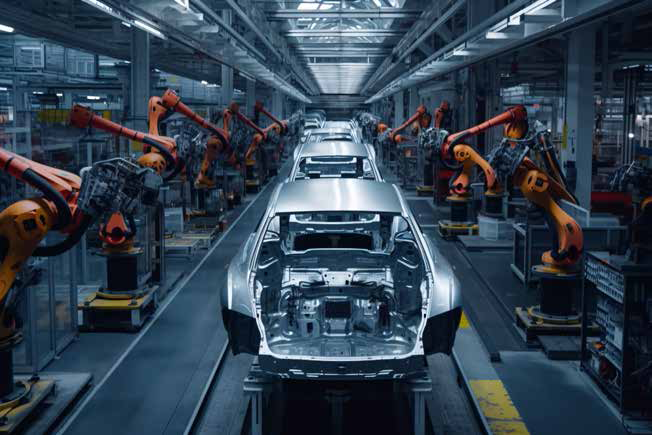
Automotive plants and heavy manufacturing lines continue to rely on AGVs for moving large loads safely and consistently. These environments value precision over adaptability, and AGVs deliver that reliably.
3. Hybrid AGV–AMR Fleets Are Becoming the Norm
One of the clearest Robotics Trends in 2026 is this: companies are done arguing about AGVs versus AMRs.
They’re using both.
Different Robots for Different Jobs
Fixed routes? AGVs. Dynamic tasks? AMRs. The smartest facilities don’t force one solution everywhere. They assign the right level of autonomy to each workflow.
One Control Layer, Not Two Systems
What makes hybrid fleets work is unified fleet management. Operations teams want a single dashboard, not fragmented control systems. This shift toward centralized orchestration is enabling mixed fleets to run smoothly.
4. Robotics-as-a-Service Is Changing How Automation Gets Approved
Many automation projects used to die in boardrooms—not on factory floors. Cost was the main reason.
Robotics-as-a-Service (RaaS) is changing that conversation.
Less Upfront Risk, Faster Decisions
Instead of committing large capital budgets, companies can now subscribe to robotics systems. This reduces financial risk and makes it easier to test automation without long-term lock-ins.
Scaling Without Fear
RaaS also makes scaling less intimidating. If a pilot works, expansion is simpler. If it doesn’t, companies can pivot without sunk-cost anxiety.
5. AI Is Making Robots Less Predictable—and That’s a Good Thing
Predictability used to be the goal. In 2026, adaptability matters more.
Smarter Perception, Better Decisions
AI-driven perception allows robots to understand their surroundings instead of blindly reacting. Machine vision systems now handle variations in lighting, object placement, and movement far better than earlier generations.
From Reactive to Predictive
Robots are starting to anticipate problems—congestion, delays, even maintenance needs. This shift toward predictive behavior is subtle but powerful, especially in large-scale operations.
6. Robotics Platforms Are Replacing One-Off Deployments
Standalone robots create more problems than they solve once scale enters the picture.
Platforms Built for Growth
Modern robotics deployments are increasingly platform-based. That means fleet analytics, traffic control, task allocation, and system health monitoring all live in one ecosystem.
Integration Is No Longer Optional
Robots must now integrate with warehouse systems, manufacturing execution systems, and enterprise software. Interoperability has moved from “nice to have” to “deal breaker.”
7. Safety Is Finally Being Designed In—Not Added Later
As robots move closer to people, safety expectations have risen sharply.
Shared Spaces Are the New Normal
Human–robot collaboration is no longer experimental. Advanced sensing, dynamic speed control, and real-time monitoring allow robots to operate safely without isolating them behind cages.
Compliance Without Compromise
Functional safety standards are shaping how robots are built and deployed. In 2026, safety is no longer a constraint—it’s part of system intelligence.
8. Robotics Is Becoming Industry-Specific, Not Generic
One-size-fits-all robotics doesn’t scale well.
Manufacturing Robotics Is Getting Specialized
Electronics, automotive, and heavy industries now demand robotics solutions aligned with their unique processes. Customization is no longer a premium—it’s expected.
Warehousing Robotics Is Built for Throughput
In warehouses, speed and accuracy dominate. Robotics systems here are designed for rapid order fulfillment, peak demand handling, and constant layout changes.
9. Energy Efficiency Is a Real Design Priority Now
Energy costs are no longer ignored in automation planning.
Smarter Batteries, Longer Uptime
Modern robots use optimized battery management to reduce charging downtime. This improves both productivity and equipment lifespan.
Sustainability Is Measurable
Companies are tracking energy usage and emissions at the system level. Energy-efficient robotics supports broader sustainability goals without compromising performance.
10. Robotics Is Becoming Core Infrastructure, Not a Side Project
This might be the most important shift of all.
Robotics Inside Smart Factory Architectures
Robots are now tightly integrated with Industry 4.0 systems—data platforms, analytics tools, and digital twins. This allows real-time visibility and continuous optimization.
Moving Beyond Pilot Projects
In 2026, successful companies don’t stop at pilots. They scale robotics across departments, facilities, and regions—treating automation as long-term infrastructure.
Conclusion: What the Next Phase of Robotics Really Looks Like
The primary lesson learned from today’s robotic trends is that the industry has shifted away from the development of robotic systems and moved toward creating integrated robotic solutions.
Unlike the tools of AMRs, AGVs and RaaS, the real benefit of implementing these technologies occurs when organizations use them to develop their own innovative business processes.
When companies take a holistic and forward-thinking approach to developing their robotic systems they can create highly developed and adaptive operational capabilities.
Novus Hi-Tech assists businesses in the transition from partially automated to fully automated operations by providing state-of-the-art robotic systems that will provide comprehensive support for future growth. These companies are critical to the transition of enterprise operations to a central and integrated approach.