



Autonomous Mobile Robots (AMRs) have become one of the most transformative technologies in modern intralogistics. As factories and warehouses push toward higher efficiency, safer operations, and Industry 4.0 readiness, AMRs are now replacing manual material movement at scale.
Yet with dozens of AMR variants available today, one question often causes confusion:
“What are the different types of AMRs — and which one is right for my facility?”
This comprehensive guide breaks down every major AMR category, how each one works, where it fits best, and how to choose the right type for your application.
What Are AMRs? A Quick Refresher
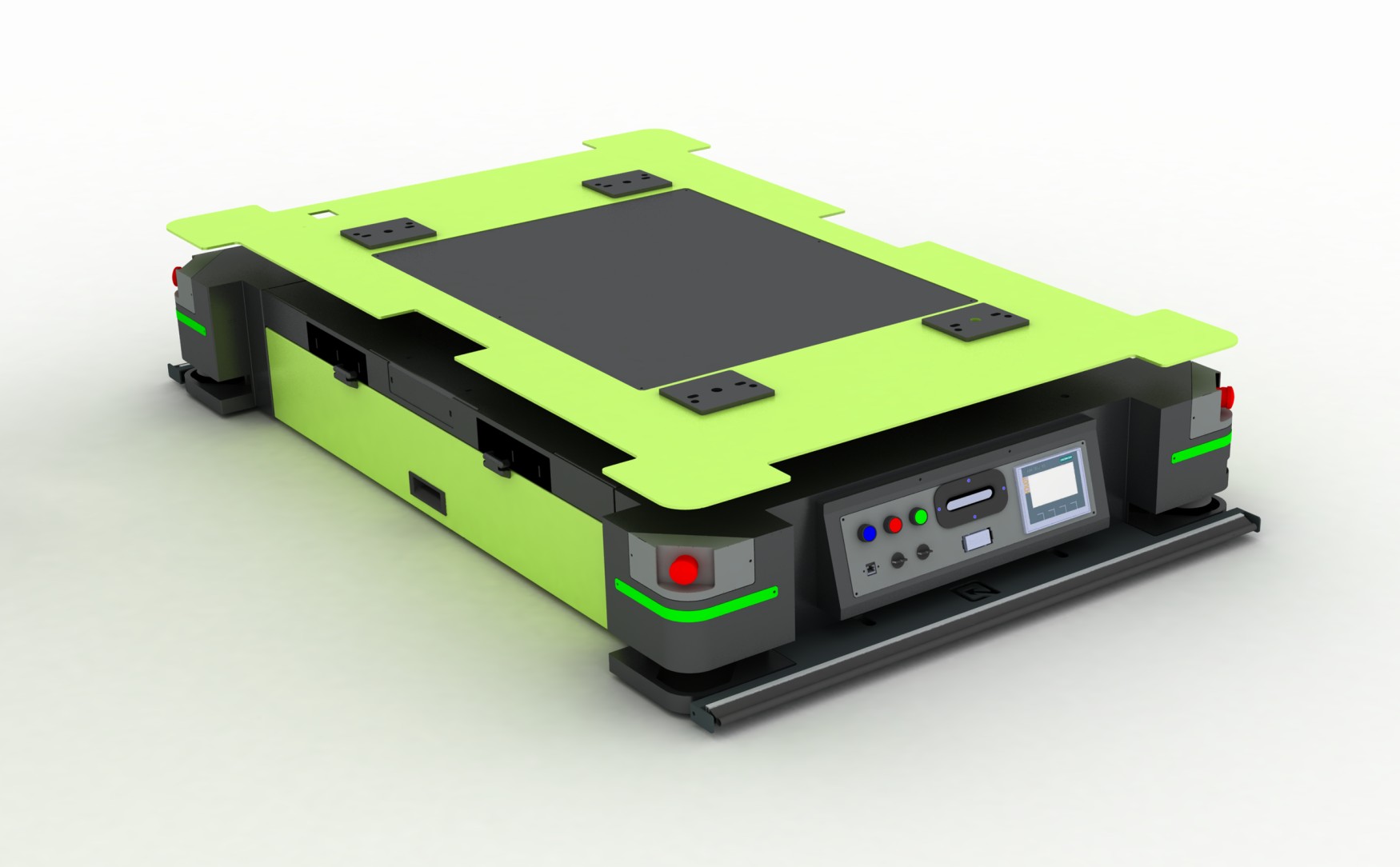
AMRs (Autonomous Mobile Robots) are intelligent, self-navigating robots equipped with sensors, 2D/3D LiDAR, cameras, and AI-based algorithms that help them understand their environment, avoid obstacles, and move safely inside factories and warehouses — without requiring physical guidance infrastructure.
Unlike AGVs (which follow fixed paths), AMRs dynamically plan routes, bypass blockages, and adapt to daily operational changes.
Discover how the right Autonomous Mobile Robot (AMR) solutions drive business efficiency.
Download our free eBook for expert insights and trends!
What Are the Main Types of AMRs? (Quick Answer)
There are eight widely used AMR categories in industrial settings:
- Forklift AMRs
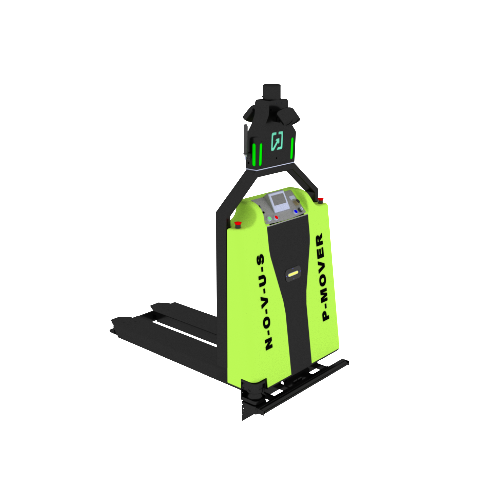
- Pallet Truck AMRs
- Tugger AMRs
- Conveyor-Top AMRs
- Shelf-Carrying AMRs (Goods-to-Person)
- Sorting AMRs
- Collaborative AMRs
- Custom/Hybrid AMRs
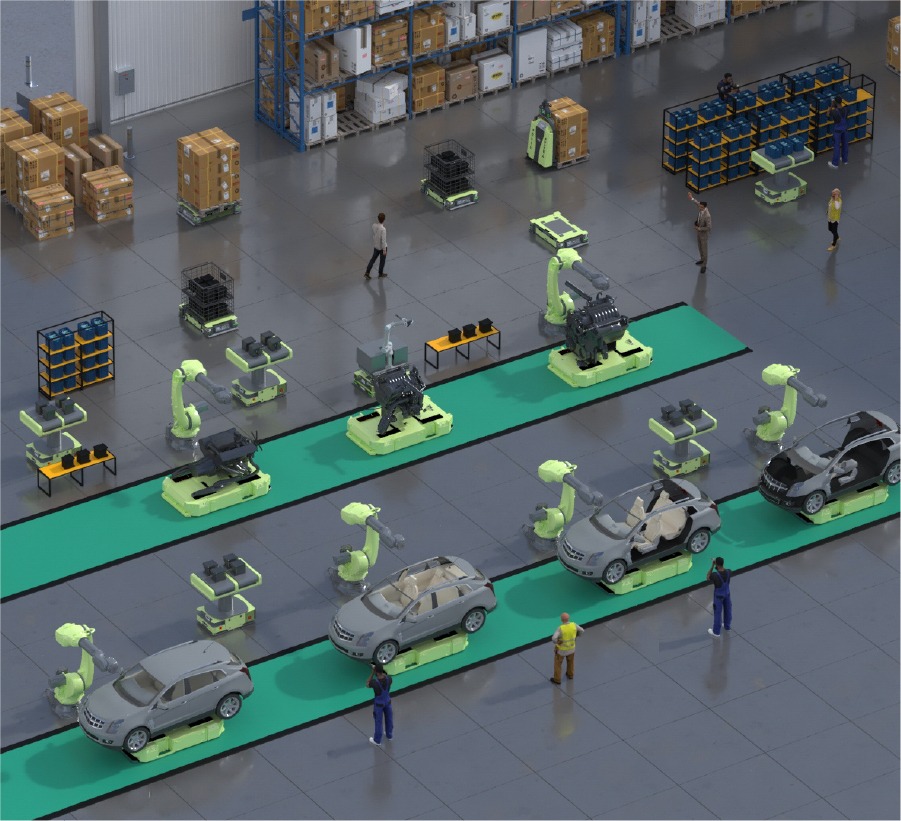
Each type is engineered for a specific intralogistics challenge — from pallet movement to goods picking, kitting, sortation, line-side replenishment, and full-facility automation.
Here is the detailed breakdown.
-
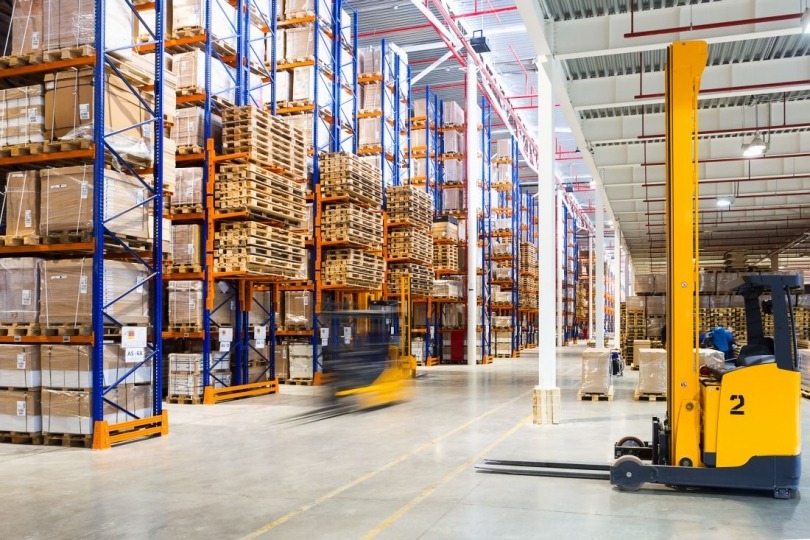
Forklift AMRs (Autonomous Forklifts)
What They Do
Forklift AMRs autonomously lift and transport pallets from ground level to height — including racks, conveyors, and flow stands.
Key Capabilities
- Lift height: 2m to 6m+
- Payload: 1,000–2,500 kg
- Pallet detection using 3D vision
- Millimeter-accurate positioning
- Compatible with high-bay storage
Where They Fit Best
- Receiving → storage putaway
- Storage → production replenishment
- High-density warehouses
- Automotive and FMCG distribution
- Multi-shift operations
Why Choose a Forklift AMR
- Eliminates manual forklift dependence
- Perfect for tall racking environments
- Consistent, safe pallet handling
-
Pallet Truck AMRs (Ground-Level Pallet Movement)
What They Do
Move pallets at ground level between production zones, staging areas, conveyors, QC, dispatch, and storage.
Key Capabilities
- Payload: 1,000–2,000 kg
- Ground-level transport only
- Compact design for narrow aisles
- Fast acceleration for short routes
Where They Fit Best
- Production line feeding
- Receiving → inbound QC
- Finished goods movement
- Cross-department pallet flow
Why Choose a Pallet Truck AMR
- Most common AMR type
- Ideal for fast, repetitive, short-distance movement
- Great for both factories and warehouses
-
Tugger AMRs (Towing Robots)
What They Do
Pull multiple carts/trolleys in a “train” configuration across the facility.
Key Capabilities
- Towing capacity: 500 kg to 3,000 kg
- Automated hitching/unhitching
- Supports long, multi-stop routes
Where They Fit Best
- Automotive kitting
- Milk-run replenishment
- Multi-SKU movement
- WIP (work-in-progress) transfer
- Gemba-style assembly flows
Why Choose a Tugger AMR
- Highest throughput per robot
- Ideal for multi-station deliveries
- Great for takt-based manufacturing
-
Conveyor-Top AMRs
What They Do
These AMRs have conveyor belts mounted on top to transfer bins, totes, or cartons automatically.
Key Capabilities
- Bi-directional conveyor movement
- Seamless transfer to fixed conveyors
- Ideal for lights-out transport
Where They Fit Best
- Packaging lines
- Finished goods transfer
- Automated storage systems
- E-commerce sortation
Why Choose Conveyor-Top AMRs
- Eliminates manual tote transfer
- Perfect for “conveyor gap” automation
- Smooth integration with AS/RS
-
Shelf-Carrying AMRs (Goods-to-Person Systems)
What They Do
Lift entire shelving units and bring inventory to stationary picking stations — transforming warehouse picking productivity.
Key Capabilities
- Carry 300–1,000 kg shelving pods
- Real-time inventory slotting
- 3–4× increase in picker productivity
Where They Fit Best
- E-commerce fulfillment centers
- Spare parts warehouses
- Health & pharma distribution
- Any operation with 1,000+ SKUs
Why Choose Shelf-Carrying AMRs
- Minimizes worker walking time
- Enables high-density storage
- Delivers maximum order picking speed
-
Sorting AMRs (Parcel / Tote Sortation)
What They Do
Identify, route, and sort parcels or totes to designated zones or chutes.
Key Capabilities
- Up to 1,000 items/hour per robot
- Built-in barcode/QR scanning
- AI-based dynamic sorting
Where They Fit Best
- Courier and parcel hubs
- E-commerce returns
- Cross-dock operations
- 3PL distribution centers
Why Choose Sorting AMRs
- Fastest way to scale sortation without conveyor systems
- Great for peak season handling
-
Collaborative AMRs (CoBots on Wheels)
What They Do
Share working spaces with humans and support them in movement-heavy tasks.
Key Capabilities
- 360° safety sensors
- Dynamic speed adaptation
- Configurable payload platforms
Where They Fit Best
- Mixed-traffic environments
- Factories with manual sub-assembly
- Operations needing safe human-robot coexistence
Why Choose Collaborative AMRs
- Excellent for flexible, human-centric workflows
- Ideal for factories beginning their automation journey
-
Custom / Hybrid AMRs
What They Do
Tailored robots designed for unique loads, environments, and workflows.
Examples
- AMRs with robotic arms
- Coil-handling platforms
- Cleanroom-rated robots
- Outdoor autonomous tuggers
- Heavy-load platforms (10–50 tons)
Where They Fit Best
- Heavy manufacturing
- Semiconductor cleanrooms
- Steel, metal, chemical plants
- Multi-building industrial campuses
Why Choose Hybrid AMRs
- Solve high-complexity, high-value problems
- Ideal when standard AMRs cannot support unique operations
How to Choose the Right AMR Type
Ask these questions:
-
What are you moving?
Pallets → Forklift or Pallet Truck
Carts → Tugger
Totes → Conveyor-Top
SKU inventory → Shelf-Carrying
Parcels → Sorting
-
What’s the weight?
<500 kg → Shelf/Sorting/Conveyor AMR
500–2,000 kg → Pallet Truck
2,000+ kg → Forklift or Heavy-Duty AMR
-
What environment do you operate in?
High-density warehouse → Shelf-Carrying
Mixed human traffic → Collaborative AMR
Cold storage → Pallet Truck with cold rating
Hazardous areas → Explosion-proof AMRs
-
How dynamic is your workflow?
If workflows shift weekly/monthly → AMRs
If everything is fixed for years → AGVs
-
What’s your throughput requirement?
Long multi-stop routes → Tugger
High pick rates → Shelf-Carrying
Fast transit between stations → Conveyor-Top
Discover how the right Autonomous Mobile Robot (AMR) solutions drive business efficiency.
Download our free eBook for expert insights and trends!
A Quick Comparison Table of AMR Types
| AMR Type | Payload Capacity | Lift? | Best Application | Key Advantage |
|---|---|---|---|---|
| Forklift AMR | 1,000–2,500 kg | Yes (2–6m) | Putaway, replenishment | High-bay automation |
| Pallet Truck AMR | 1,000–2,000 kg | No | Ground-level pallet flow | Most versatile |
| Tugger AMR | 500–3,000 kg | No | Multi-stop routes | Highest throughput |
| Conveyor-Top AMR | 50–200 kg (totes) | No | Conveyor linking | Fully automated handoff |
| Shelf-Carrying AMR | 300–1,000 kg | Yes (under-shelf lift) | Goods-to-person | Best for picking |
| Sorting AMR | Light loads | No | Parcel sorting | Scalable, fast |
| Collaborative AMR | 50–500 kg | No | Human-robot zones | Safest mixed operation |
| Custom/Hybrid AMR | Up to 50 tons | Optional | Heavy/unique loads | Configurable for any use case |
Conclusion
AMRs are not one-size-fits-all.
Each AMR category addresses a unique intralogistics challenge — from pallet handling and kitting to order picking and sortation. The right AMR type can dramatically improve safety, accuracy, and throughput, while enabling scalable, data-driven automation.
For most modern facilities:
- Pallet Truck AMRs offer the best starting point
- Tugger and Forklift AMRs unlock higher throughput
- Shelf-Carrying AMRs transform warehouse picking
- Sorting AMRs deliver unmatched peak-season resilience
A thoughtful, workflow-first evaluation ensures you invest in the AMR type that delivers maximum ROI.
How Novus Hi-Tech Can Help
Novus Hi-Tech is a global pioneer in AI-driven robotics and AMR/AGV technologies — designed and built indigenously in India. With:
- 150+ patents
- 1,200+ autonomous mobile robots deployed
- 8 million+ km of autonomous travel
- 100+ enterprise customers
…we help factories and warehouses move from manual transport to intelligent, reliable, and scalable automation.
If you’re exploring AMR types for your facility, our team can map your workflows, recommend the right AMR mix, and design a complete automation blueprint.
📩 Reach our industrial automation specialists: marketing@novushitech.com
Let’s build the next generation of smart intralogistics — together.