
Augmented Worker
AI-Powered Augmented Worker System for Smart Assembly & Manufacturing
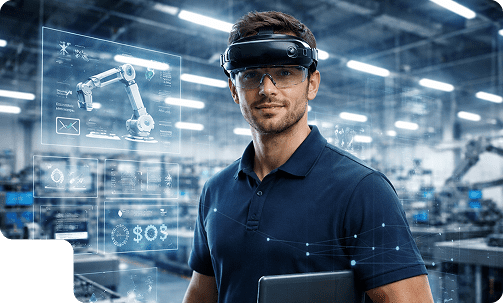
AssemblyGPT™ is a commercially deployable AI-driven hardware–software platform designed to empower frontline workers with real-time intelligence. It integrates AI-powered monitoring, visual inspection oversight, and operational analytics to improve precision, efficiency, safety, and traceability across assembly and manufacturing facilities.
Trusted by Global Leaders


Critical Monitoring in Assembly & Manufacturing Facilities
AssemblyGPT™ is a commercially deployable AI-driven hardware–software platform designed to empower frontline workers with real-time intelligence. It integrates AI-powered monitoring, visual inspection oversight, and operational analytics to improve precision, efficiency, safety, and traceability across assembly and manufacturing facilities.
Ensuring Precision
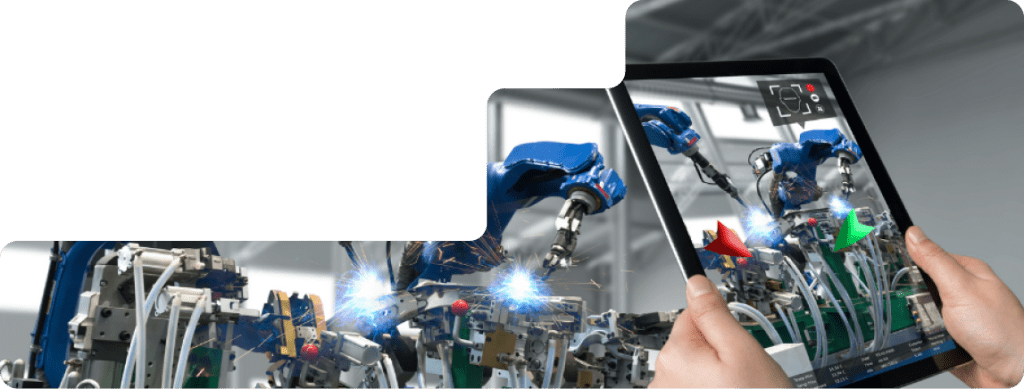
Process Adherence Monitoring
- Real-time monitoring of SOP compliance
- Detection of skipped steps, incorrect sequences, and deviations
- Timestamped, workstation-level traceability
Business Outcome Line:
Enforces standardized execution and reduces human-error variability.
Visualizing Quality
Automatic Visual Inspection Oversight
- AI-based detection of assembly defects and errors
- Verification of component placement and orientation
- Automated quality issue flagging for corrective action
Business Outcome Line:
Reduces rework, scrap, and warranty risk.
Efficiency at Every Station
Turnaround Time (TAT) Tracking
- Station-wise cycle time measurement
- Bottleneck identification across the line
- Shift-wise and operator-wise performance analytics
Business Outcome Line:
Improves throughput and cycle time predictability.
Optimizing Workforce
Operator Efficiency & Utilization Oversight
- Operator activity and idle-time monitoring
- Skill-based performance insights
- Data-driven workforce planning
Business Outcome Line:
Improves labor allocation and productivity.
Streamlining Production
Line Utilization & Efficiency Monitoring
- End-to-end line performance visualization
- Real-time utilization dashboards
- AI-driven throughput optimization recommendations
Business Outcome Line:
Maximizes asset utilization and production ROI.
Process Adherence Monitoring

Real-time monitoring of SOP compliance

Detection of skipped steps, incorrect sequences, and deviations

Timestamped, workstation-level traceability
Business Outcome Line
Enforces standardized execution and reduces human-error variability.
System Architecture & Deployment Model
AssemblyGPT™ is delivered as a modular enterprise platform integrating AI analytics, industrial hardware, and secure deployment infrastructure.
System Components Include:
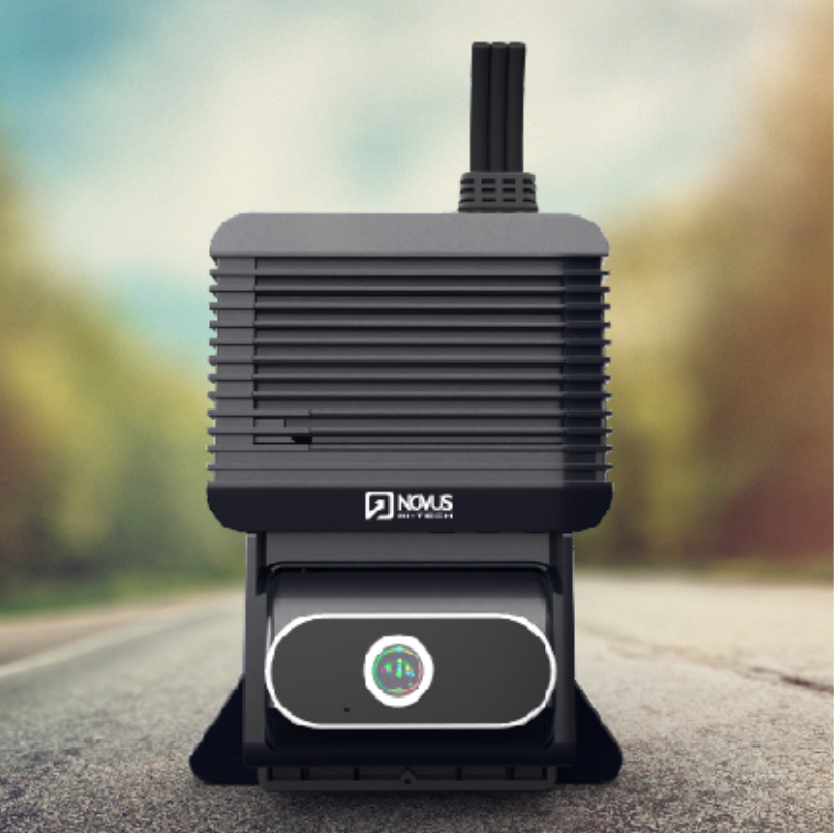
- Industrial-grade cameras
- Audio sensors (optional hardware bundle)
- AI-powered video and audio analytics engine
- Edge deployment capability
- On-Premise server deployment
- Private Cloud architecture
- Secure, compliance-ready data framework
AssemblyGPT™ supports Edge, On-Premise, and Private Cloud deployments to meet enterprise security and compliance standards.
Commercial Offering
AssemblyGPT™ is available as:
- Enterprise Hardware + Software System
- Annual Software License (SaaS / On-Prem / Private Cloud)
- Per Assembly Line Deployment
- Multi-Plant Enterprise Rollout
Implementation Includes:
- System configuration
- AI model training
- Line-level calibration
- Integration with manufacturing systems
- Deployment support
- Ongoing software updates
AssemblyGPT™ is a commercially available enterprise system designed for industrial deployment and compliant integration within manufacturing environments.

See AssemblyGPT™ in Action
Live AI-powered monitoring, intelligent insights, and augmented workforce execution in real manufacturing environments.
Play Video
Ordering & Enterprise Access
AssemblyGPT™ is available for enterprise deployment across assembly lines and manufacturing facilities.
Enterprise Pricing Available on Request
marketing@novushitech.com
Website Reference
www.novushitech.com
AssemblyGPT™ is an enterprise AI-powered augmented worker system designed for industrial environments. Deployment models, hardware configuration, and licensing structures are subject to enterprise agreement and technical feasibility assessment.

FAQ's
What are autonomous mobile robots?
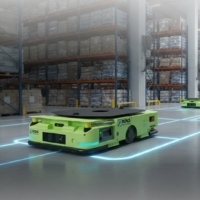
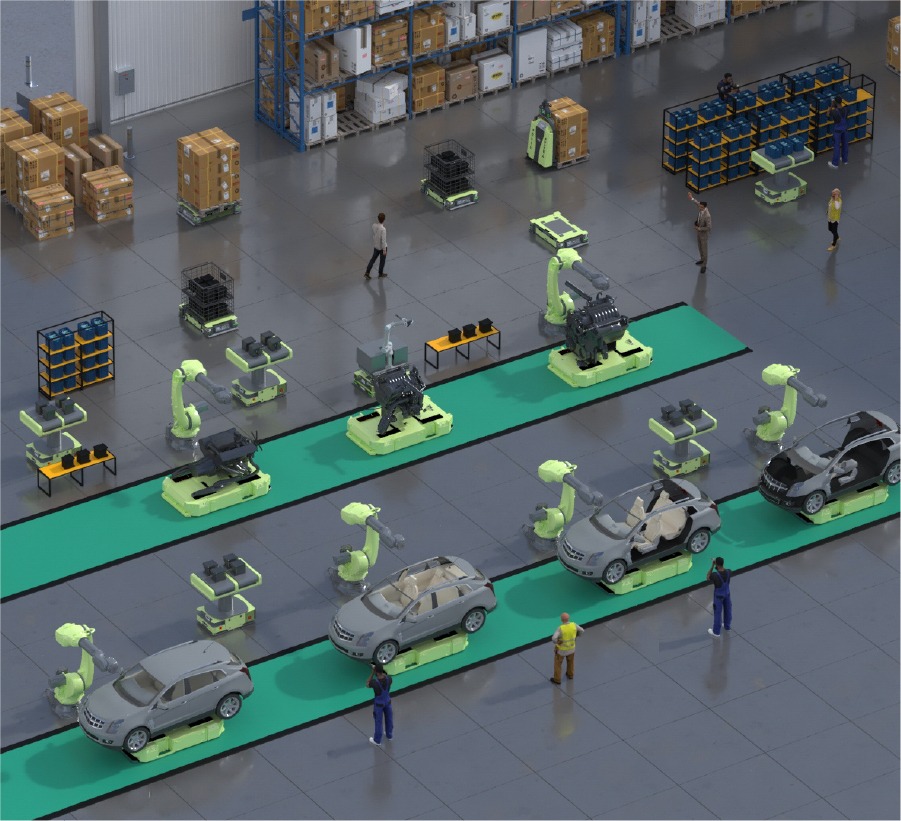
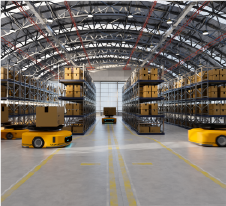
Autonomous Mobile Robots (AMRs) are smart, self-navigating machines designed to move materials from one place to another without needing fixed tracks, wires, or human guidance. Unlike traditional automation systems, AMRs understand their environment using sensors, cameras, and onboard software.
They don’t just follow a preset path — they make decisions in real time. If something blocks their way, they slow down, reroute, or stop safely. That ability to “think on the move” is what makes them so powerful in modern warehouses and manufacturing plants.
What are mobile robots used for?
Mobile robots are mainly used to move materials — but that’s just the beginning.
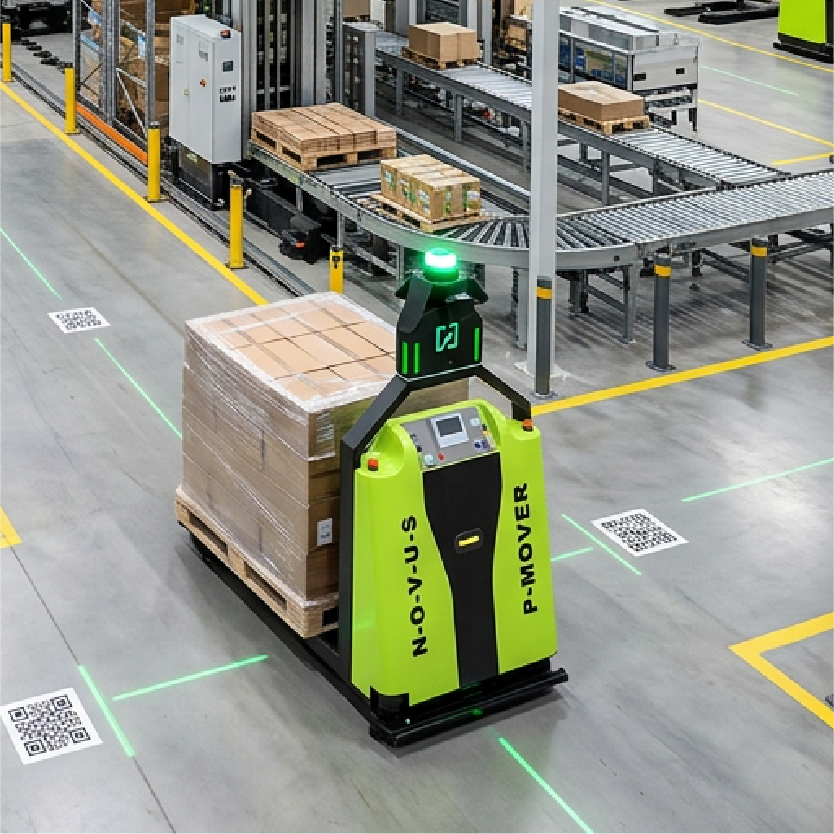
In manufacturing plants, they transport raw materials, finished goods, bins, pallets, and components between workstations. In warehouses, they assist with order picking, pallet transfers, and inventory movement. Some are even used in hospitals for medicine delivery or in airports for baggage handling.
The idea is simple: let robots handle repetitive internal logistics so people can focus on higher-value tasks that require judgment and skill.
What is the difference between AGV and AMR?
This is one of the most common questions — and the difference is actually quite practical.
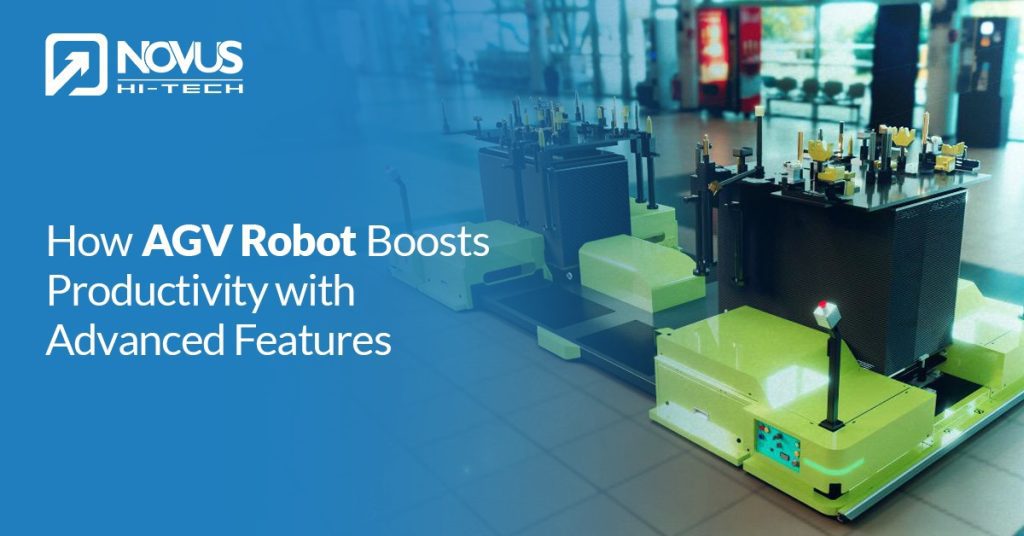
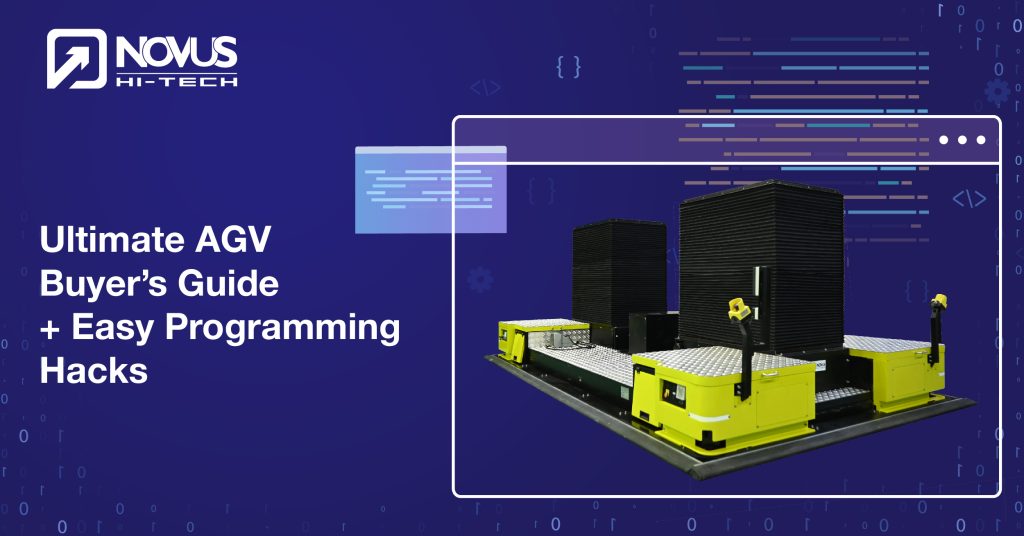
AGVs (Automated Guided Vehicles) follow fixed routes. They rely on physical guides like magnetic strips, wires, or QR codes embedded in the floor. If something blocks their path, they usually stop and wait.
AMRs, on the other hand, are far more flexible. They use advanced navigation systems (like LiDAR and SLAM technology) to map their surroundings and move dynamically. If there’s an obstacle, they calculate a new route on the spot.
In short:
● AGVs follow.
● AMRs think and adapt.
That flexibility makes AMRs more suitable for dynamic, fast-changing environments.
What is the cost of an autonomous mobile robot?
The cost of an autonomous mobile robot varies depending on its payload capacity, navigation technology, software features, and level of customization.
Entry-level AMRs can start in the range of ₹20–30 lakhs, while more advanced systems designed for heavier loads or complex integration can go significantly higher.
But here’s the bigger picture: companies don’t evaluate AMRs purely as a purchase cost. They look at return on investment — reduced labor dependency, improved productivity, lower operational errors, and 24/7 uptime. In many facilities, the ROI becomes visible within 18–24 months.
What are the key benefits of deploying autonomous mobile robots in a manufacturing facility?
Deploying AMRs changes how material flow works inside a plant.
Some of the biggest benefits include:
● Reduced manual handling: Less physical strain and lower safety risk.
● Improved productivity: Continuous, predictable material movement.
● Better space utilization: No need for fixed tracks or infrastructure.
● Scalability: You can add more robots as production grows.
● Real-time visibility: Integrated dashboards help monitor fleet performance.
More importantly, AMRs bring structure to internal logistics. They reduce chaos during peak production and make operations more predictable.
How do autonomous mobile robots improve supply chain efficiency?
Supply chains often slow down because of internal bottlenecks — not external ones.
AMRs help eliminate those bottlenecks by ensuring consistent material flow. They reduce waiting time between processes, improve coordination between departments, and minimize human-related delays.
When connected to a central fleet management system, AMRs also provide data insights — like route optimization, delivery frequency, idle time, and load patterns. That data helps managers fine-tune operations and reduce waste.
In simple terms: smoother internal movement leads to faster external delivery.
What makes Novus Autonomous Mobile Robots different from other AMR solutions?
What sets Novus Autonomous Mobile Robots apart is their focus on real industrial environments — not just lab-tested automation.
Novus AMRs are designed to operate reliably in high-traffic manufacturing floors, warehouses, and dynamic industrial spaces. They combine advanced navigation technology with strong engineering depth and local deployment support.
Instead of offering just a robot, Novus provides a complete ecosystem — including integration support, fleet management software, and real-world customization. The emphasis isn’t just on automation — it’s on operational impact.
And that difference shows in deployment stability, safety performance, and long-term scalability.