
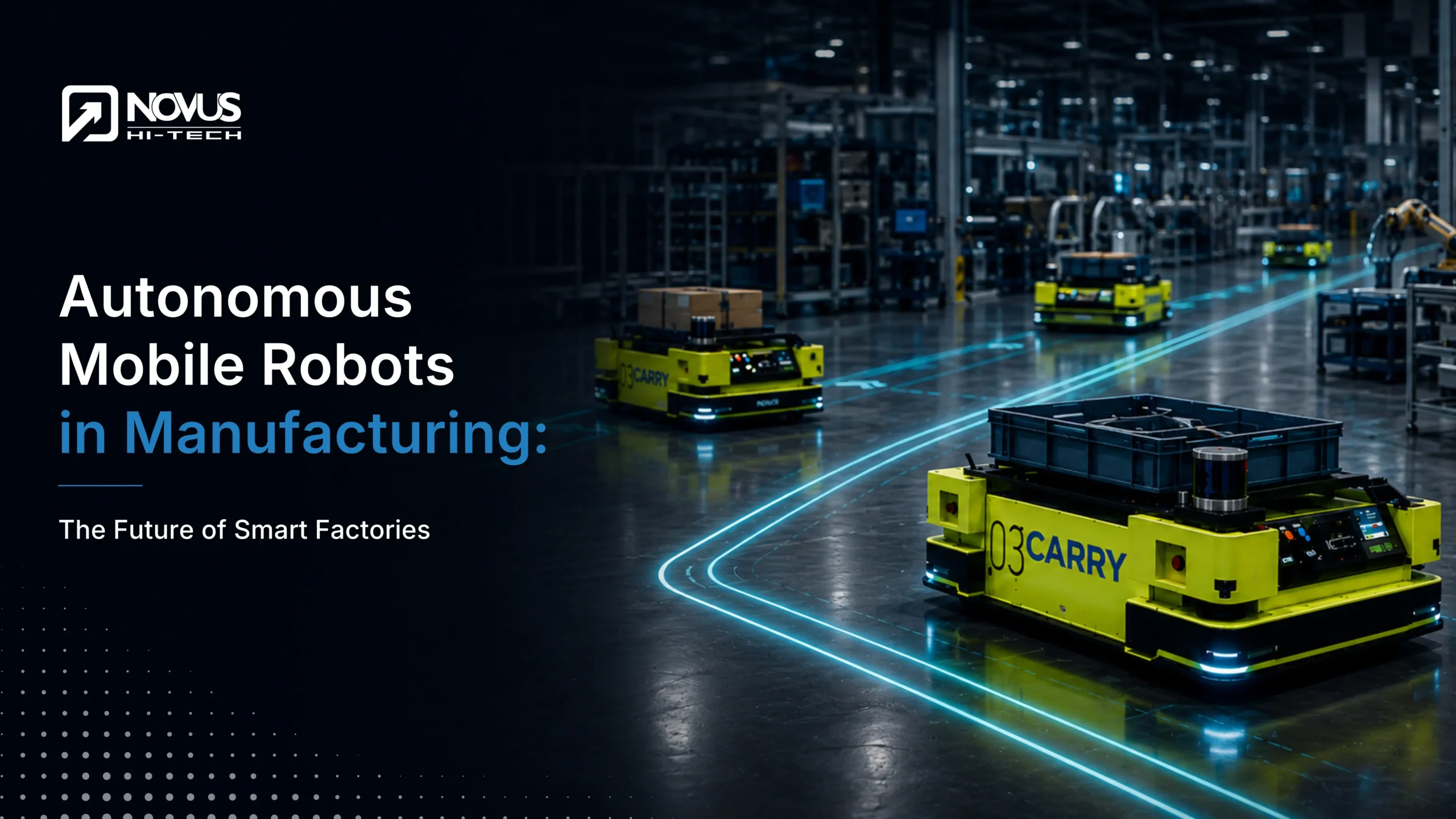
Autonomous mobile robots in manufacturing are changing how materials move across factory floors and with it, how entire operations are run.
Manufacturing today looks nothing like it did a decade ago. The most visible shift isn’t in machinery or software. It’s in movement. Rather than waiting for an operator to pick materials up and carry them forward, materials now flow evenly and consistently through the facility on their own schedule.
This move from a push system to a pull system has progressed largely due to the introduction of autonomous mobile robots. Not because they’re the loudest change on the floor — but because they quietly fix one of manufacturing’s oldest problems: how things move from one place to another.
The result isn’t just faster operations. It’s a fundamental shift from a rigid, regimented approach to one that is fluid and adaptable — where manufacturing happens in real time instead of following a predetermined process.
What are autonomous mobile robots?
Autonomous mobile robots in manufacturing refer to self-navigating equipment that transports goods throughout the manufacturing plant without fixed paths or human operation. Autonomous mobile robots (AMRs) incorporate cameras and sensors that allow them to sense their environment, artificial intelligence (AI) to interpret what they observe, and they map in real time (constantly updating their locations) as they move throughout the manufacturing operation. This allows manufacturers to be able to produce products in a quicker, more flexible manner and scale their business.
Also read: A Comprehensive Guide to Autonomous Mobile Robots (AMRs)
AMR vs Traditional Automation: What’s Changed?
If you walk through a manufacturing plant today, the difference isn’t loud or dramatic—but it’s there.
Things just move… better.
Materials don’t pile up waiting for someone to pick them up. There’s less chaos around movement. Fewer delays. And somehow, everything feels more connected.
That shift is largely because of autonomous mobile robots.
They’re not just replacing forklifts or manual handling. They’re quietly fixing one of the biggest problems factories have always had—how things move from one place to another.
At a glance, you might think, “Okay, it’s just another robot moving stuff.”
But it’s not that simple.
Traditional systems—like conveyors or AGVs—need structure. Fixed routes. Predictable layouts. Once something changes, they struggle.
AMR robotics doesn’t work like that.
These robots:
- Understand their surroundings
- Make decisions in real time
- Adjust without needing reprogramming
They don’t follow paths. They create them.
That’s why autonomous robots in factories feel less like machines and more like systems that actually respond.
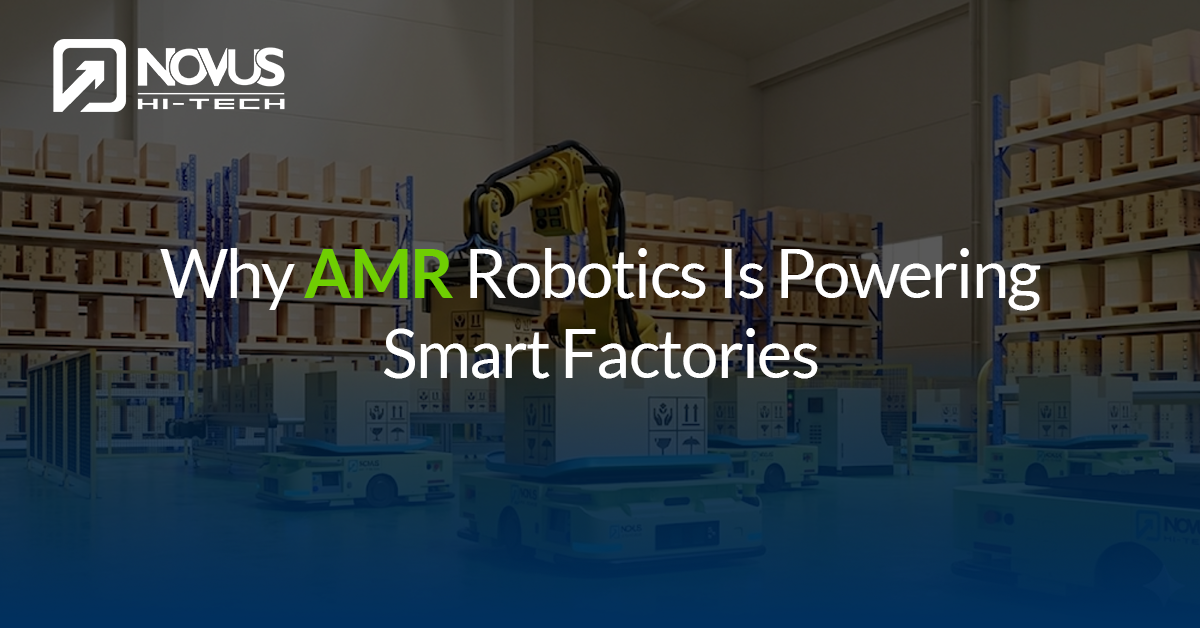
Why AMR Robotics Is Powering Smart Factories and Warehouses
Everyone talks about “smart factories & warehouses,” but what does that really mean?
It’s not just automation. It’s awareness.
Every time a warehouse robot completes a task, it generates data:
- Where did it slow down?
- Which route was inefficient?
- Where did congestion happen?
Over time, that data starts shaping how the factory operates.
So instead of just automating movement, mobile robotics automation starts improving it.
And that’s where things get interesting—because now the system is learning.
Ready to automate your material flow?
Book a Free AMR Consultation
The Role of Warehouse Robots in Manufacturing
Most inefficiencies in manufacturing aren’t in production—they’re in movement.
That’s where warehouse robots come in.
They handle:
- Raw material transport
- Movement between production stages
- Finished goods delivery
And they do it without fatigue, without delays, and without inconsistency.
Once that layer becomes stable, everything else starts running smoother. Production flows better. Planning becomes easier. Even small delays start disappearing.
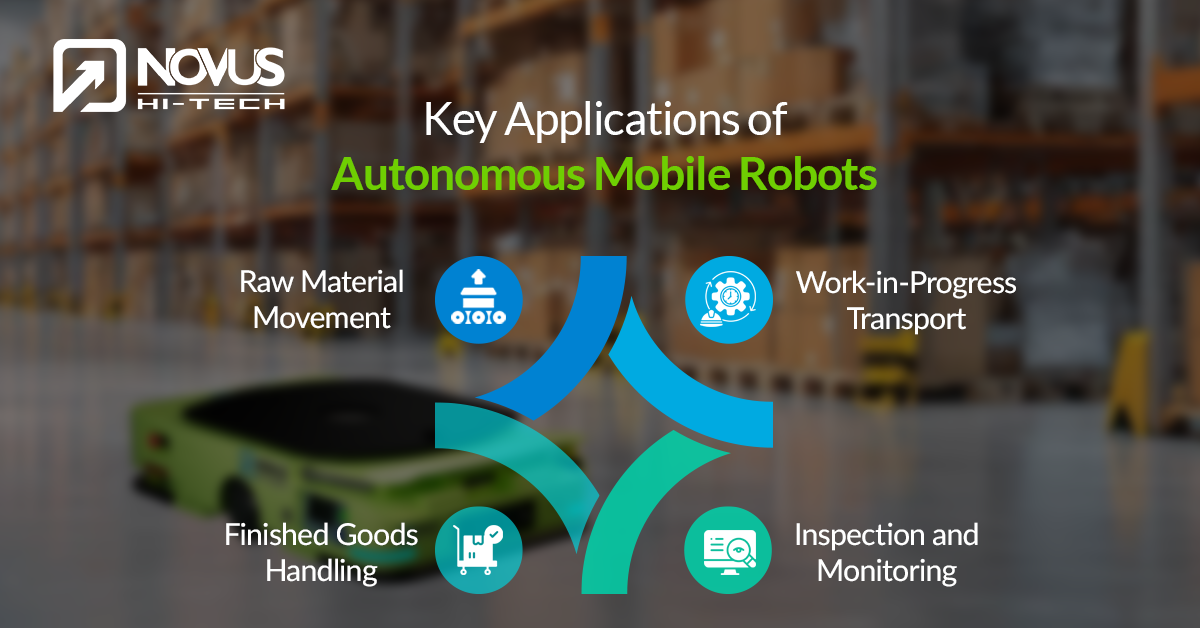
Key Applications of Autonomous Mobile Robots in Manufacturing
Let’s break it down simply.
Behind the scenes, industrial AMR systems combine a few key technologies:
1. Raw Material Movement
Instead of relying on GPS, robots build their own map of the factory as they move. They know where they are—and where everything else is.
2. Work-in-Progress Transport
They don’t just go from A to B. They figure out the best way to get there—based on what’s happening right now.
3. Finished Goods Handling
Something blocks the path? They rerouted. No waiting. No stopping the system.
4. Inspection and Monitoring
When multiple robots are involved, a central system coordinates everything so they don’t clash, overlap, or create bottlenecks.
Individually, each part is useful. Together, it feels seamless.
See how our AMRs operate in real-world environments → Watch Now
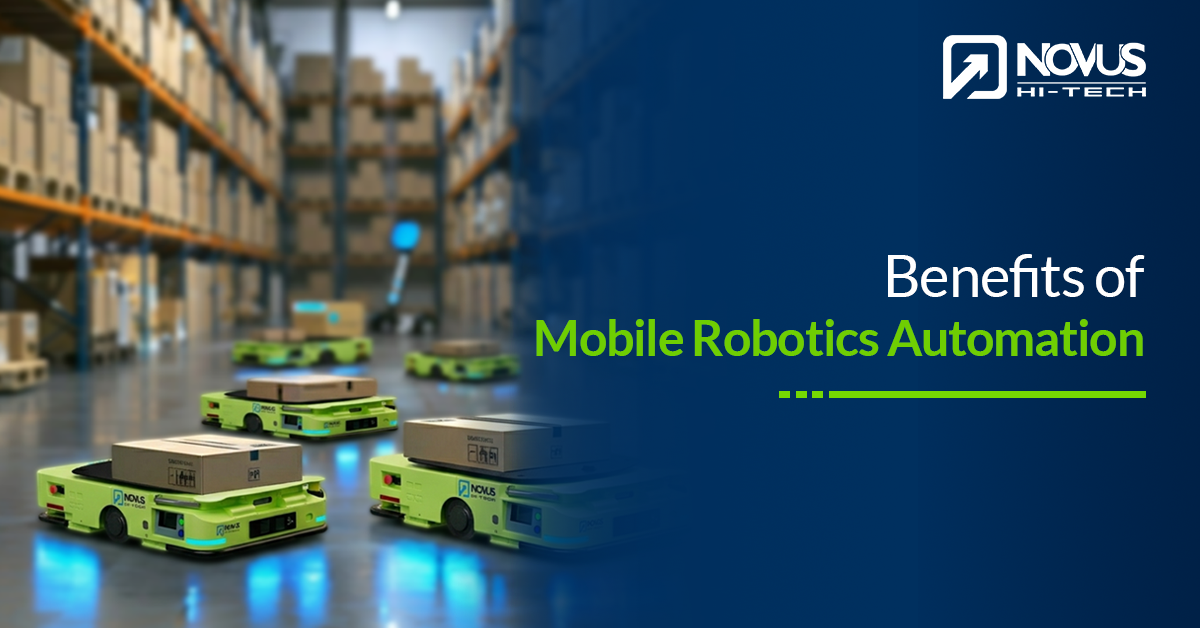
Benefits of Autonomous Mobile Robots in Manufacturing
This is where theory meets reality.
Productivity Improves (Quietly but Significantly)
Not because things are faster—but because they’re consistent. No delays, no dependency on manual movement.
Safety Gets Better
Less heavy lifting. Fewer repetitive tasks. Lower risk around material handling.
Flexibility Increases
Layouts change. Demand changes. The system adapts without needing major adjustments.
ROI Shows Up Sooner Than Expected
Because you’re not rebuilding infrastructure—you’re improving how it works.

Common Challenges in Deploying AMRs in Manufacturing
Most companies don’t start big.
They start by asking:
- Where are we losing time in movement?
- Where do delays keep happening?
- What tasks feel repetitive but critical?
That’s usually where autonomous mobile robots make the biggest difference first.
From there, it scales naturally.
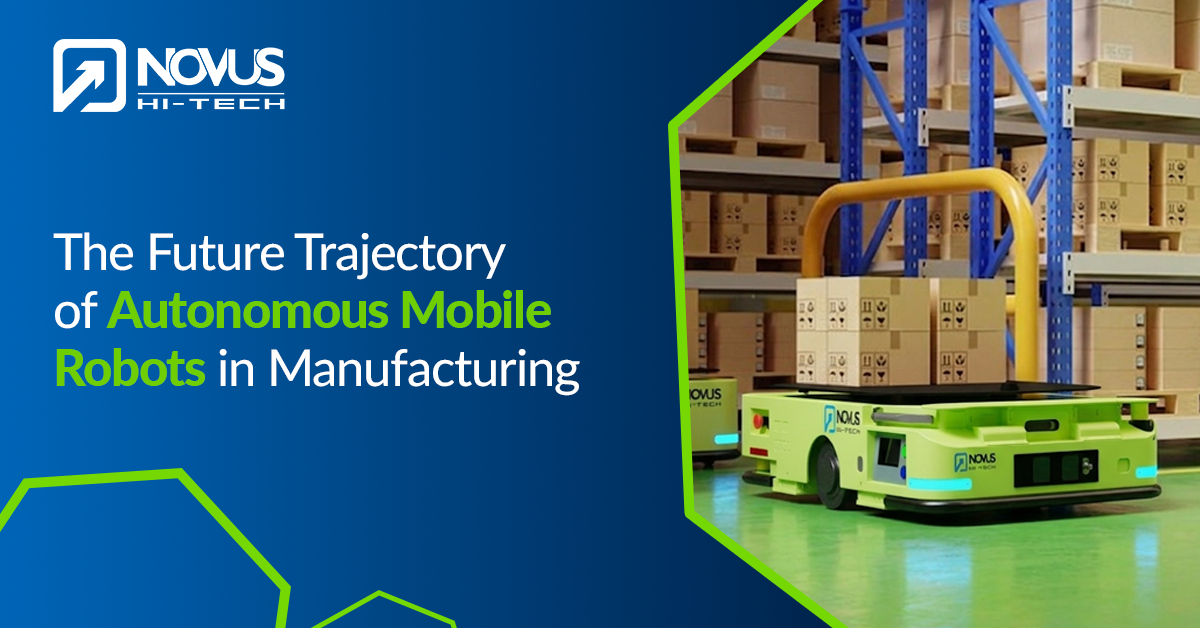
The Future Trajectory of Autonomous Mobile Robots in Manufacturing
Right now, robots are reacting.
Soon, they’ll start predicting.
We’re already moving toward systems that:
- Anticipate demand
- Optimize movement before issues happen
- Coordinate across multiple systems
So factories won’t just run efficiently—they’ll think ahead.
Final Thoughts: Autonomous Mobile Robots Are Not the Future, They Are the Present
Autonomous mobile robots aren’t some futuristic concept anymore.
They’re already here. Already working. Already improving how factories operate.
And once you start looking at your own workflows through that lens, it becomes hard to ignore how much of manufacturing still depends on inefficient movement.
That’s usually where the shift begins.
Ready to Explore What This Could Look Like for You?
If you’re evaluating automation, the easiest next step isn’t jumping into full deployment.
It’s understanding where it fits.
Talk to an expert
Explore AMR use cases