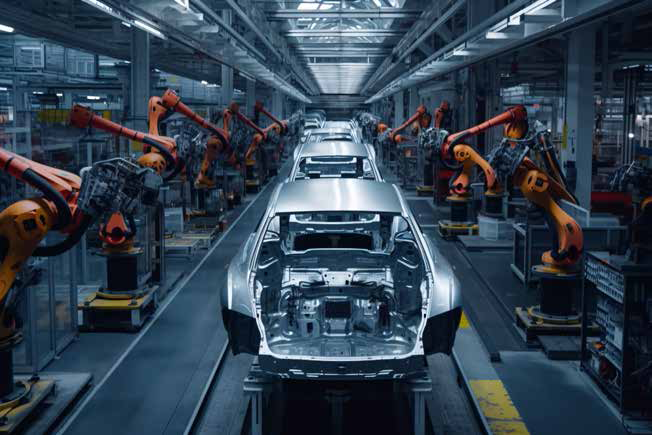

Most companies already understand that automation has proven effective.
Only a handful of them can justify why it should be implemented for operational growth, scalability, and long-term competitiveness at this very moment.
Within manufacturing plants, warehouses, and intralogistics environments, growth may often get checked due to operations failing to match the increasing demand. Manual handling, interrupted material flow, slow picking, and poor warehouse coordination eventually become silent growth bottlenecks.
This is the point at which advanced warehouse automation makes a difference.
At Novus Hi-Tech, we don’t view automation as mere machines or robots. Our intelligent RAAS (Robotics-as-a-Service) driven ecosystems are designed to help businesses scale rapidly, increase throughput, optimize movements, and create future-ready operations without sacrificing order to operational chaos.
The topic of automation has moved on from merely replacing the human workforce.
It refers to the development of highly synchronized warehouse environments that can support ongoing B2B growth.
Why ROI Is the Only Language That Matters
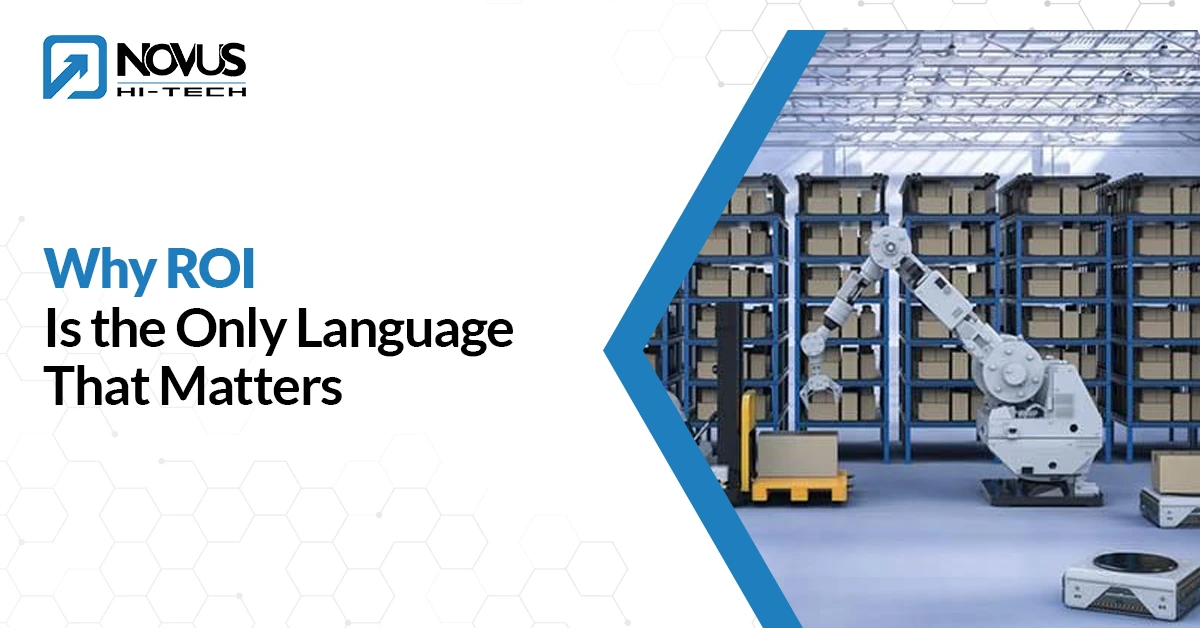
Warehouse automation talks usually kick off with some sort of innovation angle. Like, you know, better ways… But then approval happens only when leadership actually sees measurable operational impact, not just big ideas.
ROI isn’t just about shrinking labor expenses. It is more about building warehouse ecosystems that:
– Shift materials faster
– Tighten operational predictability
– Cut down downtime
– Make throughput consistency less wobbly
– Let production scale without drama
– Handle demand fluctuations without operational breakdowns
For growing manufacturers, and for logistics groups too, warehouse inefficiencies end up hitting delivery timelines, inventory movement, and even customer commitments. So yeah, automation ROI turns into more of a business growth conversation.
RAAS-driven automation solutions from Novus Hi-Tech help organizations build adaptive warehouse environments that can keep evolving, alongside production schedules and market demand. Instead of fixed, static infrastructure , businesses get flexible automation systems that scale intelligently over time.
The Real Drivers Behind Warehouse Automation ROI
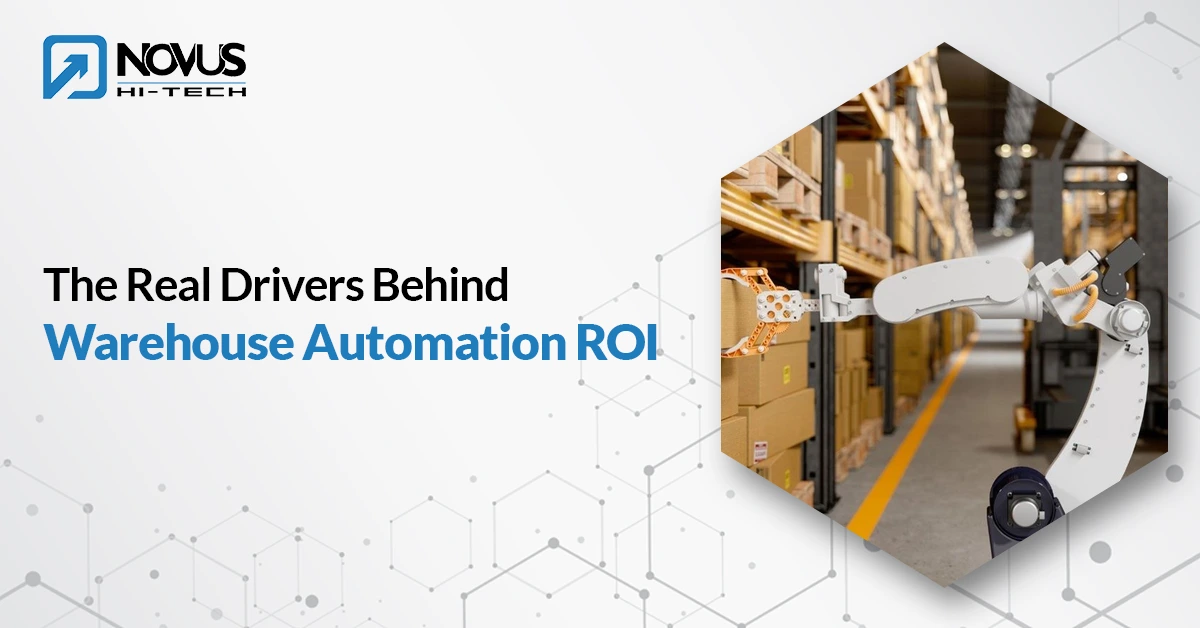
Most companies simplify automation ROI into labor savings.
But the true impact goes much deeper.
Modern warehouse automation improves the entire movement intelligence layer of operations.
Here’s a practical breakdown:
| ROI Driver | What It Really Means | Business Impact |
| Intelligent Material Movement | Automated transport between stations | Faster workflow execution |
| Throughput Optimization | Continuous movement coordination | Higher daily output |
| Reduced Operational Delays | Fewer manual interruptions | Better production continuity |
| Warehouse Visibility | Real-time movement intelligence | Faster decision-making |
| Scalability | Easier expansion without operational strain | Supports long-term growth |
| Predictable Operations | Consistent workflow execution | Improved delivery reliability |
With RAAS-enabled systems, businesses are no longer investing only in hardware.
They are investing in operational intelligence.
This is where solutions like AMRs, AGVs, fleet management systems, and intelligent intralogistics platforms become major contributors to sustainable B2B growth.
See Automation in Action
Want to explore how intelligent warehouse automation improves operational ROI?
Discover RAAS-driven automation ecosystems from Novus Hi-Tech designed for scalable industrial growth.
Where Most Business Cases Go Wrong
Many automation proposals end up failing, because they lean on assumptions instead of what actually happens day to day. The frequent issue is, calculating ROI while only staring at a projected labor reduction. But in most warehouses the real obstacles are kinda tucked away inside things like material congestion, delayed movement between workstations , inconsistent pallet flow, idle equipment time, and poor warehouse coordination. Also there’s the manual dependency during peak demand, plus a lack of real time operational visibility. If those inefficiencies aren’t surfaced and quantified up front, the ROI math stays half done, not truly complete.
A solid automation business case should tie back straight to operational bottlenecks, not just theoretical savings. At Novus Hi-Tech, we structure automation strategies around real intralogistics movement analysis, production behavior , warehouse layouts, and the future scalability requirements. That approach makes the ROI discussion more practical, more measurable and , frankly, much easier for leadership teams to approve.
How to Actually Build a Solid ROI Case
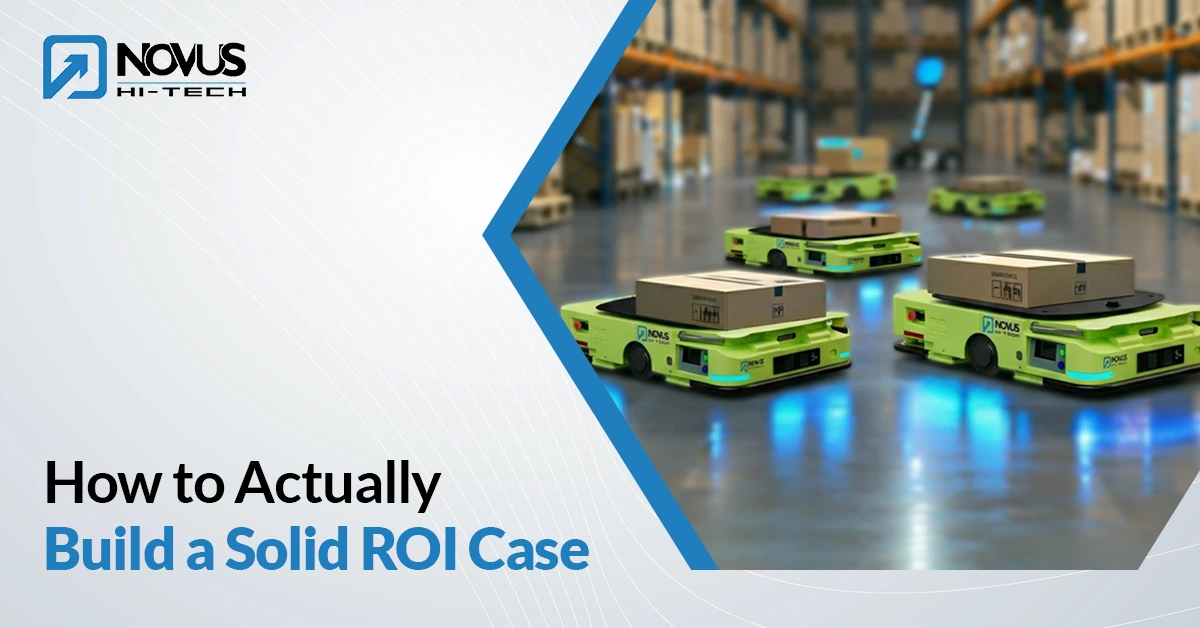
A well-planned ROI strategy should be based on what is happening on the warehouse floor. Watch how goods are transported.
Note down the delays. Look for the areas where people have to do the same tasks repeatedly.
Fig Interruptions in movement can be analyzed.
Hidden within everyday operational inefficiencies, the largest automation opportunities are often found. You might come across:
- Delays in pallet movement Bottlenecks during shift changes
- Picking routes that are not efficient Transport paths that are congested
- Replenishment cycles that are too slow Device forklifts that are used excessively
- Handling workflows that are inconsistent After mapping these inefficiencies, automation comes clearer.
Now is the time when RAAS models can be the most effective. Rather than making the huge infrastructural investment upfront, companies can get the robotics ecosystem which they can scale up or down as per their operational needs.
Solutions like AMRs, intelligent fleet orchestration systems, autonomous transport platforms, and smart warehouse coordination tools can help businesses improve movement efficiency while keeping them flexible.
Looking to identify hidden warehouse inefficiencies impacting growth?
Connect with Novus Hi-Tech and build a warehouse automation roadmap focused on measurable ROI.
The Compounding Effect of Automation
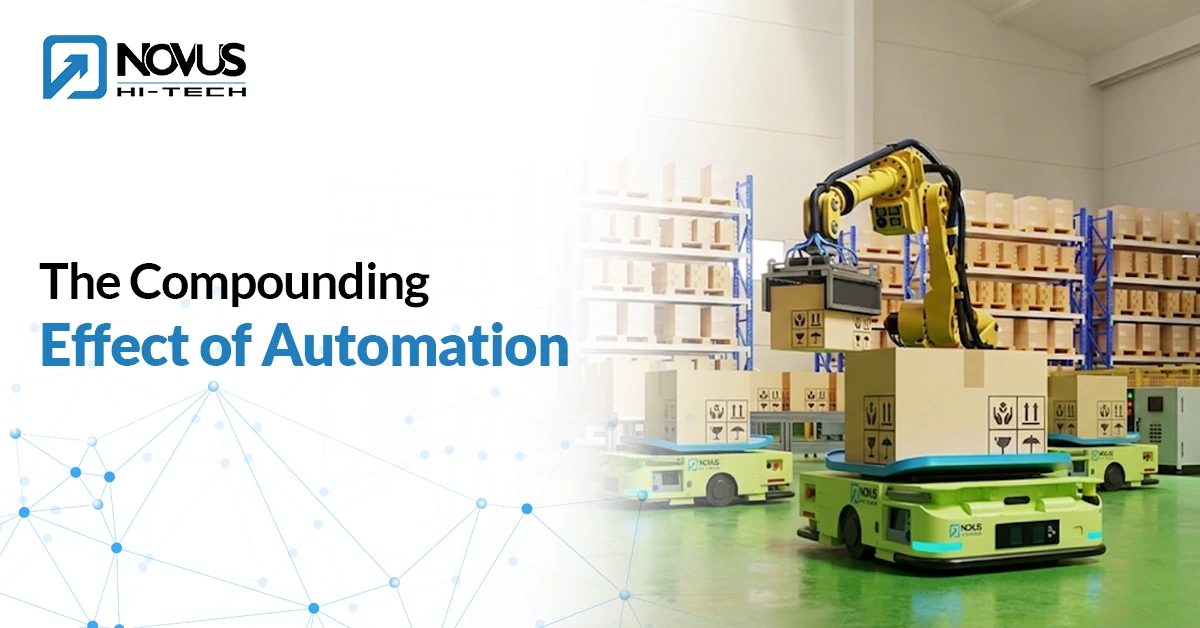
The biggest advantage of warehouse automation isn’t just one clean improvement. It’s more like a compounding operational effect, you know, it adds up over time, and it kinda stacks on itself. Faster movement boosts throughput , and then the higher throughput cuts down delays. Those reduced delays then improve delivery performance, which in turn builds customer confidence.
Over time, these operational changes start strengthening the whole business ecosystem, instead of only helping one step at a time. This matters a lot in high-growth manufacturing environments, where demand fluctuations can suddenly overwhelm manual operations. That is where RAAS-driven automation ecosystems help organizations put in place warehouses that are more adaptive, more intelligent, more scalable, and also more resilient.
So the outcome is a warehouse operation that can support sustained B2B expansion, without operational instability, even when everything else gets busy and unpredictable.
Why Timing Matters More Than Ever
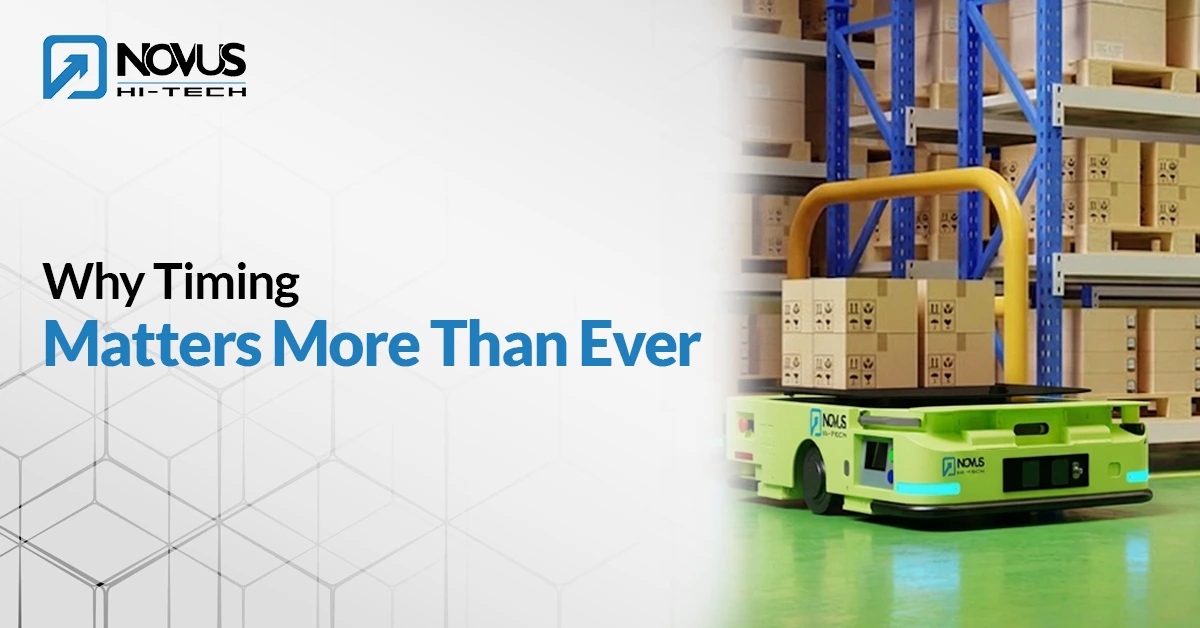
Many businesses delay automation waiting for the “perfect time.”
But day after day, those operational inefficiencies keep quietly turning into losses, like it’s just going to stop.
As production scales, the human, manual dependency becomes harder to coordinate and manage.
Warehouse congestion keeps growing.
Then, movement coordination, it gets more complex and a bit messy in practice.
Operational unpredictability also climbs, so planning feels less reliable.
Meanwhile, companies that adopt intelligent automation systems are already putting in place faster, more agile operations.
Forward-thinking manufacturers are now turning their attention to scalable automation models that work with phased implementation, not this massive one-time overhaul.
That’s why RAAS-based automation is getting momentum across industrial operations.
It enables businesses to:
- Start small
- Scale gradually
- Optimize continuously
- Boost operational agility, faster
All of this points to a much lower-risk route toward long-term warehouse modernization.
You do not need to automate everything at once.
Start with scalable RAAS-driven warehouse automation solutions from Novus Hi-Tech and expand based on measurable operational results.
What a Strong ROI Case Actually Looks Like
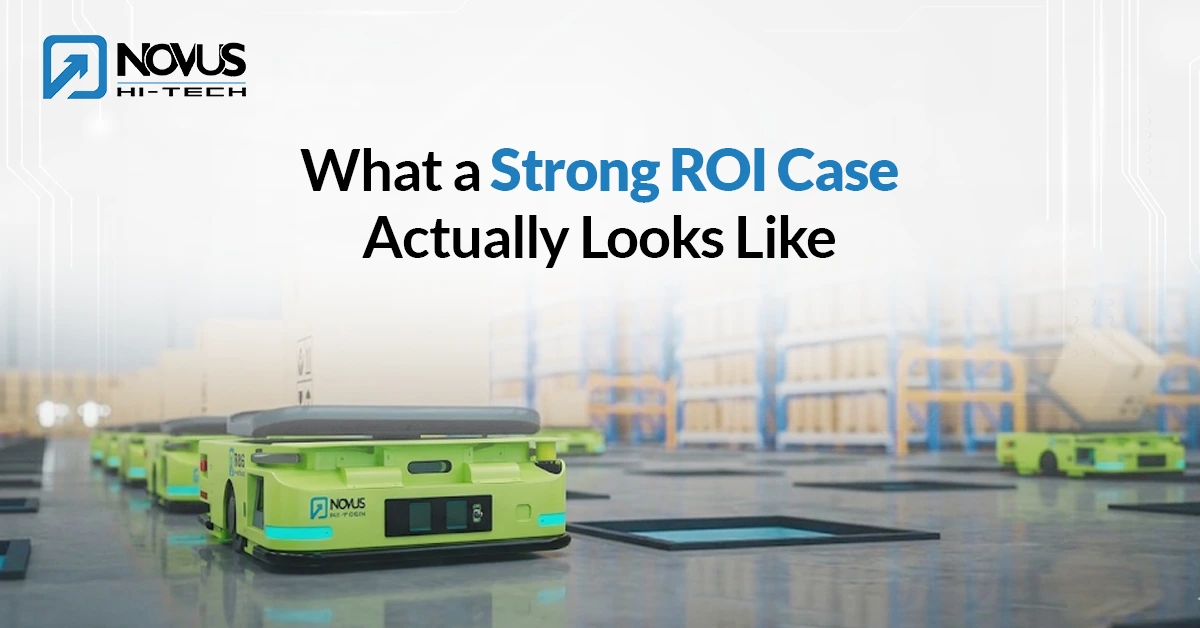
A strong warehouse automation business case is quite simple.
It only involves clearly answering these 3 questions:
- What are the operational inefficiencies that are hindering growth?
- In what ways can automation facilitate movement, throughput, or visibility?
- What attainable operational results can be accomplished over a period of time?
The best ROI cases focus on actual operations rather than assumptions.
When automation is tied to throughput improvement, warehouse optimization, scalability, and operational predictability, making decisions becomes much simpler.
Intelligent intralogistics automation is exactly that point of major value realization.
Final Thought
Warehouse automation is no longer just an operational upgrade, kind of like it used to be
It is turning into the base line for scalable industrial growth, and honestly it feels more strategic now than before
Companies that keep trusting manual coordination, entirely, will eventually run into limits, in speed, flexibility, and operational scaling
The future leans toward warehouses that can think adapt, coordinate, and expand more intelligently
With RAAS-driven automation ecosystems, businesses can build processes that stay efficient as demand, production complexity, and movement requirements keep shifting
The point is not only to automate movement.
The point is to craft an operation that can sustain long-term growth, with intelligence consistency, and operational control
Ready to transform warehouse movement into measurable business growth?
Explore intelligent RAAS-driven warehouse automation solutions with Novus Hi-Tech and build scalable operations designed for the future.