







Automation is no longer a luxury but a necessity in today’s fast-paced industrial landscape. At the forefront of these technologies are pick and place robots. Such highly efficient robotic systems make repetitive tasks faster, more accurate, and cost-effective. Be it an assembly line in manufacturing or a warehouse dealing with logistics, the pick and place robots are now an indispensable tool.
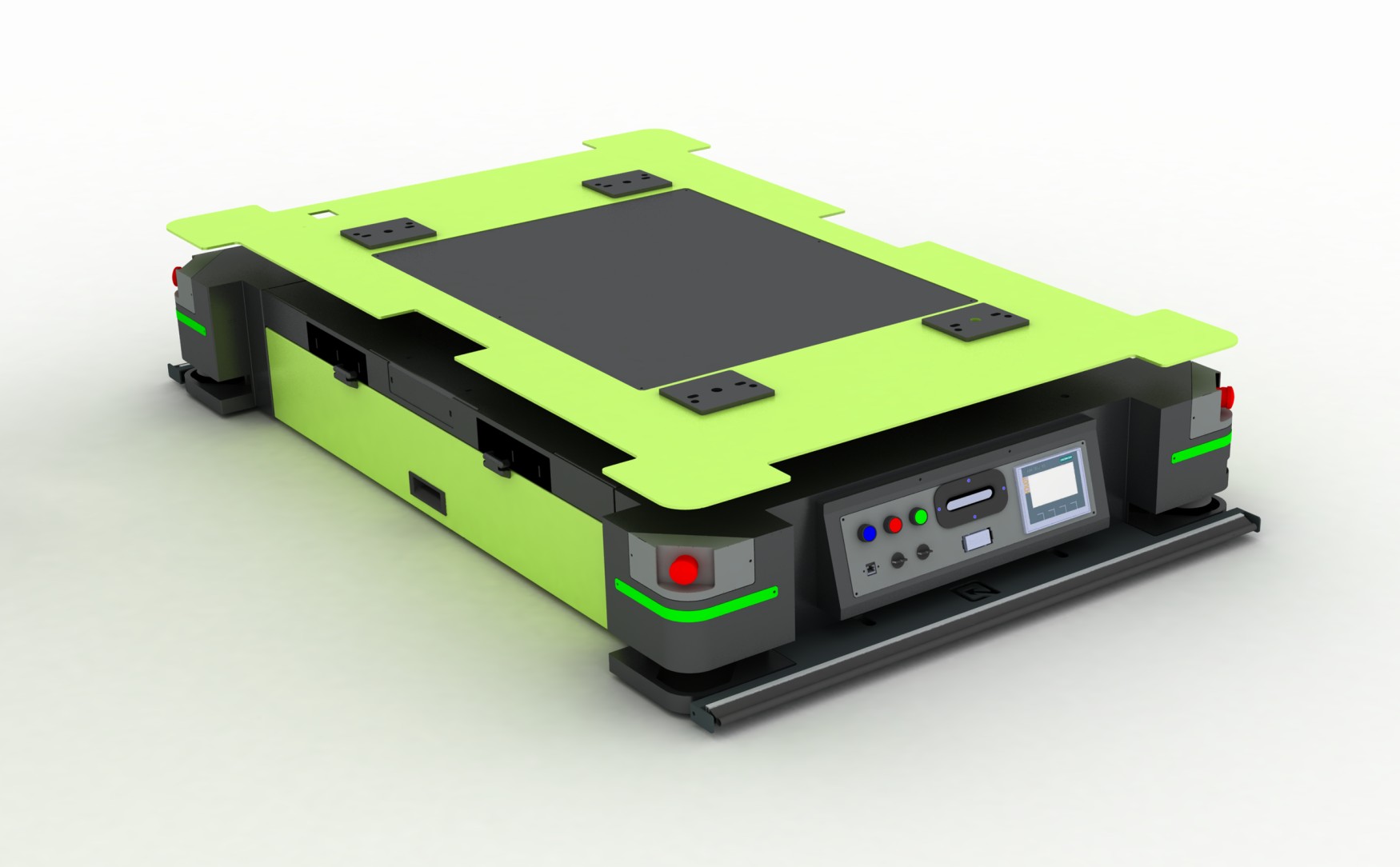
One of the leaders in innovation in this field is Novus Hi-tech, which has created more sophisticated Autonomous Mobile Robots to accompany the pick and place systems. It not only increases productivity but lays down pathways for safer and more efficient warehouse and production facilities.
How Pick and Place Robots Operate
Pick and place robots are marvels of engineering, seamlessly blending hardware and software to perform tasks with precision. Here’s a breakdown of their operation:
Key Components:
- Robot Arm: The robot arm, being the central device of the system, consists of multiple degrees of freedom for high freedom of movement.
- End Effector: This is the grip tool or mechanism attached to a robot arm that serves with precision in handling the object.
- Sensors: A sensor ensures accuracy because object positions, sizes, as well as orientations are sensed; in most cases, in vision systems, objects will be identified and followed.
- Control System: The “brain” of the robot, which processes incoming inputs and commands to guide the movements of the robot arm.
Operational Workflow:
- Detection: Sensors and cameras identify the object to be picked up.
- Gripping: The end effector adjusts its grip according to the shape and material of the object.
- Transporting: The robot arm moves the object to the designated location.
- Placement: The robot places the item in its intended location with great precision.
By automating these steps, pick and place robots minimize human error and increase throughput.
Discover how Pick and Place Robots boost efficiency and precision in manufacturing.
Download our free brochure for expert insights and trends!
Key Applications of Pick and Place Robots in Warehouses

Warehouses are dynamic environments requiring speed and precision—qualities that robot pick and place systems excel in. Here are some major pick and place robot applications:
Sorting
Robots can quickly sort products according to size, weight, or SKU to allow smooth inventory management and decreased processing times.
Packaging
Robot usage in packaging lines makes arranging of products, sealing containers, or stacking items, and also improves uniformity, saving human effort.
Order Fulfillment
E-commerce warehouses use pick and place robots for faster order picking and packaging, thus resulting in quicker deliveries and decreased error..
Inventory Management
Robots help in putting away and picking out items from storage, making the most of space available, and minimizing misplacements.
Quality Control
Pick and place robots with vision systems detect defective products at the assembly or packaging stage, so only quality products reach the customers.
Palletization
Pick and place robots, stack and organize products on pallets for storage or shipping. This automation enhances efficiency, reduces manual labor, and ensures uniformity in pallet loads.
Different Types of Pick and Place Robots

The versatility of pick and place robot lies in their diverse designs, each tailored for specific tasks. Here are the primary types:
- Cartesian Robots: The Cartesian robots operate on three linear axes (X, Y, Z) and give higher precision for assembly or inspection jobs.
- Delta Robots: These are fast and ideal for lightweight operations at high speeds, such as food packaging.
- SCARA Robots: SCARA is adaptable to horizontal movement. SCARA robots are ideal for assembly and palletizing.
- Articulated Robots: These have many rotating joints. Articulated robots are very versatile for more complex operations.
- Collaborative Robots (Cobots): Designed for collaboration with humans, working safely and performing delicate or complex tasks without heavy shielding.
Selecting the appropriate robot is important because different types offer unique capabilities suitable for specific applications. Companies such as Novus Hi-tech combine their AMR technology with these robots to deliver customized automation solutions to warehouses.
Benefits of Integrating Pick and Place Robots in Warehouse Operations

The advantages of integrating pick and place robots into warehouse workflows are immense. Let’s explore how these robots revolutionize operations:
1. Increased Productivity
Pick and place robots work tirelessly and take on repetitive tasks at unmatched speeds. This translates to faster throughput and higher output.
2. Enhanced Accuracy
Human errors in sorting and order picking are often expensive. Robots are more precise with each movement, and overall accuracy is improved.
3. Cost Savings
Though the investment in automation might seem significant at the beginning, it would prove cost-effective in the long term through reduced labor costs and reduced errors.
4. Improved Safety
Pick and place robots make workers safer by eliminating dangerous or labor-intensive work. Employees can be relegated to supervisory work rather than doing the labor.
5. Scalability
Robots can be repurposed or reconfigured to adapt to changes in business, thus being scalable for expanding businesses.
These benefits minimize errors to maximize efficiency and the transformative potential of pick and place robots in modern warehouses.
Conclusion
Pick and place robots were the beginning of new eras of manufacturing and warehousing since they brought unprecedented accuracy and efficiency. With technological changes in industries, new opportunities will arise for robots too. Novus Hi-tech’s AMR is designed for this purpose.
The need for pick and place robots is not an upgrade but a necessity for businesses that want to keep up with the rest of the world. The incorporation of these innovations will enable companies to have higher productivity, lower costs, and a safer working environment.
As far as warehouse automation solutions are concerned, few can be trusted as much as Novus Hi-tech can. Contact Novus Hi-tech for warehouse automation solutions.
FAQs
What is a pick and place robot?
This pick-and-place robot is actually an automated system designed for picking up objects from one place and placing them in another with speed and precision.
How do pick and place robots operate?
Picking and placing robots work using a combination of parts that can include a robotic arm, sensors, and control systems. It identifies objects, picks them securely, moves them around, and places them exactly.
What are the main applications of pick and place robots in warehouses?
The most common applications include sorting, packaging, order fulfillment, inventory management, and quality control for improved efficiency in operations.
How can I choose the right pick and place robot for my needs?
Weighing aspects such as the type of job, payload capacity, requirements in terms of speed, and possible integrations. To ensure finding the perfect application, seek advice from experts, like Novus Hi-tech.
What are the benefits of integrating pick and place robots in warehouse operations?
These benefits include increased productivity, accuracy, cost savings, improved safety, and scalability, making them necessary for modern warehouses.