








The Future of ADAS in India
As India’s automotive industry accelerates towards automation, a pressing question arises: Will 2025 and 2026 mark a pivotal shift in the adoption of Advanced Driver Assistance Systems, ADAS cars in India? With an estimated 150,000 road deaths a year, India has one of the highest accident rates in the world. In contrast, the USA, Germany, and Japan have seen considerable reductions in road fatalities because of widespread ADAS implementations.
These upcoming years promise to completely alter the automotive landscape in India. With many advances in technology, and regulatory changes, ADAS system cars in India will be at the forefront of improving road safety and driving experience throughout the country.
Learn what’s next for ADAS cars in India in 2025.
Download our free brochure/e-book for expert insights and trends!
A Snapshot of the present
Currently, there is limited adoption of ADAS feature cars in India, though the current number of vehicles with ADAS features is growing. Some of the models that have Level 2 ADAS built in are—Hyundai Creta, Mahindra XUV700, Tata Safari, and MG Astor. All Level 2 ADAS cars in India have varying features that include lane keep assist, adaptive cruise control and autonomous emergency braking. However, we are only seeing a small fraction of the total capabilities of these systems because of several significant challenges, including infrastructure limitations and diverse driving styles.
No matter the challenges, the path is clear; the proliferation of cars with ADAS in India will only move faster, and our journey towards smarter and safer mobility options is officially on.
What’s Changing in 2025 and 2026: The ADAS Shift
Several factors are poised to accelerate the adoption of ADAS cars in India:
Regulatory Action
The recent deployment of the Bharat New Car Assessment Program (Bharat NCAP) signifies the government’s strong commitment to vehicle safety. Although the crash test protocols are still in initial preparations, these crash test protocols will eventually compel new vehicles to incorporate vehicle safety features conforming to Level 1 driving system capabilities, such as lane departure warnings and autonomous emergency braking, or risk strong consequences under Bharat NCAP. An increasing regulatory push for enhanced safety measures is at odds with most vehicles on India’s roads and highways. Furthermore, the government will regulate safety standards whereby vehicle systems adopted in India must conform to similar standards established in the rest of the world.
OEM Commitment
With automakers including ADAS as standard in their mid-tier and premium vehicles, the trend is growing. In the very near future, Hyundai has committed to fitting ADAS as standard on all their models in their range in India by 2025. That said, Mahindra will include Level 2 ADAS features on its soon to be released XGV 7e. The external motivators to grow ADAS is a growing trend for all manufacturers, clearly showcasing that ADAS cars in India are here to stay.
5G and Connected Cars
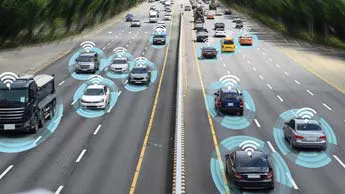
The advancement toward the introduction of 5G networks and vehicle-to-everything (V2X) will greatly enhance vehicle safety intelligence through greatly enhanced possible connectivity, allowing vehicle real-time data exchange with other vehicles, infrastructure, and ultimately pedestrians. It will host safety features such as Adaptive Cruise Control (ACC), lane changing, or collision avoidance systems—features central to ADAS feature cars in India.
Localization of ADAS Algorithms
Based on the challenges presented by the Indian driver, pedestrians walking on the road, unpredictable intersection activity and traffic law breakthrough, companies are actively working towards localizing ADAS algorithms. It will also involve adjusting to other idiosyncratic issues such as two wheelers, free-roaming livestock, and road surfaces varying from tarmac, dirt, and natural rock, adjusting to three different types of gravel too! All with downsizing to what would be standard regulations in countries outside of India as specified in the SAE Level Guidelines.
The Future-Ready Features: ADAS evolution in India

By 2026, ADAS tech will develop to suit Indian driving conditions in the following ways:
+
Next-Gen Lane Keep Assist
Next-gen LANEKP will use enhanced algorithms to enable lane keep assist systems to be functional on Indian condition roads that have faded or no lane markings.
Smarter Autonomous Emergency Braking (AEB)
Context-based AEB systems would utilize artificial intelligence to differentiate between genuine threats and benign obstacles to limit false-positive alerts and improve safety.
Urban Adaptive Cruise Control
For the purpose of slow-moving intra-urban traffic activity, urban adaptive cruise control would dynamically adjust vehicle speed to improve comfort and reduce driver fatigue.
360-Degree Sensing and Real-Time Mapping
Sensors with improved sensing suites would provide complete environmental context for the vehicle to support safer overtaking as well as parking and congested urban travel.
Predictive Pedestrian & Animal Detection
Predictive Pedestrian and Animal Detection would use machine learning AI to predict and respond to the erratic movement of pedestrians and animal movements, this is especially important in rural or suburban driving contexts.
These advancements further clarify why is ADAS useful in India, particularly when adapted to its unique road and traffic conditions.
The ADAS-Ready Ecosystem: What Has To Change
For ADAS to reach its potential in India, many elements of the ecosystem will need to evolve:
Government Involvement
All forms of economic and civic infrastructure improvements (such as better road demarcation, ways to implement V2X communication), policies that enforce the use of safety features, and the endorsement of smart city projects, cumulatively facilitate the adoption of ADAS cars in India.
OEM Positioning
Automakers must focus on integrating some level of ADAS into a greater portion of car types, including compact SUVs and sedans, and that are designed to be thoughtful of the complexities and difficulties of the Indian roadways.
Education from Dealerships and Drivers
Navigating learning programs with dealers and end-users will be critical for showcasing ADAS and its features, if only to gain their trust and prompt them to continue to use ADAS for personal use.
Urban Deterrence
Smart city projects in Pune, Bengaluru, Delhi NCR, have outlined vehicle technology or intelligent transit system concepts. Continuous funding on these types of projects will create conditions that support ADAS feature cars in India.
What Novus Hi-Tech is Creating for Tomorrow
Novus Hi-Tech is an innovator of ADAS technology and is well-positioned to provide solutions for India’s unique driving environment:
Advanced Sensor Suites:
Designed for reliable performance under a variety of visibility and climatic conditions experienced throughout India.
AI-enabled Localization Tools:
AI tools also help ADAS systems learn the behavior on Indian roads and use that to increase accuracy of decision making.
Dynamic Testing Frameworks:
Novus Hi-Tech collaborates with OEMs to provide real-world calibration and simulation environments to ensure systems are well-calibrated and suitably tested on Indian roads.
V2X-enabled Modules:
These modules prepare vehicles for connected or autonomous mobility, by allowing secure and seamless communication with other vehicles or roadway infrastructure.
Custom Data Analytics:
By examining trends of driver behaviors, Novus Hi-Tech sheds light on properly designing and/or refining ADAS systems to consider users needs and expectations.
Although there are still challenges ahead, rapid technological advancements, easing regulatory pressures, and increased infrastructure development positions India on the cusp of ADAS evolution. The next two years are critical in determining a safer and more intelligent driving future with acceptance and implementation of ADAS cars in India.
ADAS cars in India is no longer only a future project, it is about getting ready for tomorrow, today. At Novus Hi-Tech we are building an intelligence mobility system for the future India.
FAQs
Which ADAS features do you expect to be in all Indian cars in 2026?
We expect lane departure warning, autonomous emergency braking and adaptive cruise control to be in all new vehicles, driven both by regulation and consumer needs.
What role will 5G and V2X communications play in the ADAS future?
As 5G networks are being installed they will improve V2X communications and allow for real time data exchange between the infrastructure and vehicle, which will be key for functioning ADAS feature cars in India.
What will be the role of the government in furthering the ADAS sector in India?
The government plays an important role in establishing safety rating systems, improving overall infrastructure levels, and supporting smart city initiatives, which are all important to the wide scale take-up of cars with ADAS in India.
Will ADAS significantly increase vehicle costs for buyers in 2025-2026?
ADAS will probably not add any dramatic amount to vehicle costs. The presence of economies of scale and technological advancements should stave off any considerable price increases.
Is India heading towards autonomous driving or will ADAS remain as an assistive technology only?
ADAS will remain as an assistive technology for now. It will improve overall driver safety and comfort, but higher levels of connectivity and artificial intelligence improvements will make autonomous driving reality in the future.