
The manufacturing landscape is undergoing a radical change, and automotive OEMs are leading the way. While revolutionized as they were, the traditional assembly lines have faced numerous challenges in this competitive and dynamic market today. Smart assembly lines promise to lead, using cutting-edge technologies that can drive efficiency, adaptability, and quality. This blog explores the role of smart assembly lines, the challenges they address, the benefits they bring, and how Novus Hi-Tech supports OEMs in implementing these advanced systems.
From Manual to Smart – The MPS Revolution
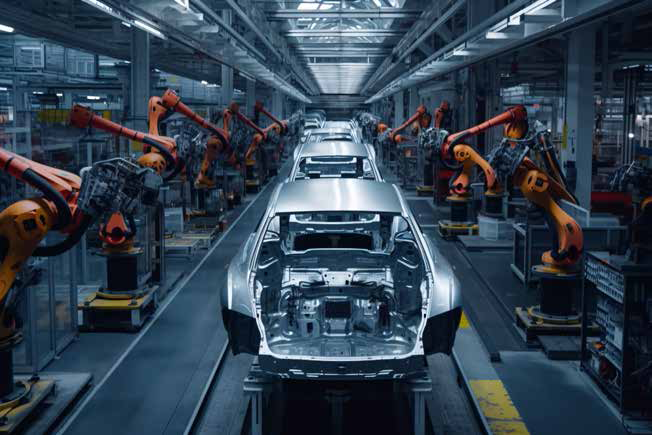
The transition from manual production systems (MPS) to smart automotive systems represents a monumental shift in manufacturing. Traditional manual lines often encounter issues such as human error, inconsistent output, and slower production speeds. In contrast, smart assembly lines integrate advanced robotics, IoT sensors, and data analytics, creating a seamless and efficient production environment. MPS drives this transformation by introducing modular and flexible systems that adapt to evolving automotive design requirements, reducing downtime and enhancing scalability. This transformation is crucial in meeting the increasing demand for customized vehicles and faster delivery times.
By adopting MPS-driven smart assembly lines, automotive OEMs can achieve greater precision, improved safety, and minimized waste, ensuring competitiveness in an ever-evolving market. Novus Hi-Tech plays a pivotal role in this journey by providing cutting-edge MPS solutions, empowering manufacturers to streamline operations and meet future challenges head-on.
Challenges of Traditional Assembly Lines
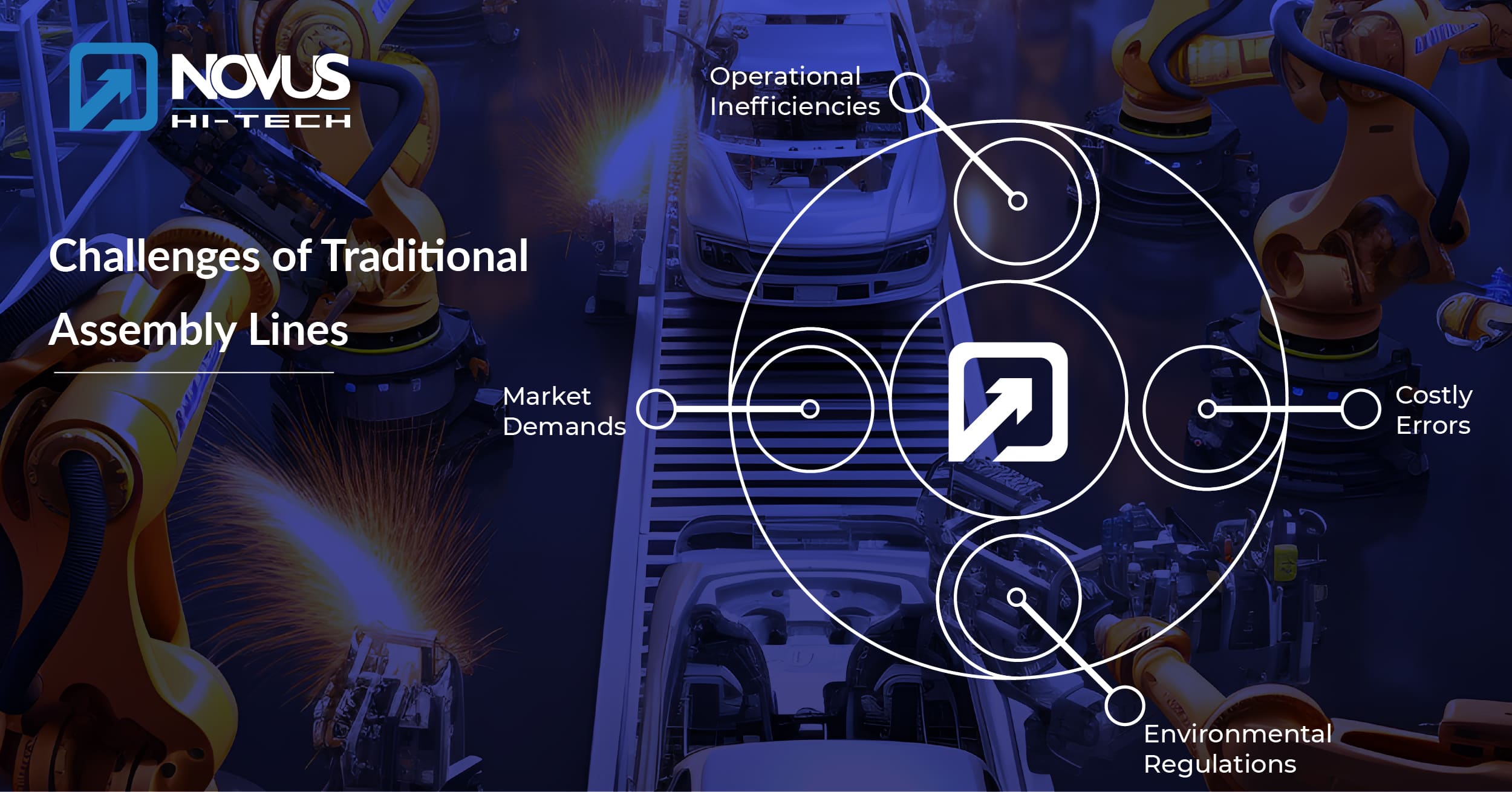
Traditional assembly lines are plagued by several issues that hinder their performance in modern manufacturing:
- Operational Inefficiencies: Manual processes and outdated equipment cause slower production and higher downtime
- Market Demands: The pressure from mass customization and faster time-to-market burdens traditional systems greatly.
- Environmental Regulations: It is challenging to meet strict sustainability requirements without data-driven approaches.
- Costly Errors: Human mistakes and variations in production can result in bad products and financial losses.
Smart assembly lines address these challenges by integrating intelligent technologies that revolutionize production.
Understanding Smart Assembly Lines
Smart assembly lines refer to state-of-the-art manufacturing techniques involving the integration of technologies, especially IoT, robotics, AI, and others, to increase productivity or automation in the process. That is why with seamless machine-to-machine conversation, predictive maintenance, real-time data analytics, or insights, the products built by OEMs reach perfection at productivity.
Discover how Smart Assembly Lines transform Automotive OEM efficiency.
Download our free brochure for expert insights and trends!
Technologies Behind Smart Assembly Lines
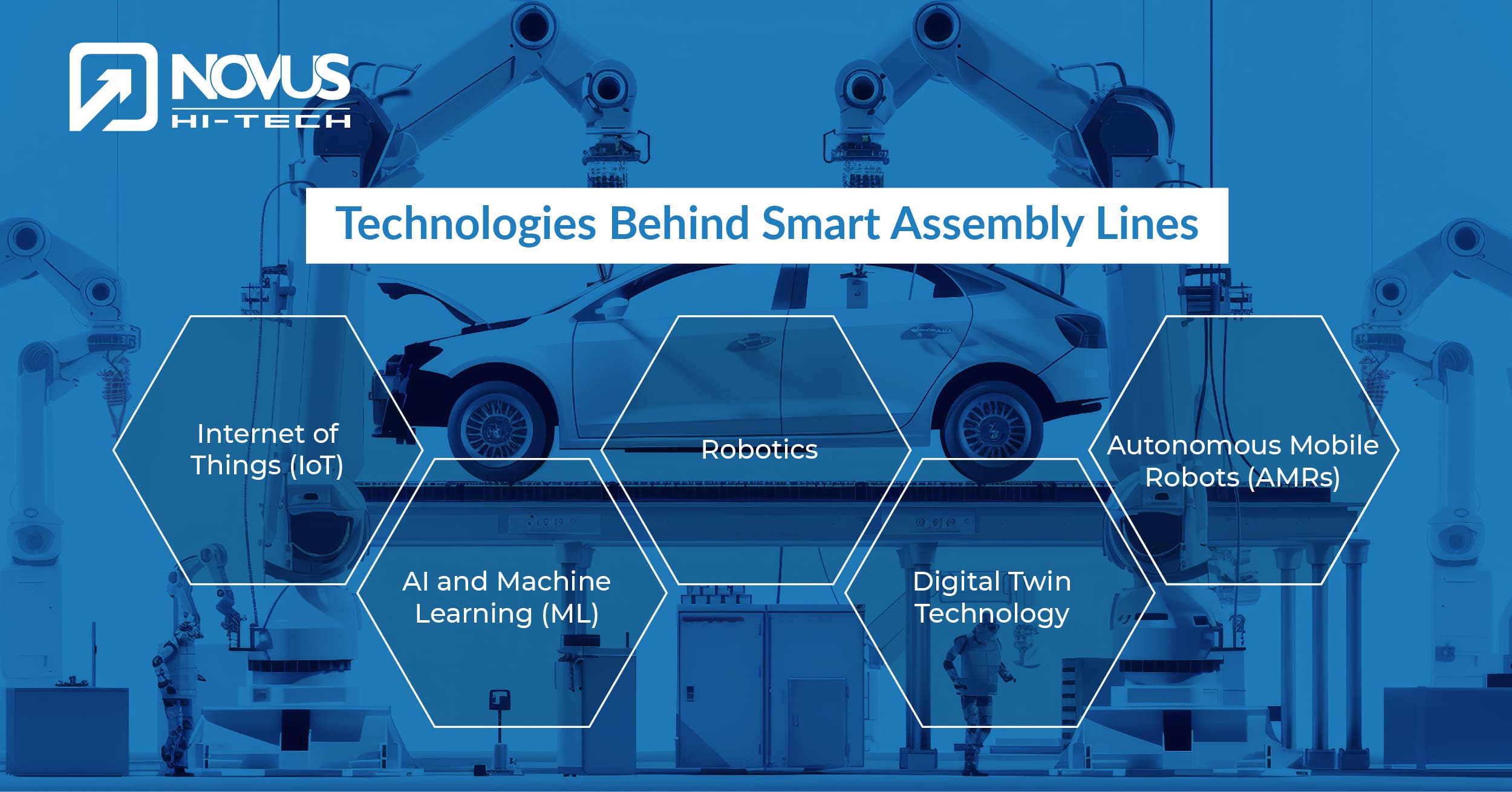
The backbone of smart assembly lines lies in the integration of several transformative technologies:
Internet of Things (IoT)
Humanize AI IoT connects machines and devices, so they can talk and share data. The system is designed to support real-time monitoring as well as predictive maintenance, which avoids downtime and helps increase operational efficiency.
AI and Machine Learning (ML)
AI and ML process vast datasets to identify patterns, optimize workflows, and enrich decision-making. Quality control is enhanced with the improved accuracy and speed in defect detection by AI-driven systems more than manual inspections.
Robotics
Advanced robotics, including cobots, automate repetitive tasks with precision. They can work along with human operators to improve productivity and safety.
Digital Twin Technology
Digital twins are virtual copies of physical systems. Manufacturers can apply simulation, testing, and optimization of the assembly process without interrupting the functions. This way, risk is reduced and innovated faster.
Autonomous Mobile Robots (AMRs)
Humanize AI AMRs make material handling on factory floors easy. They improve logistic operations, saving labor and improving all workflows.
Benefits of Smart Assembly Lines
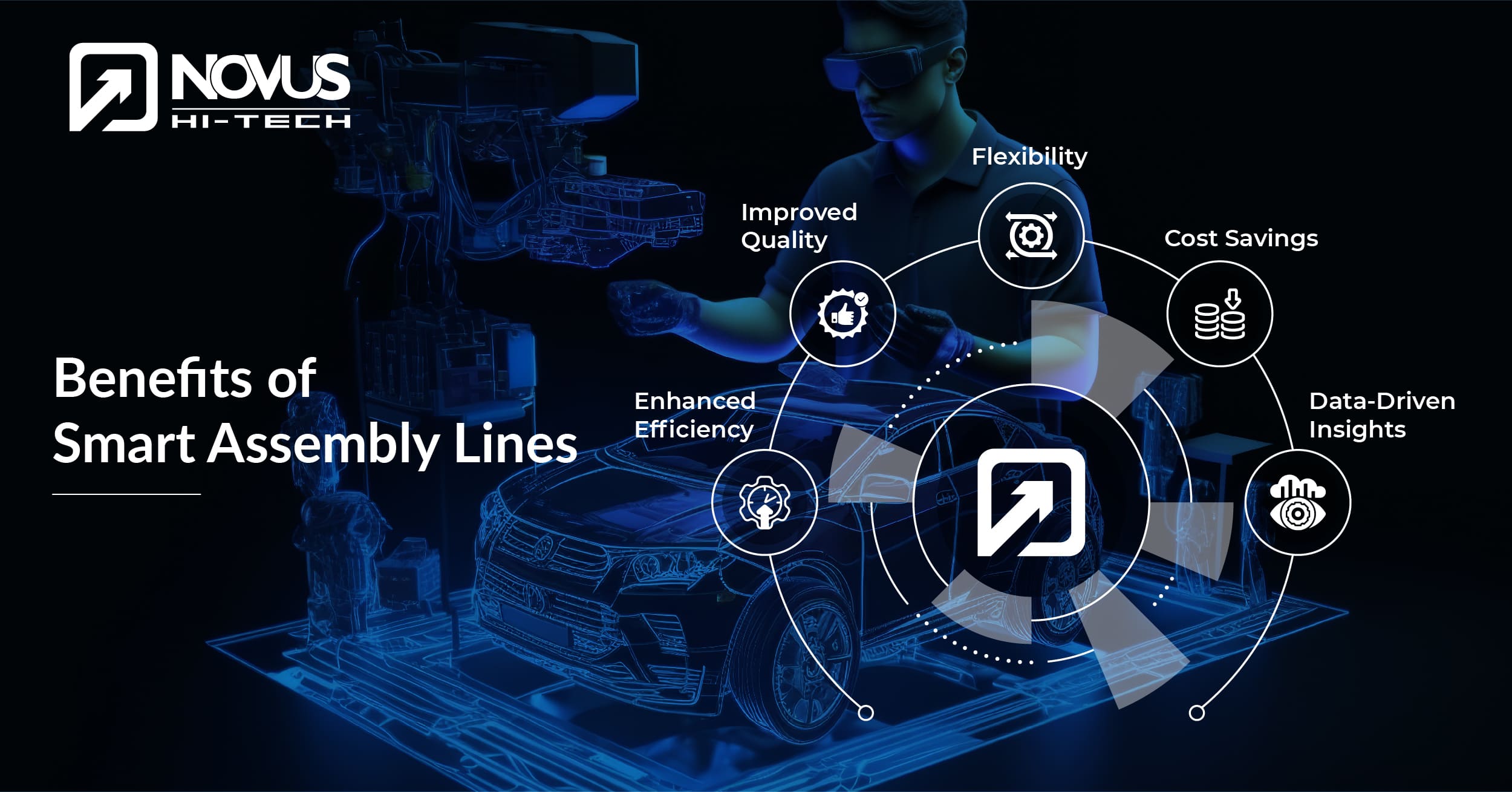
The adoption of smart assembly lines offers numerous advantages for automotive OEMs:
- Enhanced Efficiency: Automated systems eliminate as much downtime as possible and maximize output.
- Improved Quality: Advanced monitoring, combined with AI-driven quality control, reduces defects to a minimum.
- Flexibility: Smart systems easily adjust to changes in product design and production volumes.
- Cost Savings: Although initial costs are high, long-term savings from reduced errors and maintenance are significant.
- Data-Driven Insights: Real-time analytics allow for informed decision-making and continuous improvement.
Overcoming Challenges in Implementation
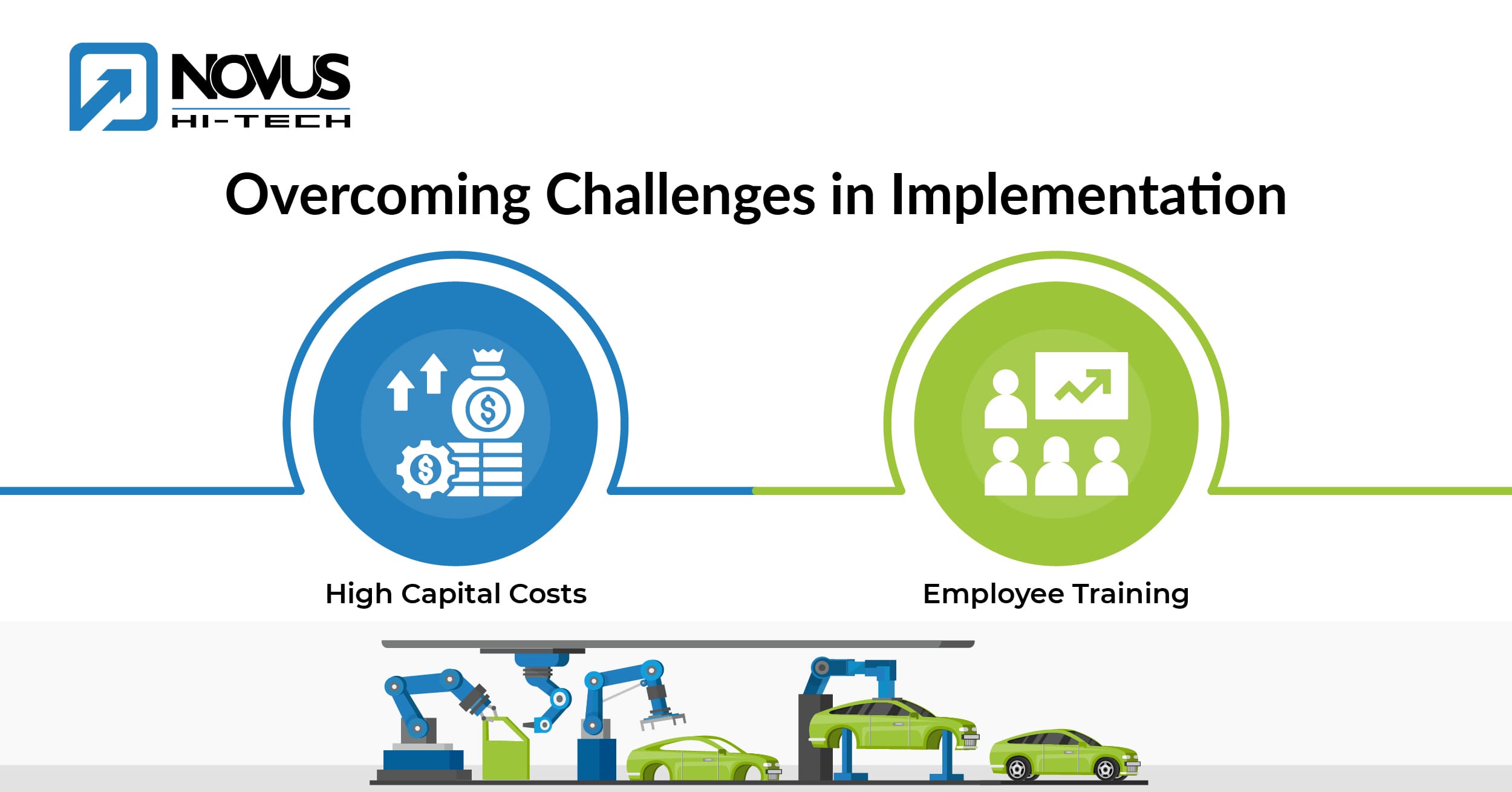
While the benefits are clear, transitioning to smart assembly lines involves overcoming certain hurdles:
- High Capital Costs: Investment is heavy at the time of establishment but with an investment ROI at a very good level.
- Employee Training: The operation and maintenance of complex technologies demand the training of employees. To be implemented efficiently, one has to build a capable workforce.
By addressing these concerns, manufacturers can unlock the full potential of smart assembly lines.
Novus Hi-Tech’s Role in Supporting OEMs
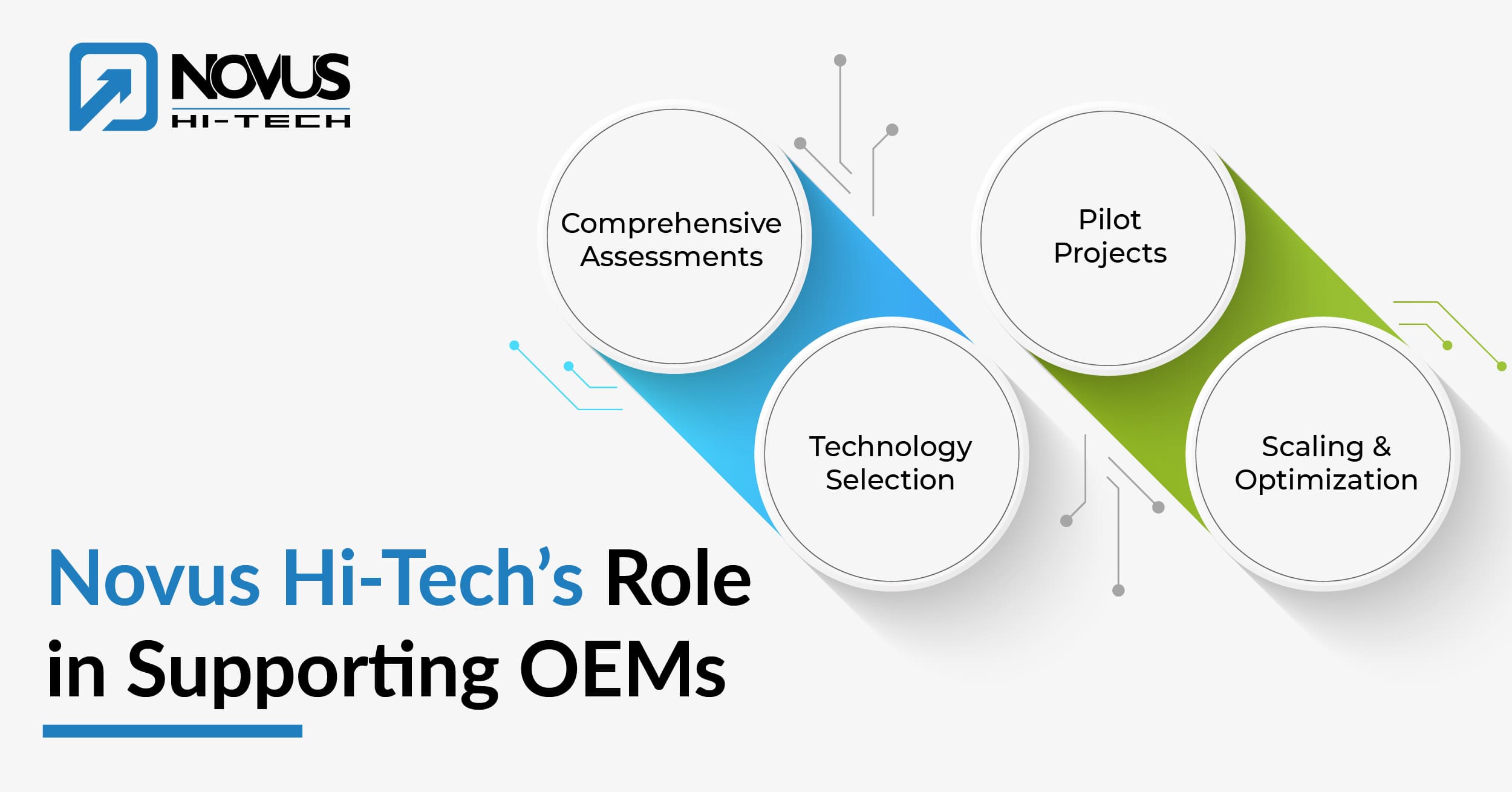
Novus Hi-Tech plays a pivotal role in helping automotive OEMs embrace smart manufacturing. From initial assessment to full-scale implementation, Novus Hi-Tech offers:
- Comprehensive Assessments: Identifying the existing systems to analyze what needs improvement.
- Technology Selection: Helping OEMs decide what tools to use, such as AMRs and vision systems
- Pilot Projects: Testing the new technology in a controlled environment before scaling up
- Scaling and Optimization: Ensuring smooth integration and continuous enhancement of smart assembly lines.
Steps to Implement Smart Assembly Lines
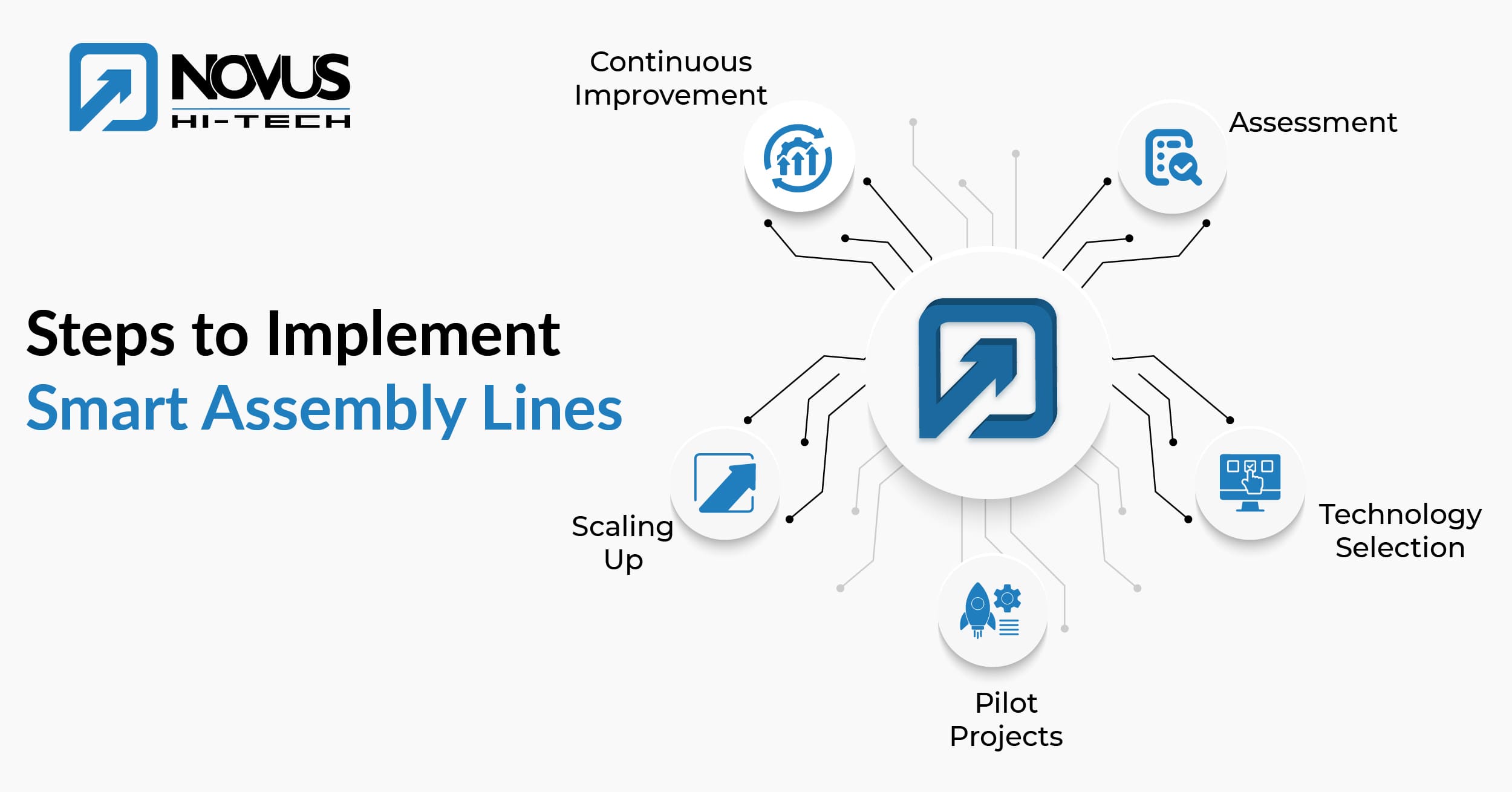
Transitioning to smart assembly lines involves several key steps:
- Assessment: Conduct a thorough evaluation of current processes and identify pain points.
- Technology Selection: Choose the most suitable technologies to meet production goals.
- Pilot Projects: Implement small-scale projects to validate new systems.
- Scaling Up: Roll out successful solutions across the facility.
- Continuous Improvement: Use data-driven insights to refine and optimize operations.
Future Trends in Smart Manufacturing
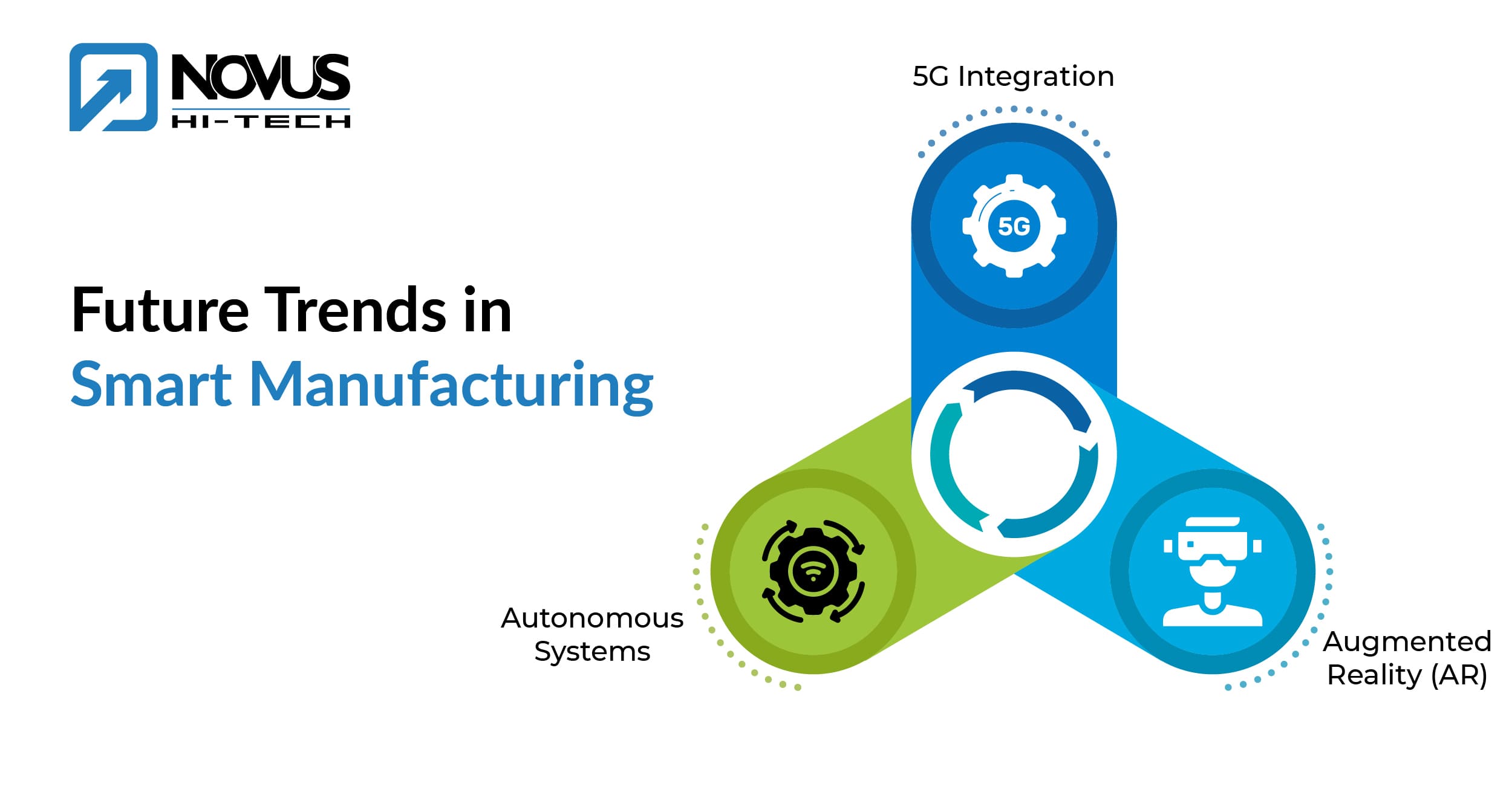
The future of smart assembly lines is filled with exciting possibilities:
- 5G Integration: Ultra-fast connectivity will allow real-time communication and automation
- Augmented Reality (AR): The AR will revolutionize employee training by making it more immersive and effective
- Autonomous Systems: More and more self-learning systems would further streamline manufacturing processes
Conclusion
Smart assembly lines change the way the art of automotive manufacturing is practiced with increased efficiency, quality, and adaptability. There are opportunities to gain a competitive edge for OEMs in coming up with an innovative approach to how some of the issues in the market could be worked around. All the expertise and tools that go into implementing such advanced systems are yours through Novus Hi-Tech. Feel free to contact us for further information regarding our solution, including Mobile Production Stations.