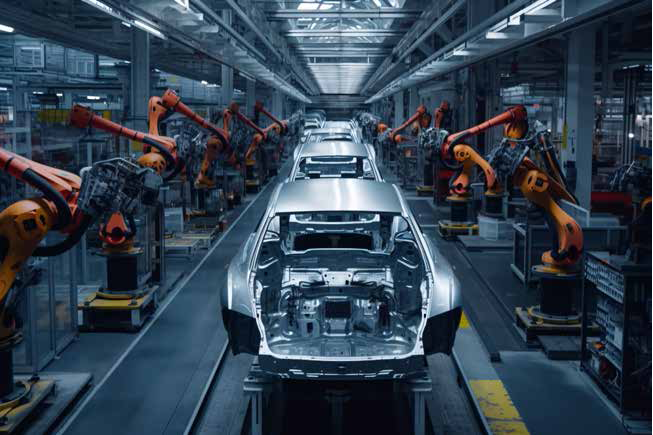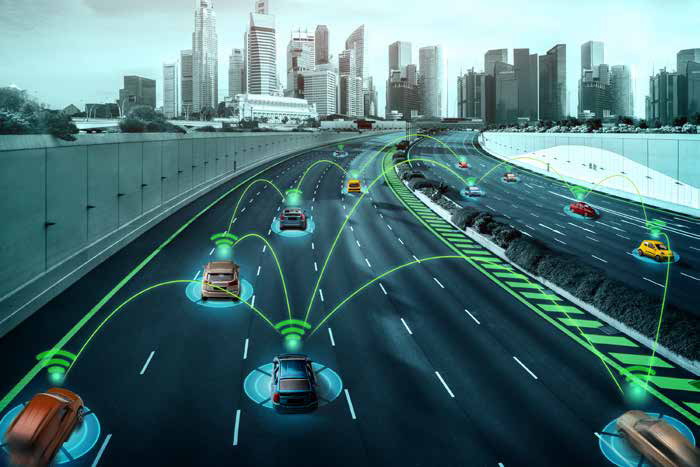

The top trends in automotive manufacturing for 2026 are mixed EV and ICE production, record robot adoption, autonomous intralogistics, modular assembly cells, gigacasting, software-defined factories, AI vision inspection, and physical AI. Each one changes how parts and vehicles move through the plant, not only how they are built.
Automotive manufacturing plants are being rebuilt around flexibility. Electric cars took 25% of global car sales in 2025, and the IEA expects that share to approach 28% in 2026. In India, the industry produced 3.47 crore vehicles in FY2025-26 (April 2025 to March 2026), with every segment posting record sales.
Higher volumes, more variants and tighter delivery windows push plants past fixed conveyors and manual material handling. The trends below show where that pressure lands on the shop floor, and what leading automotive manufacturers are doing about it.
Key Trends in Automotive Manufacturing
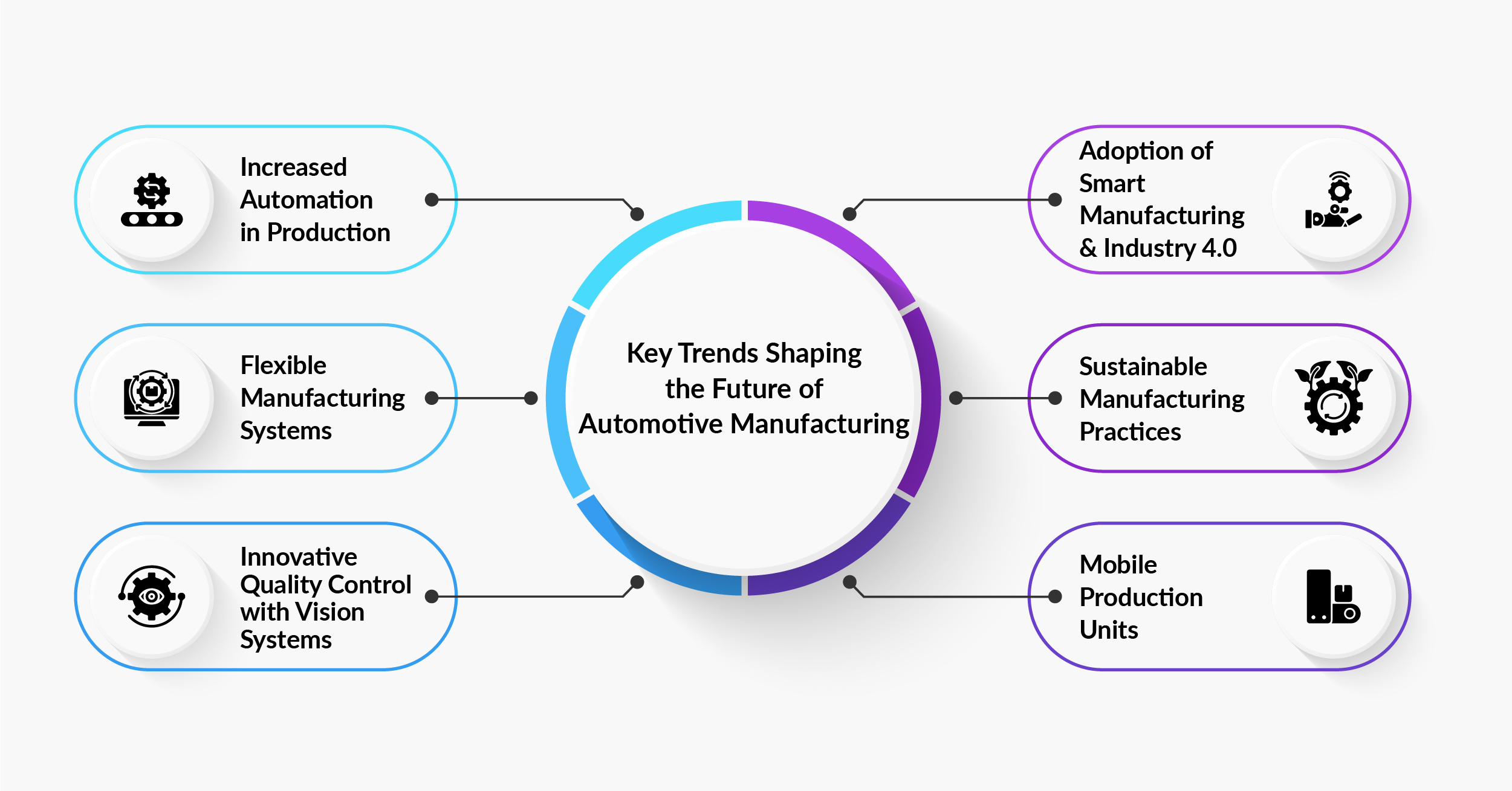
Increased Automation in Production
Implementing automated systems using robotics is replacing the workforce and enhancing the speed, precision, and certainty of quality.
Adoption of Smart Manufacturing & Industry 4.0
Connected devices, IoT, and real-time data analytics technologies provide predictive maintenance and real-time information on the factory floor to improve the smartness and efficiency of decisions.
Flexible Manufacturing Systems
Manufacturers are using technologies that make it easy to switch between models and sizes of batches, which helps implement Mass Customization with greater flexibility and leaner production.
Sustainable Manufacturing Practices
Car plants are maximizing sustainability targets with the implementation of lightweight materials, sustainable materials, energy-efficient machines, and waste elimination to appeal to consumers with green impulse buying interests.
Innovative Quality Control with Vision Systems
AI-powered vision systems and sensors that provide real-time defect detection and quality inspections during production will help reduce recalls and create high-quality products.
Mobile Production Units
Mobile production workstations help provide a quick adjustment to workflow, supporting lean manufacturing and providing momentum to be responsive to market input changes.
Discover how Automotive Automation transforms production efficiency.
Download our free brochure for expert insights and trends!
How Novus Hi-Tech Supports Modern Automotive Manufacturing
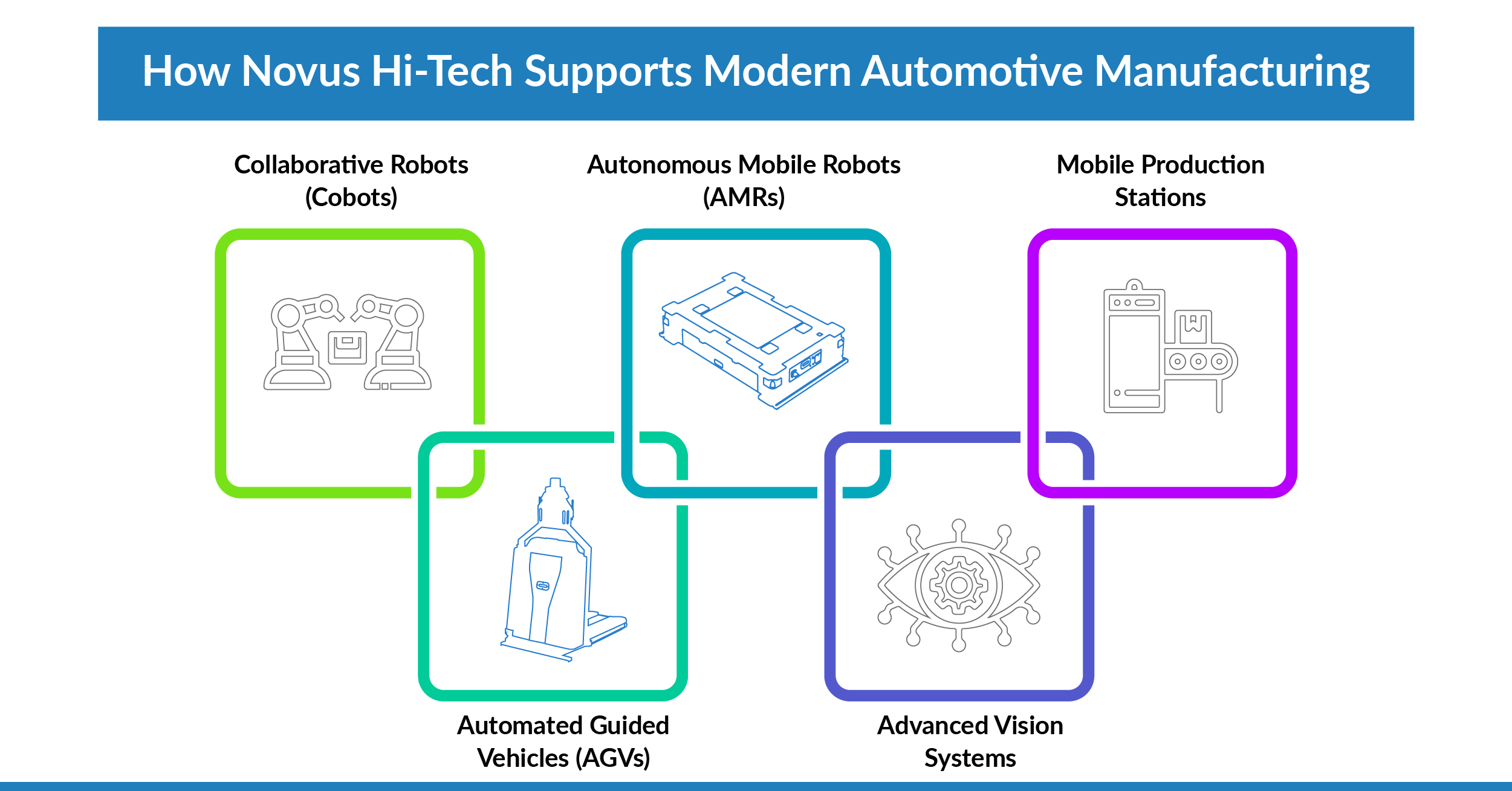
Novus Hi-Tech is leading the way to make auto manufacturing more intelligent, efficient, and better prepared for the future. They have a ton of great tools that help automotive manufacturers to trends in the auto industry.
Collaborative Robots (Cobots): Novus Hi-Tech has the latest cobots that work and communicate safely with human workers. Cobots allow for enhanced productivity with no safety concerns for the human operator.
Automated Guided Vehicles (AGVs): AGVs move material in and around the auto manufacturing facility, resulting in enhanced productivity, less manual handling of parts, and time savings.
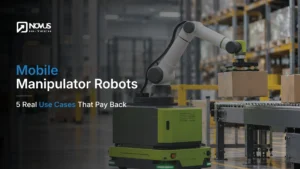
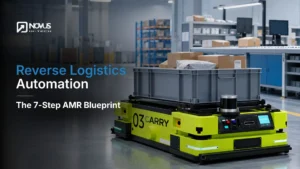
Autonomous Mobile Robots (AMRs): AMRs are flexible, on-demand logistics for manufacturing. With AMRs, manufacturers can take full advantage of the transportation capacity for their local operations.
Advanced Vision Systems: Novus Hi-Tech has precision vision systems and sensors that add exceptional quality control function to manufacturing processes. Vision systems can even detect defects, and you can modify your process in real-time.
Mobile Production Stations: Mobile production stations provide scalable and adaptable production spacing that can provide a quick/changeover and allow for lean manufacturing.
Integrating Novus Hi-Tech’s advanced technologies ensures automotive manufacturers are future-ready and productive.
Conclusion
The automotive manufacturing industry is undergoing transformation from trends of automation, smart manufacturing, flexibility, sustainability, and advanced quality. Moving forward in the construction of the auto industry, manufacturers must be adaptive and innovative. Novus Hi-Tech provides a solution set for automotive manufacturers that wish to adopt these trends to maintain pace with their competitors, constructing their innovative production lines. To learn more about how Novus Hi-Tech can change your automotive manufacturing operations, take a look at their website today.