
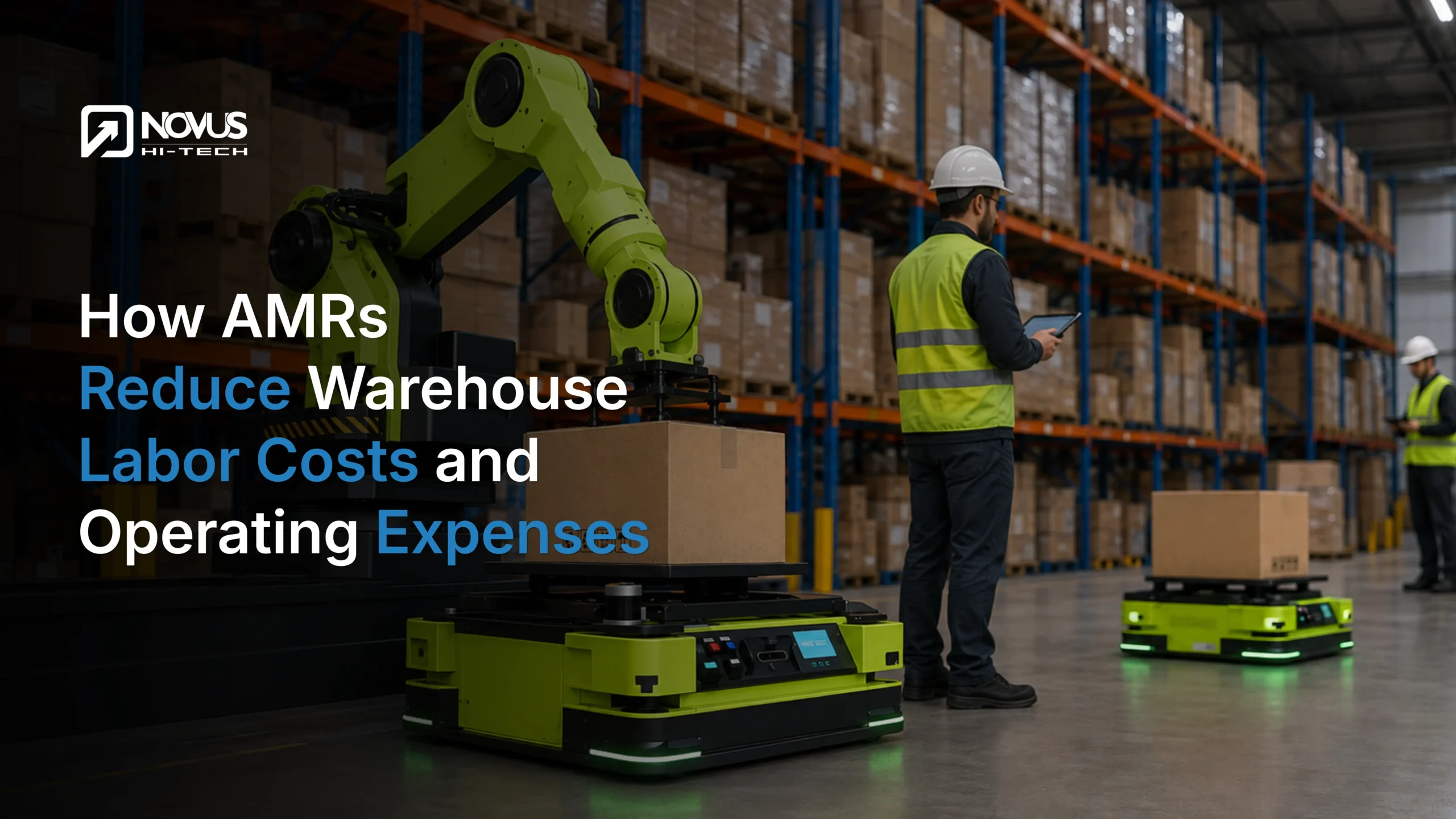
A quick answer: In the right deployment, AMRs can cut warehouse labor needs by up to 25%, largely by removing walking, waiting, and repetitive motion that eats up a picker’s shift. So your existing team can take on more work without adding headcount at the same pace.
Here’s the problem your team is likely facing. Wages keep rising, open roles sit unfilled for weeks, and every mispick or slow pick adds costs you can’t see until the month-end report lands. You don’t need to plan anything again. You probably need your existing team to cover more ground without walking it.
That’s precisely what AMRs solve. A single warehouse worker can record 8 to 10 miles a shift, moving between pick faces and pack stations, and to be honest, none of that distance adds value. It’s the simplest way to reduce warehouse costs with robots without affecting service levels.
This guide breaks down where the labor reduction comes from, what the latest industry data shows, and how to start capturing AMR cost savings in your own operation.
The Real Drivers Behind Rising Warehouse Costs
Before we get to the fix, let’s pinpoint the problem.
- Wages keep rising. In India, warehouse salaries are rising by around 7%-10% annually, depending on the role and location.
- Workers are hard to find. Nearly half of warehouse managers say hiring and retaining staff is extremely challenging.
- Manual travel time adds up. Pickers walk miles a day just to grab items, and every minute of walking is a minute not spent picking.
- Injuries cost real money. Manual material handling is one of the top causes of warehouse injuries, and each one brings medical costs, downtime, and claims.
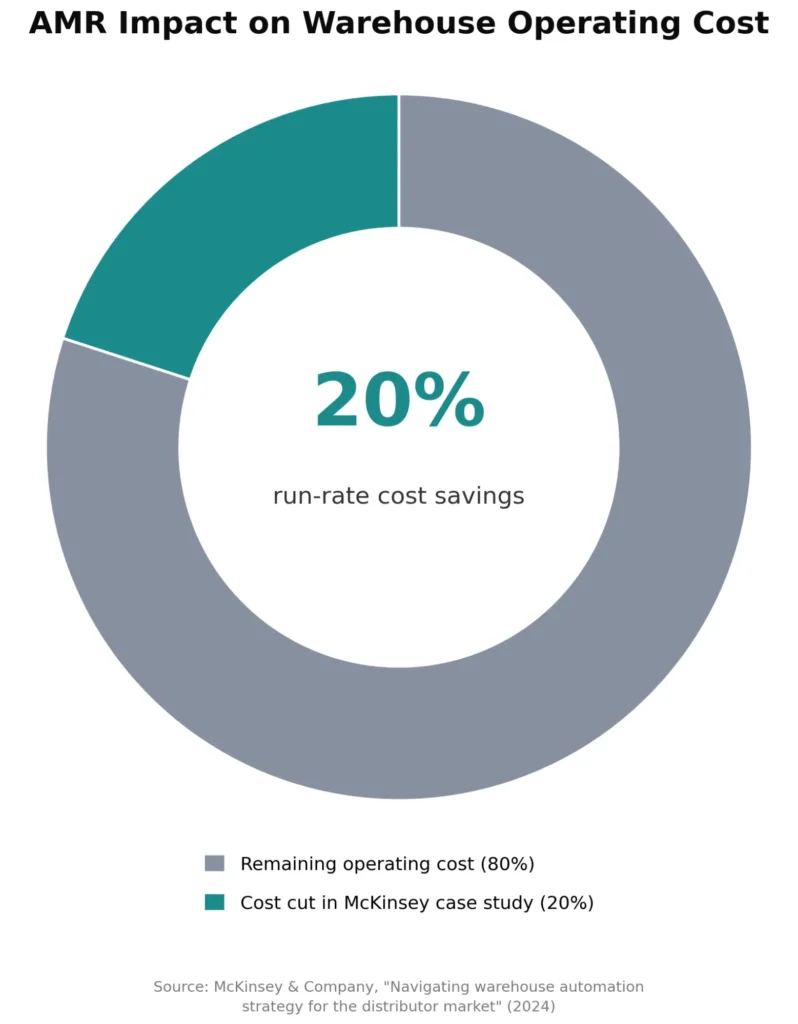
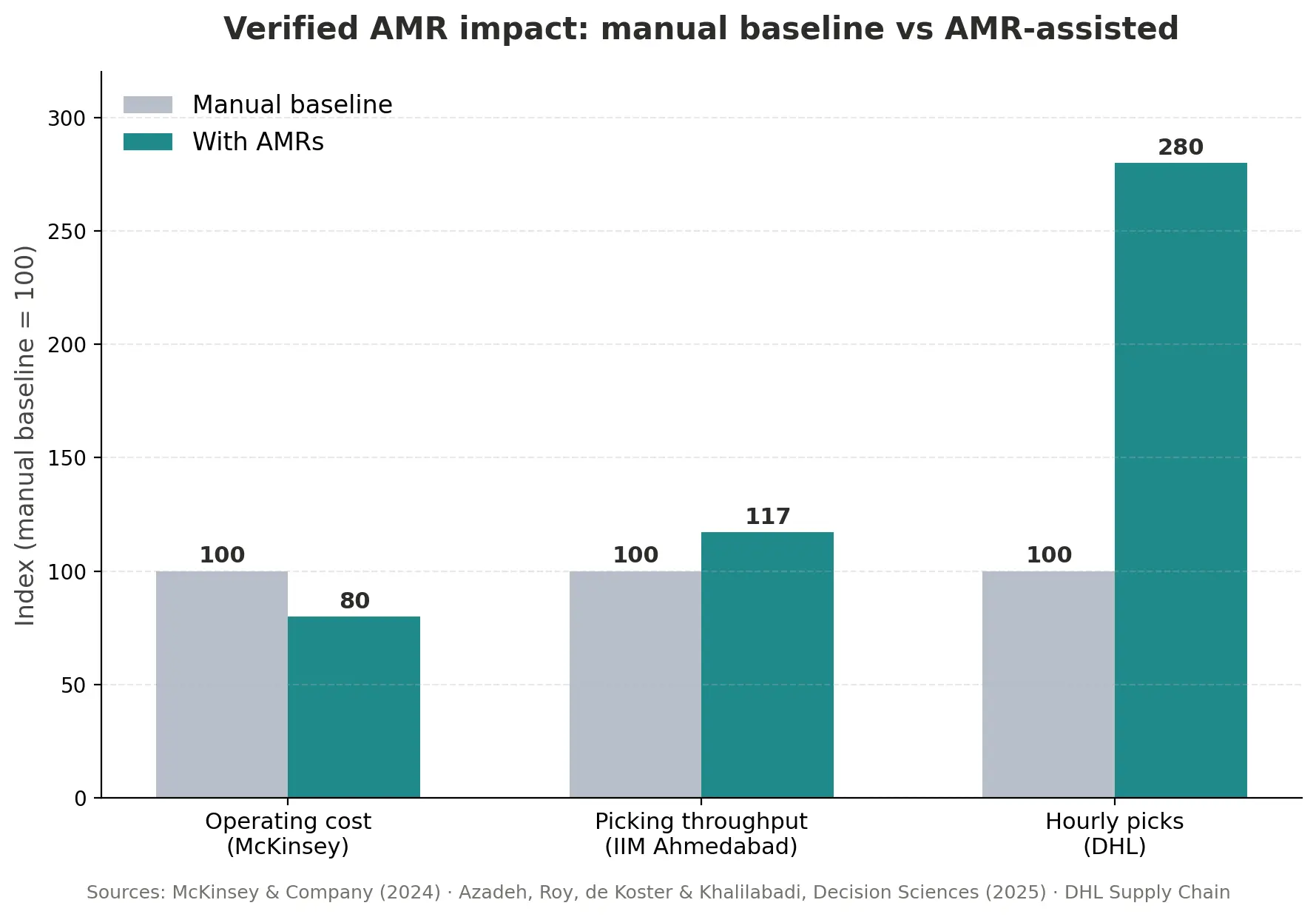
None of this is new. What’s new is a practical way to tackle AMR warehouse operating costs, with McKinsey reporting up to 20% cost savings and 4× productivity gains from warehouse automation.
The Five Cost Levers AMRs Pull
AMRs handle the repetitive, physical work that drains your labor budget. That’s the whole concept.
Here’s where the savings come from:
- Less walking, more picking. IIM Ahmedabad research found that AMR-based zoning can improve warehouse picking throughput by up to 17%.
- Fewer injuries, fewer claims. Robots take on the heavy lifting and repetitive travel, which lowers strain injuries and the costs that come with them.
- Better space use. AMRs don’t need wide aisles built for forklifts. Tighter layouts mean more storage in the same square footage.
- Fewer errors, less rework. Automated picking and put-away cuts mispicks, which means fewer returns and less wasted labor fixing mistakes.
- Round-the-clock output. Robots don’t take breaks, call in sick, or slow down at hour eight of a shift.
Add all of those together, and you get real AMR cost savings on your monthly operating statement.
Labor Cost Reduction in Practice: What It Looks Like on the Floor
Let’s make this concrete. At a Reliance JioMart grocery warehouse in India, automation reportedly reduced labor requirements by 25% in May 2025.
Here’s what labor cost reduction through warehouse automation looks like on the floor:
- Pickers stay in one zone instead of walking the whole facility.
- Robots handle replenishment runs that used to need a dedicated staffer.
- Supervisors shift from handling manual tasks to managing exceptions.
- Seasonal spikes get absorbed by adding robot hours, not by rushing to hire temp labor.
Labor cost reduction through warehouse automation compounds every quarter you keep the fleet running.
Robots in the Warehouse: The Numbers Behind the Claim of Lower Warehouse Costs
And you don’t have to take our word for it. Industry research indicates a definite move toward automation as warehouses seek to manage operating costs and improve productivity.
- DHL says that deploying AMRs can increase the number of units picked per hour by up to 180%, while reducing the walking required of warehouse workers.
- The global warehouse AMR market is projected to triple by 2030 as adoption in logistics, e-commerce, and fulfillment operations grows, according to ResearchAndMarkets.
The result is simple: With warehouses facing rising labor pressures and increasing fulfillment demands, AMRs are proving to be a practical way to improve efficiency without depending solely on a larger workforce.
Starting: How to Reduce Your Warehouse Operating Costs
You don’t need to automate your whole facility on day one. Start smart.
- Map your busiest workflows first. Look at where your people walk the most. That’s usually where an AMR pays off fastest.
- Match the robot to the task. Not every AMR does the same job. Some move totes, some handle pallets, and some lift entire shelving units. Getting familiar with the different types of AMRs helps you pick the right fit instead of guessing.
- Check your systems integration. Your AMRs need to talk to your WMS and ERP without a headache. Confirm this upfront.
- Pilot before you scale. Run a small deployment, measure the labor hours saved, then expand with real numbers backing your case.
- Think beyond picking. AMRs also handle inter-floor transport, tool delivery, and finished goods movement – areas most teams overlook when they first budget for automation.
Conclusion
Wages keep rising, workers are harder to find, and manual processes only get more expensive over time.
AMRs flip that script. They save travel time, they reduce injuries, they tighten up your storage footprint, and they free your team to focus on work that needs a human.
Want to see what that looks like for your facility? Talk to the Novus warehouse automation team, map your busiest workflows, and start with a pilot you can measure. Your budget – and your team-will eventually thank you.
FAQs