
AI vision now determines whether your inspection line has caught the defect or has shipped it.
A camera can pass every part through a demo. Then a new surface finish comes along, the lighting changes, and the pass rate drops.
The trends that are building towards CES 2027 point to where AI vision is heading in the areas of industrial inspection, defect detection, and robot cells.
Here’s what you can expect on the show floor, why it’s important, and how it relates to actual production lines.
Key Takeaways
- AI vision decides whether a line catches a defect or ships it.
- Five trends are shaping CES 2027: production-scale physical AI, reshoring-ready inspection, vision and robots in one cell, record robotics demand, and simulation-trained models.
- Traditional rule-based machine vision works well with stable parts. AI-based vision is better suited to handling variations in finish, shape, and lighting.
- Reported AI inspection results show a 35-36% reduction in defects. Both sites were running a number of digital tools simultaneously, so the vision is getting some of the credit.
- Vision-guided robotics allows the robot to correct for part position prior to movement.
- CES judges assess submissions based on innovation, functionality, and design
What Is AI Vision?
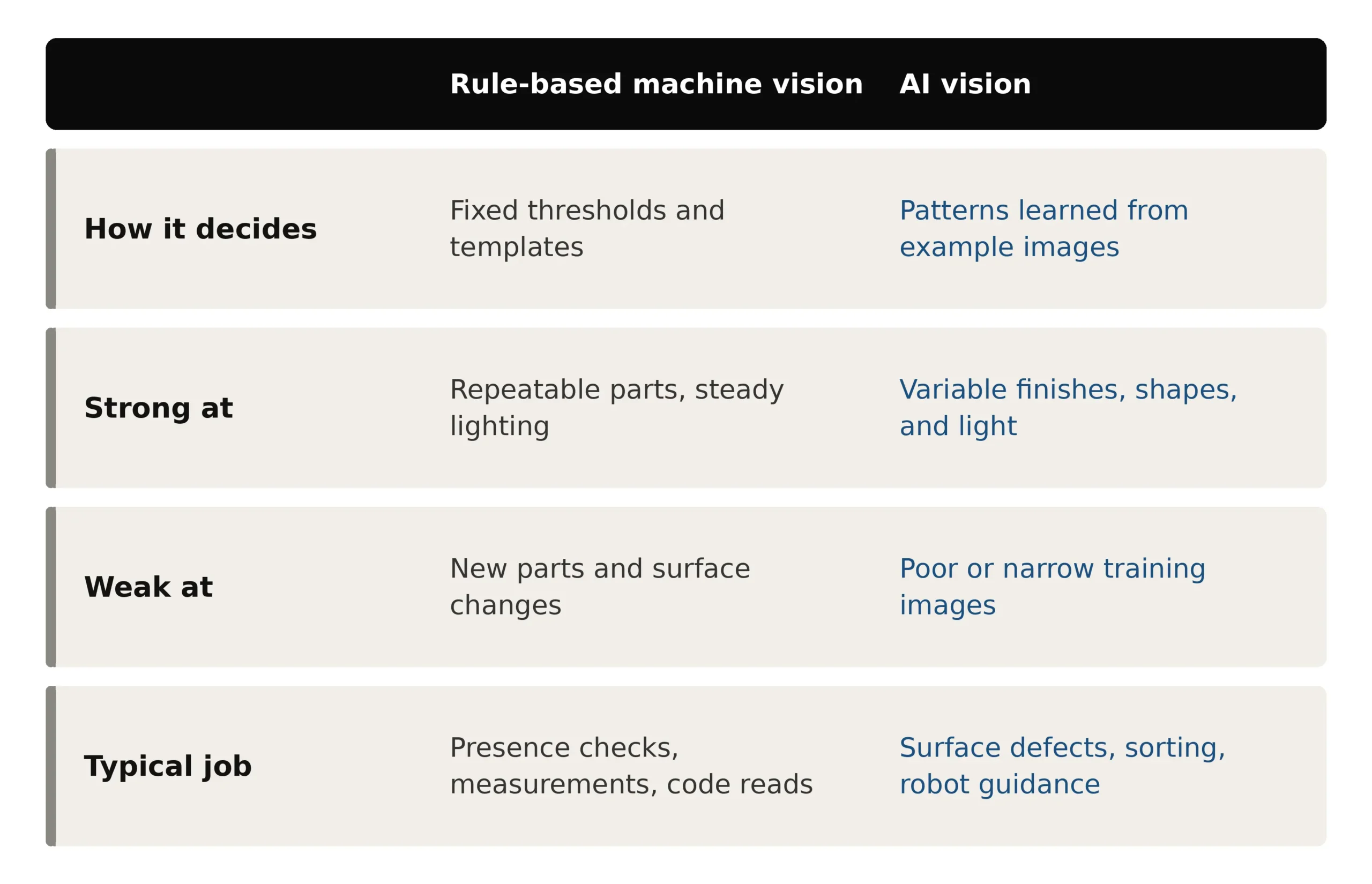
AI vision is machine vision with a brain behind the camera. Rather than comparing an image to a fixed template or threshold, it uses deep learning models to learn by example, just like a human inspector learns to spot a defect: by seeing enough good and bad parts, not by following a rulebook.
An industrial camera takes a picture of the part, an edge compute unit runs the model in milliseconds, and the system passes, flags, or routes to a human if confidence drops too low. That’s the practical difference on a factory floor: a rule-based system needs an engineer to redefine its thresholds when a part or finish changes. AI vision keeps on working because it generalizes from examples, not just memorizing one.
Five AI Vision Trends Shaping CES 2027
The CES Innovation Awards data actually does a better job of setting the themes than any keynote teaser. CTA’s announcement reports nearly 4,000 submissions, a record number and 10% more than last year. Robotics was up 74% (level with Enterprise Tech for the largest increase). AI entries were up 15%.
Five trends stand out for factories:
- Physical AI Is Moving from Demo to Deployment: CES 2026 had a Manufacturing Track and an Advanced Manufacturing Showcase. The 2027 entry data suggests that the focus is increasing.
- Inspection Built for Reshoring: The honoree list includes an AI inspection system for reshoring electronics lines. A3 reports that manufacturers are turning to automation to deal with reshoring, workforce shortages, and productivity, as evidenced by its 2025 robot order data.
- Vision and Robots in One Cell: The honoree list also features an AI robotic welding system for multi-pass groove welds. North American companies ordered 36,766 robots in 2025, up 6.6%.
- Record Robotics Demand: Entries up 74% means a very busy floor and a lot more claims to go through.
- Simulation-Trained Models: The CTA CES 2026 recap made the point that generative AI is now the engine behind simulation-based training, with robots learning from virtual experience. The same is true of vision models, which also need rare defects to be seen in large numbers.
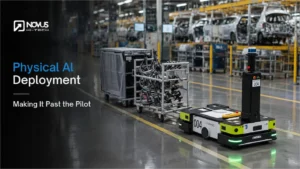
Trade shows are all about demos. Factories want results at scale, and the hard part is moving a pilot into production. A physical AI deployment guide covers what that takes.
Machine Vision vs. Computer Vision: What Changed in Industrial Vision Systems
People use machine vision and computer vision as one term. On the factory floor, they’re quite different.
Rule-based machine vision works by comparing an image to a template or a threshold. It works very well when the parts are the same, and the lighting is the same.
AI vision learns from example images. It’s much better at dealing with variation (new finishes, new angles, different lighting, etc.).
Many industrial vision systems run both. The rules do the measuring. The AI makes the judgment calls.
The market is moving. A3’s quarterly tracking shows North American machine vision transactions up year-on-year in every quarter of 2025, from 2.2% in Q1 to 5.4% in Q4.
AI Visual Inspection and Defect Detection: What Reported Results Look Like
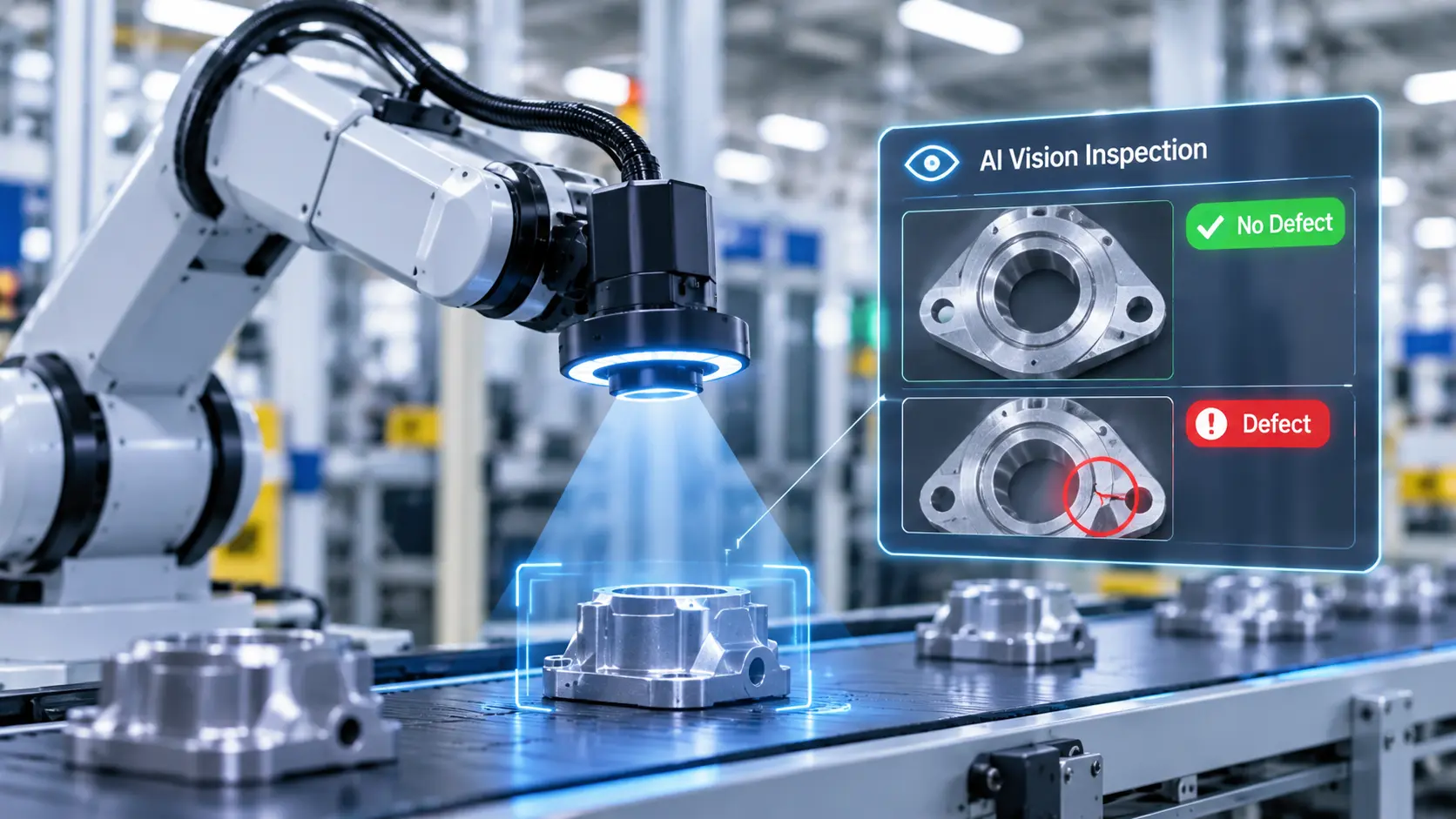
AI visual inspection gets the nod when the defects are changing in shape, size, and location. A fixed rule won’t be able to cover all the cases. A trained model can learn them.
The World Economic Forum’s January 2026 Lighthouse update shows what the plants report. The table includes two vision-guided examples.
| Use | What the vision system does | Reported result or signal |
| Surface defect detection | A tire plant in China used AI, machine vision, and big data | Defect rate down 36% |
| Inspection inside a wider program | A spandex plant used AI visual inspection among 62 digital applications | Quality defect rate down 35% |
| Vision-guided pallet pickup | An RGB-D camera and deep learning locate the target pallet | Position error under 20 mm, rotation error under 0.37° in a 2024 Sensors study |
| Vision-guided welding | AI guides a robotic welder through multi-pass groove welds | Named a CES 2027 Innovation Awards honoree |
Read those results with a grain of salt. Both Lighthouse sites were running multiple digital applications simultaneously, so the reported improvements cannot be attributed to AI vision alone. WEF’s own data shows that 94% of the successful transformations involve the use of multiple technology domains.
Vision-led inspection is one of four physical AI applications already in operation on factory floors, as covered in this physical AI in manufacturing guide.
Vision-Guided Robotics: When the Robot Sees Before It Moves
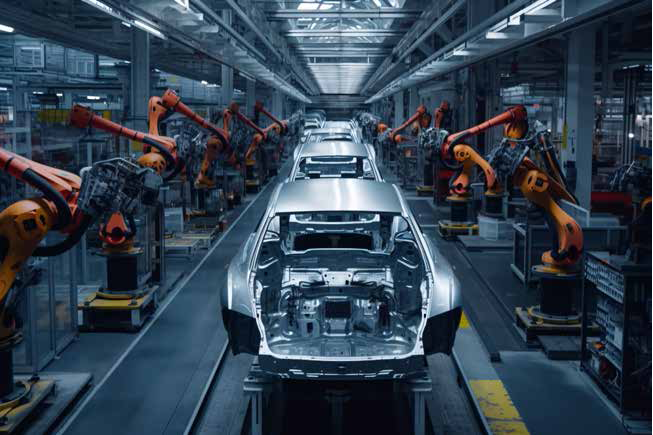
Vision-guided robotics gives the robot eyes. A camera finds the part, and the robot then adjusts its path to match.
A fixed-position robot will fail if a part is sitting a few mm out. A vision-guided robot will compensate for that.
Three jobs show the shift:
- Pick and Place: The cameras locate the parts in random positions.
- Pallet Handling: Vision finds the pallet, and the forklift lines up to it, even when pallets are wrapped, rotated, or damaged. This 3D pallet detection guide shows how.
- Guided Processes: The welding, packing, and palletizing cells are all capable of being guided to each part.
Where Novus Fits in These Trends
These trends share one need: vision that holds up when parts change. Novus builds that into its factory operations solutions.
- Physical AI at Production Scale: Augmented Worker adds automatic visual inspection oversight, process-adherence monitoring, and turnaround-time tracking at the assembly station.
- Reshoring-Ready Inspection: The vision inspection system uses advanced imaging and purpose-built algorithms for high-speed, precise checks on the line.
- Vision and Robots in One Cell: The computer vision-guided robotic arm picks, places, packs, and palletizes finished goods, adjusting to part position in real time rather than relying on a fixed, pre-programmed path.
Measure AI Vision by Your Cost of Quality
A defect that ships costs more than a defect you catch. It becomes a return, a rework job, or a customer who orders elsewhere.
So judge any AI vision system by what it changes on your line: fewer escapes, less scrap, and steadier yield.
How would vision inspection or a vision-guided arm fit in your plant? Get in touch with the Novus team.
AI vision earns its place when it lowers your cost of quality, not when it wins the demo.
FAQs