
Most factory digitization projects never leave the pilot stage. The World Economic Forum has noted that a large majority of manufacturers stay stuck in what it calls pilot purgatory, running proofs of concept that never scale across the plant. The factories that break out of that pattern are the ones worth studying.
India now has a growing list of plants that moved past pilots and put smart factory automation into full production, with measurable results in cost, quality, energy, and speed. This post breaks down five real deployments across steel, pharma, FMCG, packaging, and renewable energy, each showing what smart factory automation in India looks like in practice, the technologies involved, and the outcomes the companies themselves reported. Whether you sit on the plant floor or in the boardroom, these examples show where the value comes from.
What Smart Factory Automation Actually Means
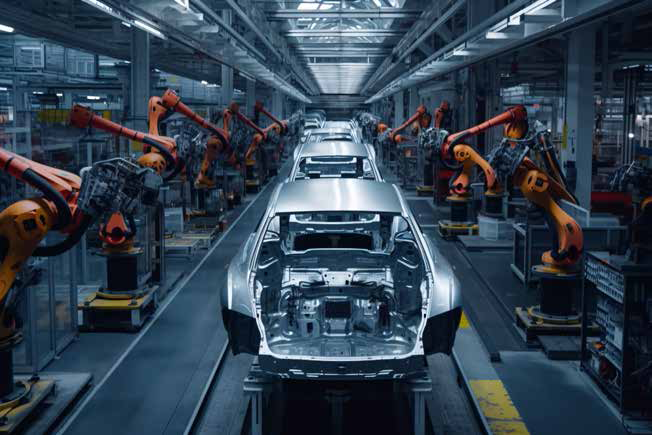
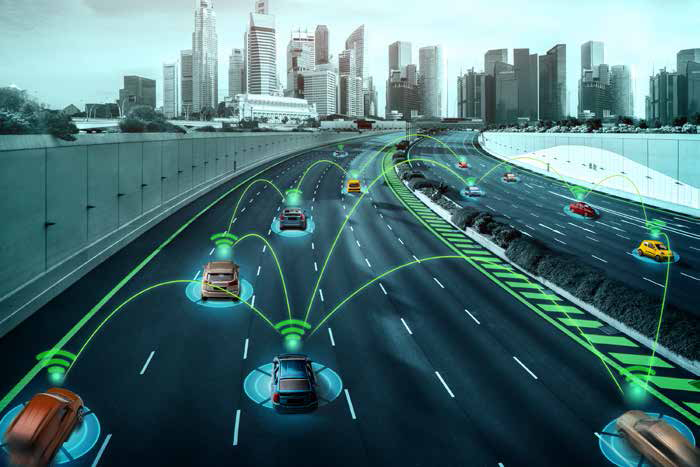
From a business perspective, smart factory automation means utilizing connected machines, sensors, and software to streamline production with reduced manual input and enhanced real-time decision-making. From a technical viewpoint, it’s an integration of the Industrial Internet of Things (IIoT), advanced analytics, machine learning, digital twins, and automated material handling into a data-driven ecosystem.
The key difference between traditional automation and smart automation is the presence of a feedback loop: while traditional automation relies on predefined rules, smart automation constantly gathers data, identifies patterns, and adapts accordingly.
In practice, most smart factory automation solutions combine a few building blocks: IIoT sensors for data capture, a manufacturing execution system (MES) to coordinate production, analytics for quality and efficiency, and robotics such as autonomous mobile robots for material movement. You do not need all of them on day one, and the deployments below prove it.
Why Smart Factory Automation in India Is Accelerating
Indian manufacturers are investing for three reasons: rising cost pressure, tighter global quality standards, and government support through programs like Make in India and production-linked incentives. The market reflects it. India’s smart manufacturing market was valued at roughly USD 23 billion in 2025 and is projected to grow at about 15.7% a year through 2033, according to Grand View Research. Within that, automotive and transportation hold the largest share of smart factory spending, close to 30%, as per P&S Intelligence.
Government policy is doing much of the heavy lifting. Under Make in India, the goal is to lift manufacturing to 25% of GDP from roughly 15%, a target that pushes factories toward the productivity only automation and data can deliver. Three policy levers matter most:
- Production Linked Incentive (PLI) scheme. Launched in 2020 with an outlay of about ₹1.97 lakh crore across 14 sectors, including electronics, automobiles, specialty steel, and solar PV modules, it rewards higher domestic output and encourages modern, automated capacity. See the government’s PLI overview for scheme details.
- SAMARTH Udyog Bharat 4.0. The Ministry of Heavy Industries’ Industry 4.0 program runs demonstration and experience centres, such as C4i4 Lab in Pune and CMTI in Bengaluru, to help manufacturers, especially MSMEs, adopt IIoT, analytics, and robotics.
- WEF Centre for the Fourth Industrial Revolution, India. Established in 2018 with NITI Aayog as the nodal agency, it helps shape policy frameworks for emerging manufacturing technologies.
Together, these programs lower the risk of adopting smart factory automation solutions and give mid-market plants, not just large enterprises, a practical on-ramp. The recognition that carries the most weight globally is the World Economic Forum’s Global Lighthouse Network, a list of factories judged to have scaled Fourth Industrial Revolution technology with real financial and operational impact. India has several sites on that list. The five below are among the most instructive.
5 Real Smart Factory Deployments in Indian Manufacturing
1. Tata Steel, Kalinganagar (Steel)
- Sector: Steel
- Location: Kalinganagar, Odisha
- Lighthouse: 2019
- Headline result: around 50% faster time to market
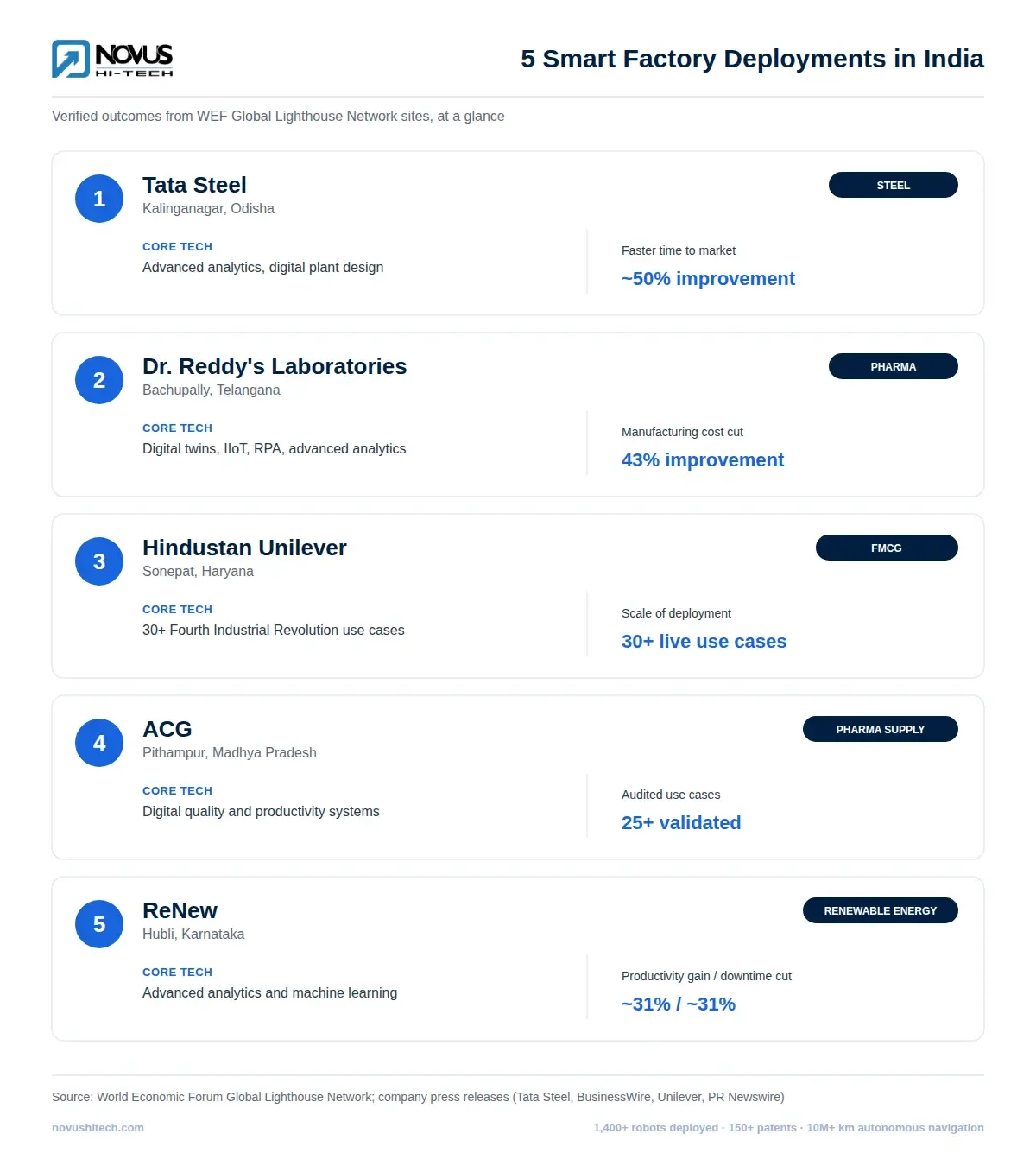
Tata Steel’s Kalinganagar plant in Odisha was the first Indian factory named to the WEF Global Lighthouse Network, in 2019. The greenfield plant was designed with digital in mind from the start, then layered advanced analytics across operations to lift productivity and quality. Tata Steel and the WEF have credited the site’s data and analytics work with improving time to market by around 50%, alongside a faster ramp to full capacity. In a capital-intensive sector like steel, that matters. The lesson: building analytics into plant design early pays off more than bolting it on later.
2. Dr. Reddy’s Laboratories, Bachupally (Pharma)
- Sector: Pharmaceuticals
- Location: Bachupally, Hyderabad
- Lighthouse: 2022
- Headline result: 43% lower manufacturing cost, 41% less energy
Dr. Reddy’s largest facility, in Bachupally near Hyderabad, joined the Lighthouse Network in 2022 after a program it called OpsNext. The plant deployed six of the eight core 4IR technologies, including advanced analytics, digital twins, robotic process automation, and IIoT, across more than 40 use cases. The reported results are among the strongest published by any Indian site: a 43% improvement in manufacturing cost, a 30% reduction in production lead time, and a 41% cut in energy use, along with fewer quality deviations. The takeaway: even under strict compliance demands, pharma can automate aggressively when data governance is solid.
3. Hindustan Unilever, Sonepat (FMCG and Nutrition)
- Sector: FMCG and nutrition
- Location: Sonepat, Haryana
- Lighthouse: 2023
- Headline result: 30+ 4IR use cases across an end-to-end supply chain
Hindustan Unilever’s Sonepat site, its largest Horlicks plant, became a Lighthouse in 2023 by running more than 30 Fourth Industrial Revolution use cases across its end-to-end supply chain. The focus was agility: serving many product variants, controlling costs during inflation, and reducing environmental footprint at the same time. HUL now has multiple Lighthouse sites in India, one of the deepest smart manufacturing footprints in the country. For high-volume consumer goods, the lesson is that smart automation is as much about flexibility as raw throughput.
4. ACG, Pithampur (Pharma Capsules and Packaging)
- Sector: Pharma supply (capsules and packaging)
- Location: Pithampur, Madhya Pradesh
- Lighthouse: 2023
- Headline result: 25+ audited use cases across quality and productivity
ACG, the world’s largest integrated supplier to the pharmaceutical industry, brought its capsule plant in Pithampur, Madhya Pradesh, into the Lighthouse Network in 2023. The recognition followed an audit of more than 25 use cases spanning quality, productivity, and operations. ACG’s case is useful because it sits in the supplier tier rather than being a marquee brand, proof that smart factory automation in India is not limited to the largest OEMs. Component and packaging suppliers can reach world-class digital maturity too, which matters for the mid-market firms that form the base of Indian manufacturing.
5. ReNew, Hubli (Renewable Energy Operations)
- Sector: Renewable energy operations
- Location: Hubli, Karnataka
- Lighthouse: 2021
- Headline result: 31% higher productivity, 31% less downtime, no extra capex
The fifth example stretches the definition of a factory, and that is the point. ReNew’s Hubli facility in Karnataka was named a Lighthouse for applying advanced analytics and machine learning to raise the yield of its distributed wind and solar assets. The deployment improved employee productivity by about 31% and cut asset downtime by roughly 31%, with no additional capital spending. It shows the smart factory playbook, data capture, analytics, and predictive action, scaling beyond a single line to distributed operations. For India’s fast-growing solar and battery manufacturing sector, that discipline is now moving onto the production floor.
What These Five Deployments Have in Common
Different sectors, similar patterns. Four themes stand out for any manufacturer planning a program:
- They started with data. Every site invested first in capturing clean, real-time data before chasing AI or automation.
- They scaled use cases, not pilots. Impact came from dozens of use cases in production, not one showcase demo.
- They built people’s capability. Each invested in training, analytics translators, and digital skills alongside the technology.
- They tracked hard metrics. Cost, lead time, energy, downtime, and quality, all measured and reported, not vague efficiency claims.
The common thread is sequencing: start with connectivity and data, layer on analytics, then scale automation and AI.
How to Start Smart Factory Automation in Your Plant
You do not need a full Lighthouse program to begin. Most manufacturers get the fastest return from a focused first project, then expand:
- Instrument one line. Add IIoT sensors to a critical line to capture real-time production and machine data.
- Fix the data flow. Connect that data to an MES or analytics layer so it is usable, not siloed.
- Automate a bottleneck. Material movement is a common first win. Autonomous mobile robots and AGV and AMR systems remove manual transport and feed clean utilization data back into the system.
- Prove the metric, then scale. Lock in one measurable result, then repeat the pattern on the next line.
To automate material handling without heavy upfront capex, models like Robotics-as-a-Service let you start small and scale as results come in.
The Takeaway
Smart factory automation in India has moved well beyond the pilot stage. Across steel, pharmaceuticals, FMCG, packaging, and renewable energy, manufacturers are achieving measurable improvements in cost, lead time, energy efficiency, quality, and productivity by combining data, analytics, and automation in a structured way.
The common lesson is not that every factory needs the latest technology. Successful manufacturers start with a clear operational challenge, build a reliable data foundation, prove value through focused use cases, and then scale what works. That approach is consistent across every World Economic Forum Lighthouse featured in this article.
For manufacturers beginning their Industry 4.0 journey, the biggest competitive advantage is not adopting every new technology at once. It is identifying the right problem to solve, measuring the impact, and expanding automation where it delivers real business value.
Ready to Start Your Smart Factory Journey?
Whether you want to automate material handling, improve production efficiency, or build a scalable Industry 4.0 roadmap, success starts with choosing the right use case and technology for your operations.
At Novus Hi-Tech, we help manufacturers deploy autonomous mobile robots (AMRs), AGVs, warehouse automation, and Robotics-as-a-Service (RaaS) solutions that deliver measurable operational improvements. Talk to the Novus Hi-Tech team about deploying AMRs, AGVs, or a RaaS fleet at your facility — and get a throughput and payback assessment for your specific plant.