
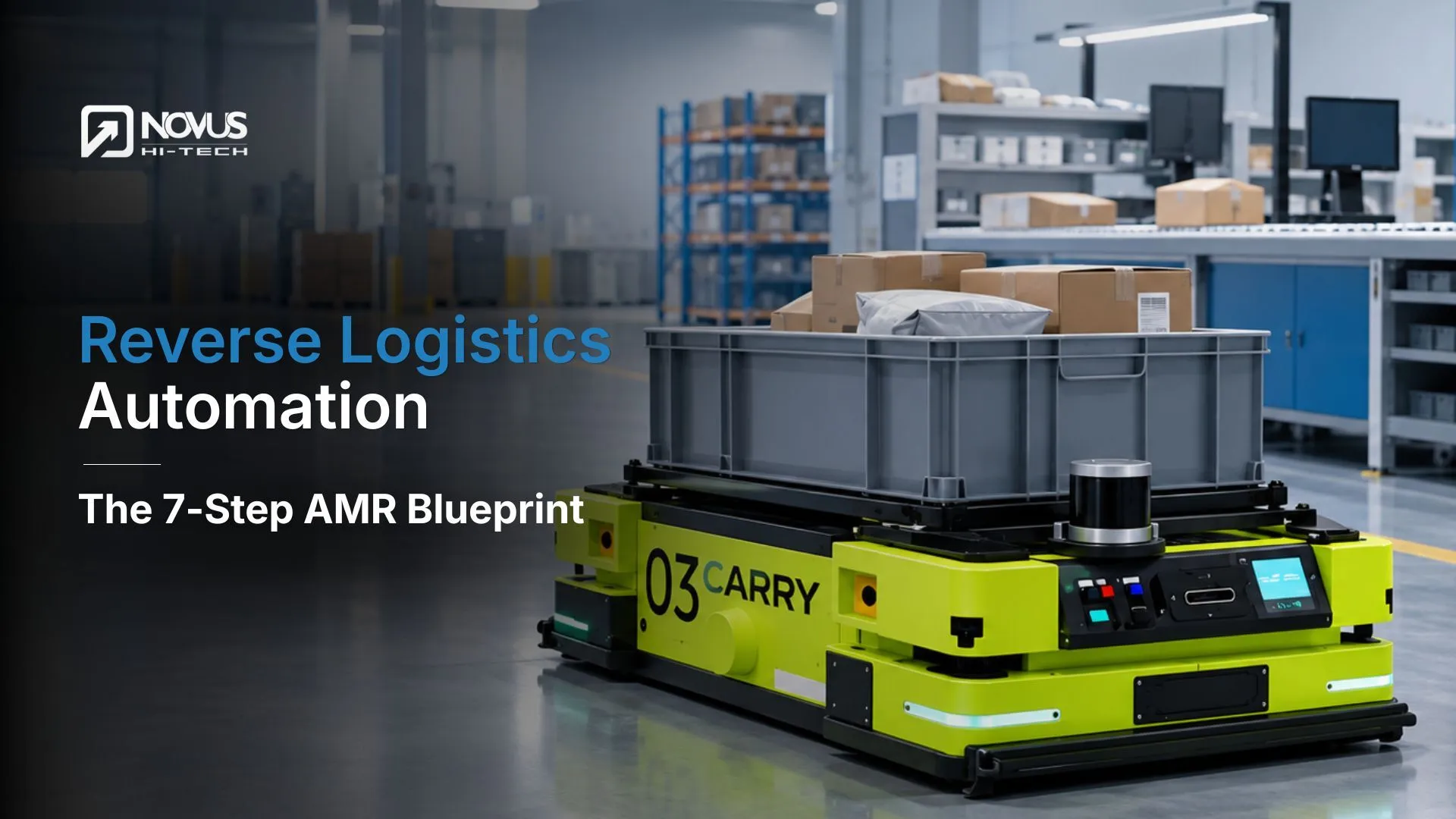
Reverse logistics automation seems like a luxury until up to 4 in 10 of your orders come back.
This is the everyday experience for many sellers worldwide. Returns pile up at the dock. Staff transport totes across the floor. Some inventory stays in a corner until the next sale launch.
So how can you move faster without hiring more staff?
Set up autonomous mobile robots, or AMRs, for the repetitive part that moves goods.
This guide breaks down further the seven moves that make it work.
Why Returns Break the Usual Warehouse Math
US retailers expect about 19.3% of online sales to come back in 2025, per the NRF Returns report.
An IIM Ahmedabad newsletter reports typical seller return rates of roughly 30%, with spikes toward 40% during big sale events. Fashion sellers commonly report 25% to 40%.
That changes your e-commerce returns automation numbers. Selecting robots only based on headcount is not feasible. The importance depends on speed, accuracy, and peak capacity.
The two streams connect at the same dock:
- Returns: products returned by buyers after delivery. Each product needs to be inspected and graded carefully.
- RTO parcels: parcels that did not reach the buyer. Many of them remain unopened, so check back as they can go back to stock faster.
Southeast Asia shows the same trend. The e-Conomy SEA 2025 report from Google, Temasek, and Bain projects regional e-commerce GMV above $180 billion in 2025. Video commerce already drives about 25% of it. More orders mean more returns on the same dock.
The Comprehensive Guide to AMR: Seven Moves from Dock to Shelf
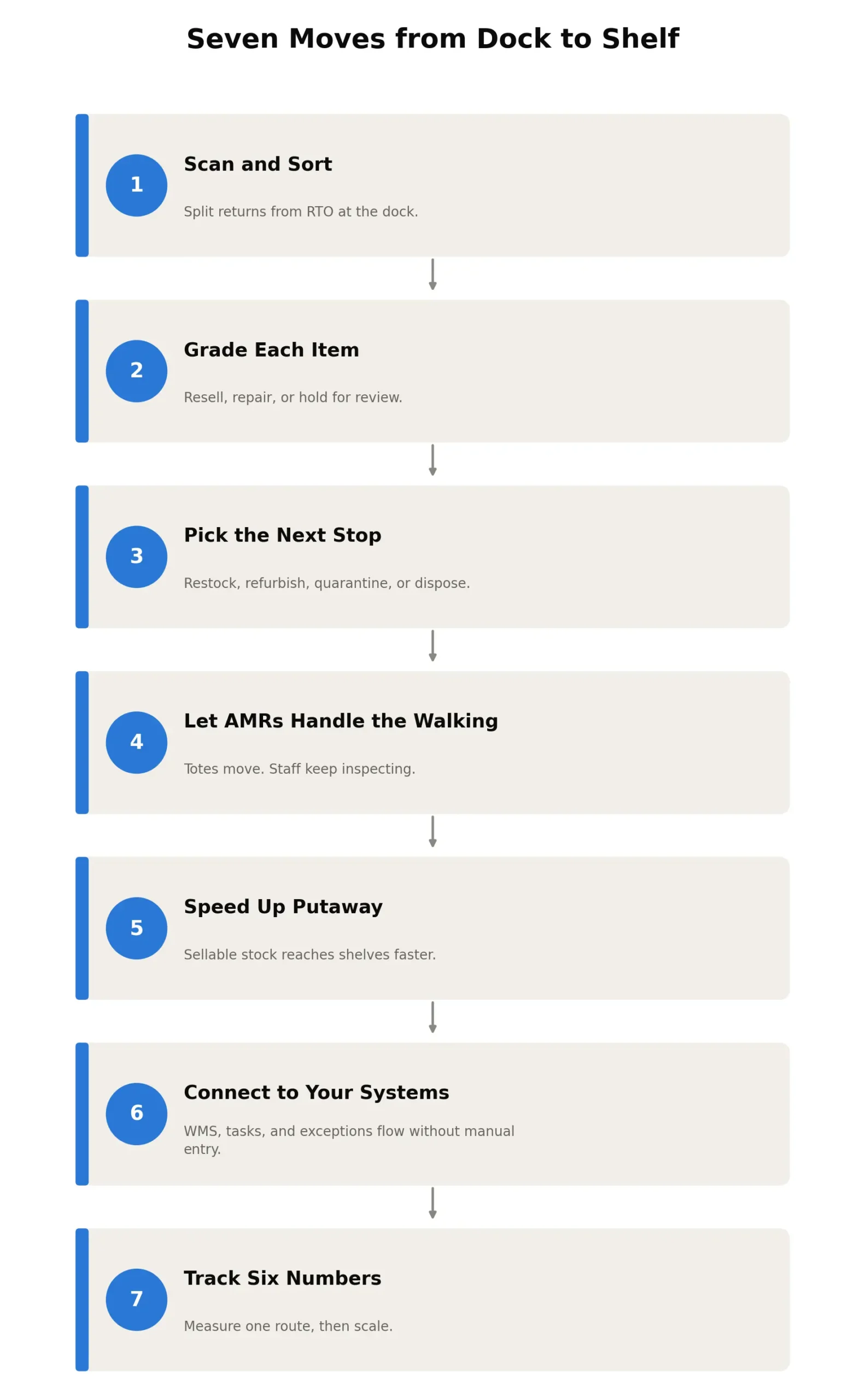
1: Scan and Sort Every Parcel at the Dock
Scan the barcode. Match it to the order. Split customer returns from RTO parcels right away.
Clean sorting at the door keeps every later step simple.
2: Grade Each Item Before It Moves
Check the condition fast. For fashion, look for stains, missing tags, odors, and wrong-size labels.
Then grade it: resell, repair, or hold for review. One quick decision here saves handling later on.
3: Pick the Next Stop for Every Item
Send each item to one of four places:
- Restock: clean and sellable
- Refurbish: needs repair or repacking
- Quarantine: needs a second look
- Dispose: can’t be resold
Your warehouse software assigns the destination. This is the core of returns center automation: decisions happen once, and every move follows them.
4: Let AMRs Handle the Walking
AMRs carry totes, bins, carts, or pallets between receiving, grading, sorting, and packing zones. Your team stops walking and keeps inspecting.
These return processing robots do one job well: move goods without a driver. A 2024 review of AMRs in warehouses from the University of Nevada, Reno, notes that most wasted warehouse expense comes from moving material point to point. That’s the gap you close.
5: Move Sellable Stock Back to Shelves Faster
Graded items head straight to putaway. AMRs run the putaway and replenishment loops.
Every hour a sellable item waits is an hour it can’t sell. During a sale, that hurts. Robotic returns handling shortens the gap between “inspected” and “available.”
6: Connect the Robots to Your Systems
Robots need instructions. Connect the fleet to your WMS and returns software so tasks, destinations, and exceptions flow without manual entry and much delay.
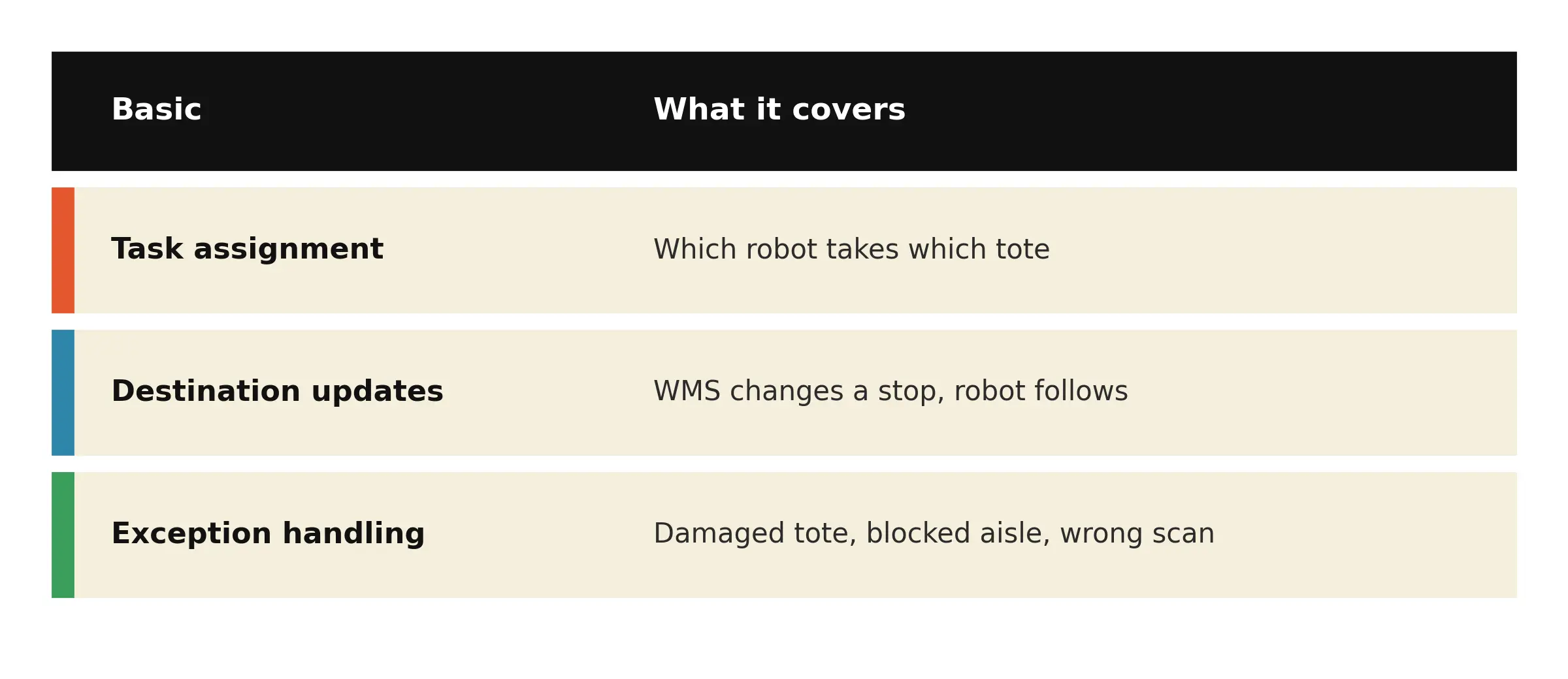
Cover these basics:
- Task assignment
- Destination updates
- Exception handling
If you are unsure how WMS, WES, and WCS work together. Novus breaks down each layer in its WMS vs WES vs WCS recent guide.
7: Track Six Numbers, Then Scale
Start with one route. Measure:
- Return-to-stock time
- Putaway productivity
- Processing throughput
- Inventory accuracy
- Manual travel distance
- Cost per return
Add robots only where the data points are. For cost levers to model, read how AMRs reduce warehouse operating costs. Novus reports up to 30% lower material movement cost and up to 30% higher productivity from its warehouse automation.
Warehouse Returns AMR Checklist for Any Region
Run through this before you sign anything:
- Verify layout: assess aisle width and turning space in the returns area.
- Peaks: size for sale events, not average days.
- Systems and loads: verify WMS compatibility and which totes, carts, and pallets you move.
- Charging and safety: plan charge points and pedestrian paths early. The AMR battery charging guide compares opportunity and full-cycle charging.
- ROI: pick one lane you can measure.
The AMR projects work well when a warehouse returns to start small and shows real outcomes. Novus Hi-Tech builds AMRs and fleet solutions for e-commerce warehouses. You can select a single route before you commit to a fleet.
Conclusion
Choose the route that requires the most walking for staff. Automate and measure it. And then grow it.
Ready to see reverse logistics automation work on your floor? Talk to the Novus team and map your first AMR route.