
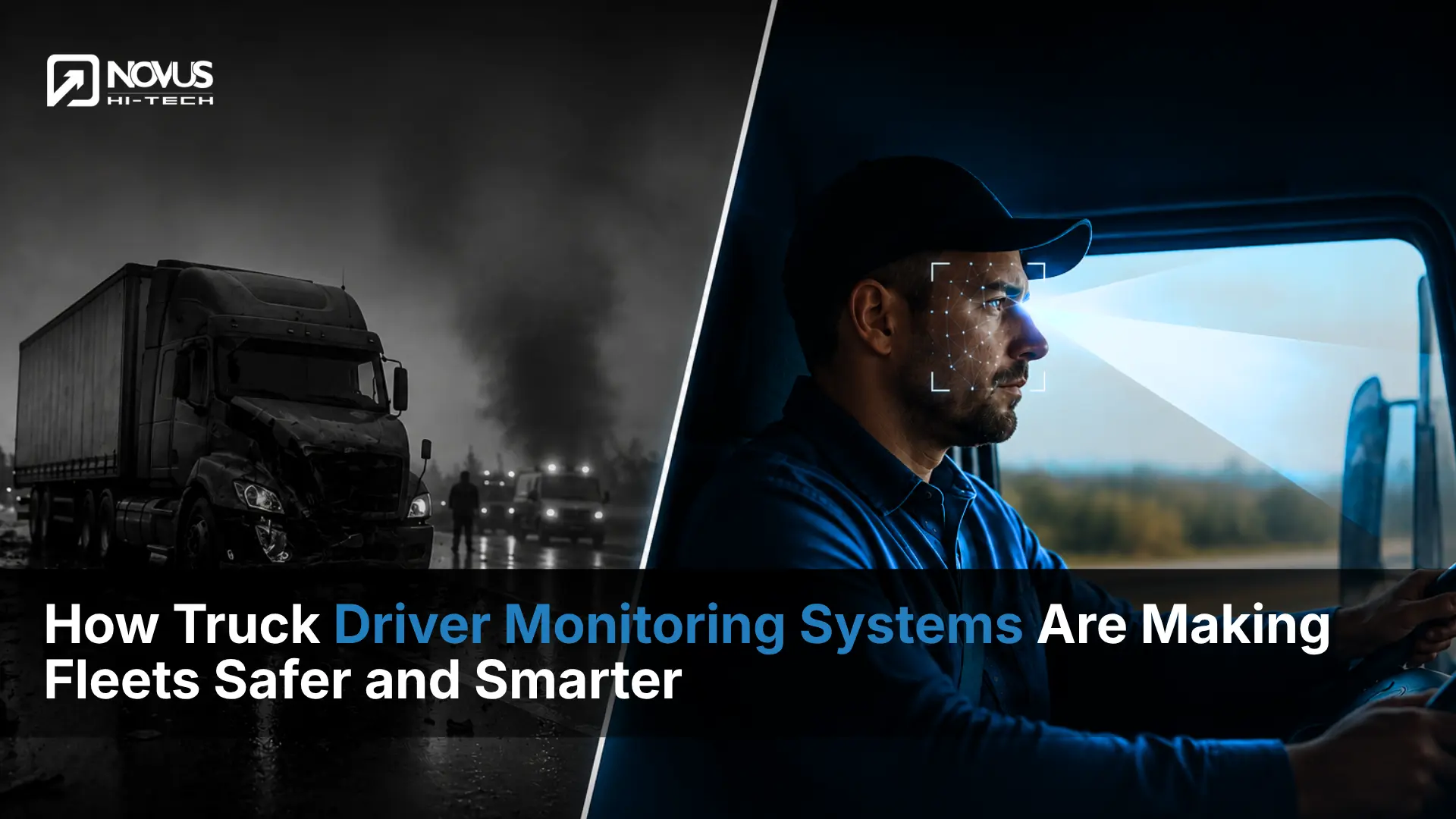
Commercial fleets operate under constant pressure. Schedules are tight, routes are long, and the cost of a single preventable incident extends far beyond the moment it happens. Yet for most fleets, the factor that contributes most to road risk, driver behavior in the cab, has remained the hardest to monitor in real time
A truck driver monitoring system changes that. Using AI-driven cameras and edge computing, these systems detect fatigue, distraction, phone use, and unsafe driving patterns as they develop, before they escalate into incidents. This is a meaningful shift from how fleet safety has traditionally worked, where the industry has relied on GPS, electronic logging devices, and post-event reporting. Those tools answer the question of what happened. A driver monitoring system answers the question of what is happening right now.
The urgency behind this shift is real. According to FMCSA data, there were 167,425 reported semi-truck crashes in 2024 alone, with approximately 74,000 people injured in those incidents. A growing body of research confirms that driver-related factors, including fatigue, distraction, and inattention, are present in a significant share of these events. Technology capable of detecting and addressing those factors in real time represents one of the most practical levers available to fleet operators today.
What Do You Get Out Of This Article?
Road incidents are expensive, disruptive, and in most cases, preventable. This article breaks down the real business cost of reactive fleet safety, explains how modern driver monitoring systems detect risk before it escalates into an incident, and shows what the shift to proactive monitoring has delivered for fleets operating in high-stakes environments.
The Impact of Preventable Road Incidents
Road incidents involving commercial trucks carry consequences that extend far beyond the moment of impact. There is, first, the human dimension. Drivers, their families, and other road users bear the personal weight of injuries and fatalities that, in many cases, stem from conditions that were detectable and preventable.
The business impact is equally significant. For medium to heavy trucks, the average cost of a single crash is estimated at around $148,279, accounting for vehicle repair, medical payments, third-party property damage, and towing. That figure, however, represents only the visible surface.
Fleet operators in 2026 are contending with a more complex financial picture. Commercial auto insurance costs rose 3% in 2024, following a 12.5% increase in 2023, according to the American Transportation Research Institute. Trucking fleet umbrella rates jumped 18% in 2025, driven significantly by nuclear verdicts, where jury awards exceeding $10 million against trucking companies are becoming more common. GPS tracking and AI dashcam programs can reduce commercial truck fleet premiums by 15 to 30%, but fleets need to make the shift first.
Beyond insurance, the indirect costs of a single preventable accident include vehicle downtime, driver replacement, litigation, compliance risk, and reputational exposure with customers. A fleet that experiences frequent incidents does not just spend more on claims. It operates in a state of reactive instability that compounds over time.
The operational tension here is straightforward: incidents are expensive, but the conditions that produce them are often visible before they become incidents. The gap between those two realities is where better technology can make a direct difference.
How Truck Driver Monitoring Systems Are Changing Fleet Safety
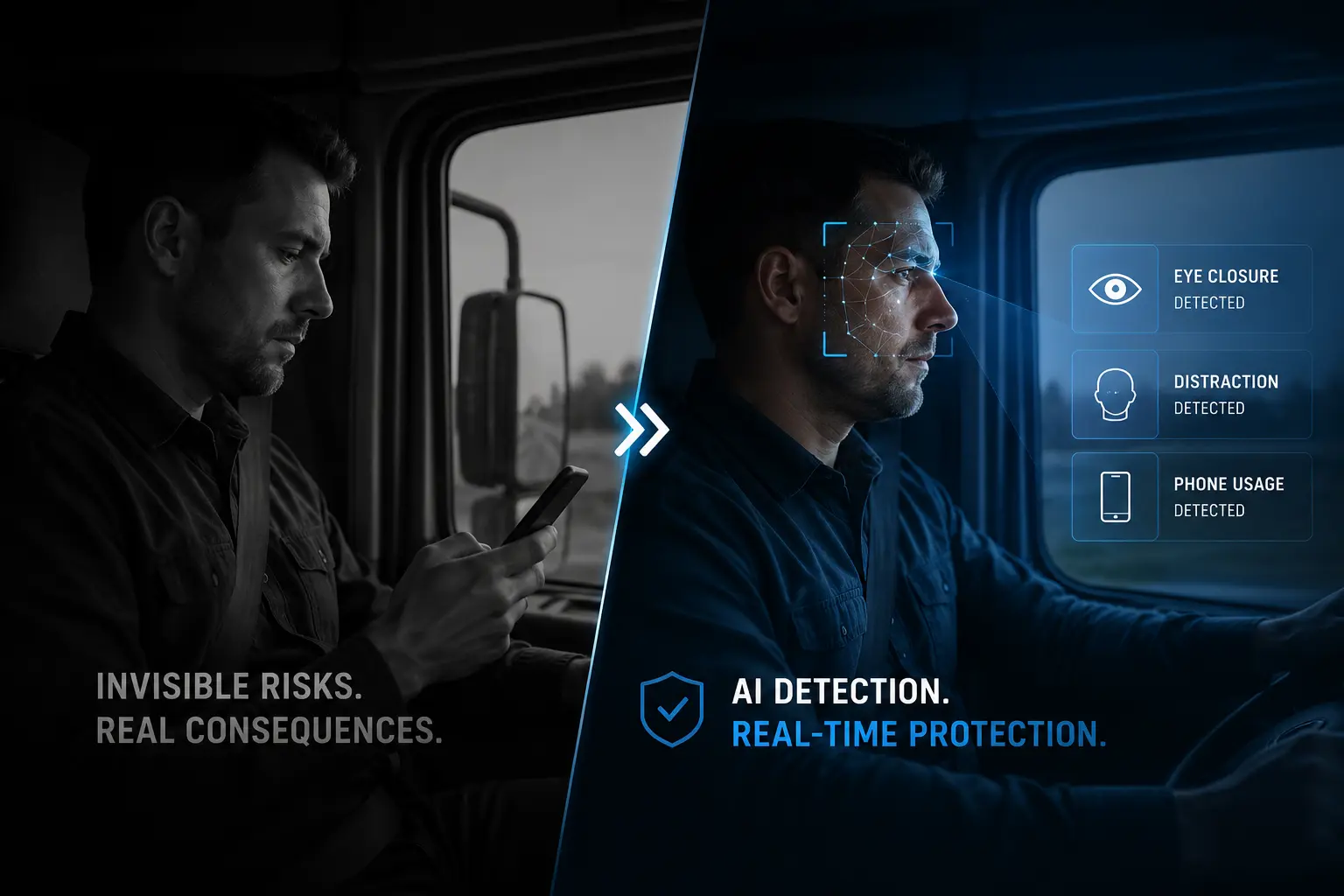
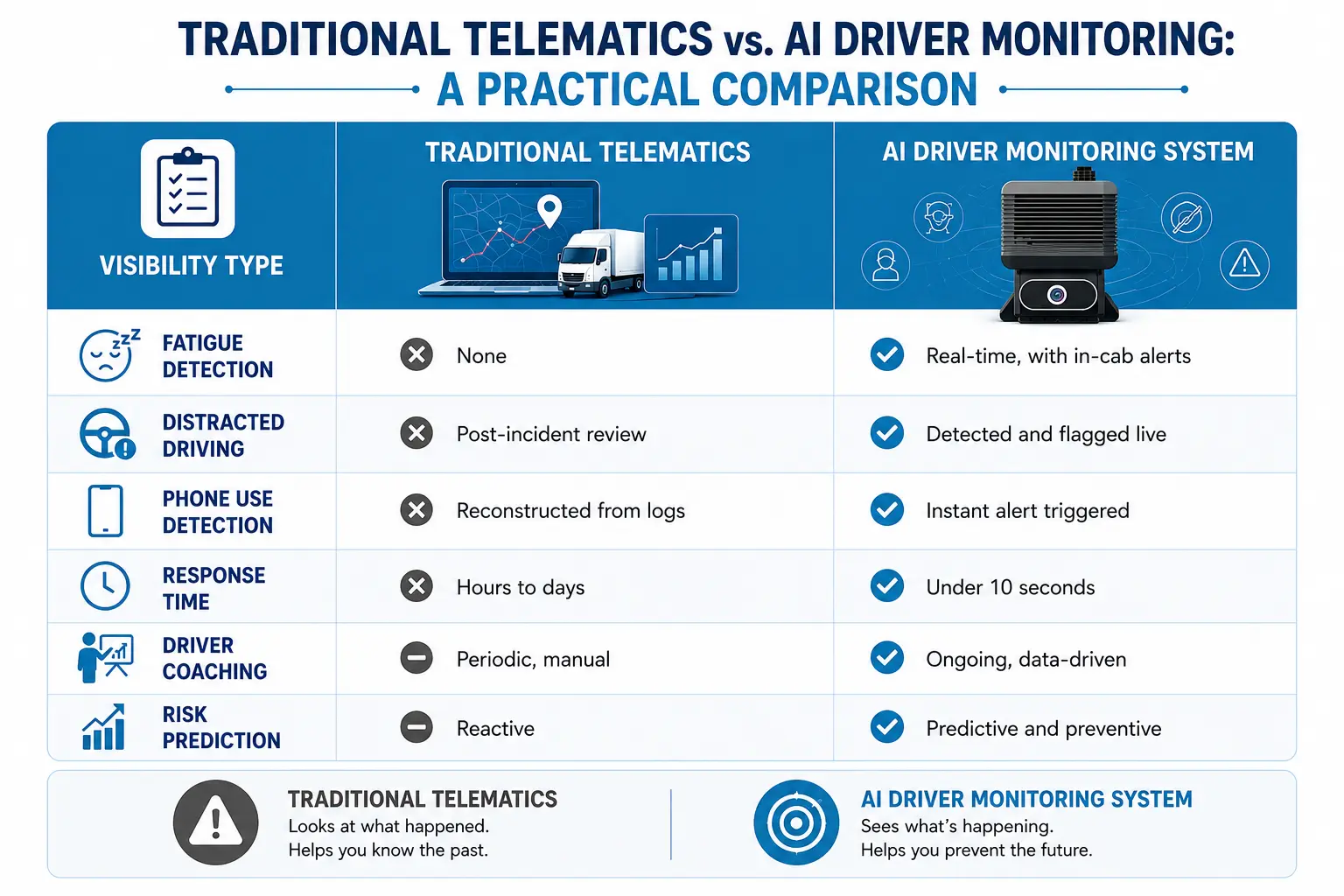
For most of the last two decades, fleet telematics has been a useful but fundamentally backward-looking tool. GPS tells you where a vehicle is. Event data tells you that a harsh braking event occurred. ELD logs tell you how many hours a driver was behind the wheel. All of these systems report conditions after the fact.
The core limitation is not data volume. Modern telematics generates substantial data. The limitation is timing. By the time a manager reviews a harsh braking event, the near-miss has already happened. The fatigue episode has already occurred. The distracted driving window has already closed.
AI-powered driver monitoring systems operate on a different logic. Rather than capturing events, they monitor conditions. Using driver-facing cameras, computer vision models, and edge AI processing on the device itself, these systems analyze facial cues, eye movement patterns, head position, and gaze direction continuously. When the system detects indicators of fatigue or distraction, it triggers an in-cab alert to the driver in real time and simultaneously notifies fleet management.
The practical difference between these two approaches is not marginal. Consider driver fatigue specifically. Research suggests that driver fatigue contributes to approximately 13% of commercial vehicle crashes annually. Sleep Foundation confirms that microsleep episodes lasting just a few seconds are enough for a driver at highway speed to lose full control of the vehicle, with the vehicle continuing to travel with no driver input. At 90 km/h, that gap covers significant ground in the time it takes to blink back to awareness. Traditional telematics has no mechanism to detect this before it becomes a crash. AI monitoring detects the early indicators and intervenes.
The same logic applies to distracted driving. Distraction, including phone use and inattention, ranked as the second most common driver-related factor in large truck crashes, as per FMCSA. Systems capable of identifying these behaviors in the moment create an entirely different safety posture for fleets: one that is predictive rather than reactive.
Traditional Telematics vs. AI Driver Monitoring: A Practical Comparison
A Strategic Observation
Fleets often frame monitoring technology as a safety investment. The more precise framing is that it is a risk management tool with measurable financial returns. When AI-powered driver monitoring reduces insurance premiums by 15 to 30%, cuts accident-related costs, and eliminates the operational disruption of preventable incidents, the ROI is direct and calculable. Safety and financial performance are not competing priorities in this context. They move together.
How Novus Hi-Tech Is Advancing Fleet Safety with AI
Modern truck driver monitoring systems are most effective when they combine AI capability, real-time intervention, and actionable fleet intelligence into a single, coherent system. That integration is what distinguishes a genuine safety solution from a dashcam that generates data no one acts on.
Novus Hi-Tech has built its driver safety offering around a three-layer architecture designed to operate from the moment of detection through to fleet-wide improvement.
Layer 1: Novus Safe Pro Hardware
The in-cab hardware includes a driver-facing camera, a road-facing camera, ADAS integration, and edge AI processing. This combination allows the system to monitor driver state and road conditions simultaneously, without requiring cloud connectivity to trigger an alert. Capabilities include:
- Fatigue and drowsiness detection
- Phone use and distraction detection
- Seatbelt monitoring
- Smoking detection
- Lane departure and forward collision alerts via ADAS
Edge AI processing is particularly important for commercial fleet applications. Because the AI model runs on the device itself rather than in the cloud, detection and alert generation happen within seconds, regardless of network conditions.
Layer 2: The AI Intelligence Engine
The AI models underpinning Novus Safe Pro have been trained on over 600TB of real-world driving data from diverse Indian driving environments, developed by a team of more than 100 AI, computer vision, and machine learning engineers. This scale of training data matters because Indian commercial fleet conditions, including varying road quality, mixed traffic, and night-heavy operations, present challenges that AI trained on Western highway data cannot reliably address.
Layer 3: Fleet Analytics and Driver Coaching
Real-time alerts handle the immediate risk. The analytics layer handles the systemic risk. Novus provides fleet managers with driver scorecards, risk maps, coaching dashboards, and predictive analytics that identify which drivers and routes carry the highest risk profiles over time. This enables targeted coaching rather than blanket interventions, which has meaningful implications for driver engagement and retention.
Taken together, the three layers move a fleet from isolated incident response to continuous safety management.
Real-World Impact: The Nayara Energy Story
The practical case for AI fleet monitoring becomes clearest in high-stakes deployments, where the consequences of a missed alert are not just costly but potentially catastrophic.
Nayara Energy operates one of India’s largest tanker fleets, transporting flammable petroleum products across long-distance routes with a significant proportion of night operations. The fleet faced a challenge common to large commercial operations: traditional telematics reported incidents after they had already occurred. By the time management reviewed an event, the window for prevention had closed.
Novus Hi-Tech deployed its AI monitoring and fleet analytics solution across the Nayara fleet, integrating real-time driver monitoring with behavioral analytics and coaching systems. The outcomes were significant:
Key Outcomes from the Nayara Energy Deployment:
- 46% reduction in road behavior violations
- 55% reduction in fatigue-related alerts
- 55 to 60% reduction in distraction events
- Fleet response time reduced from 24 hours to under 4 seconds
The response time reduction deserves particular attention. Moving from 24 hours to under 4 seconds is not an incremental improvement. It represents a fundamental change in what fleet safety management means in practice. At that speed of detection and response, interventions happen before outcomes occur, not after.
For a fleet transporting flammable cargo on high-traffic corridors, this shift from reactive to proactive safety directly reduces the probability of the kind of incidents that carry the highest human and financial cost.
A Second Strategic Observation
Results like these point towards a broader pattern in fleet safety: the greatest gains come not from deploying more monitoring in isolation, but from combining real-time detection with structured coaching. Fleets that use monitoring data to reinforce positive behavior rather than simply penalize violations build safer cultures over time. The technology creates visibility; the coaching process converts visibility into sustained change.
The Future of Fleet Safety Is Proactive
Commercial fleet safety is shifting in a clear direction. Regulatory expectations are increasing. Insurance costs are rising in direct proportion to claims frequency. And the tools that once defined best practice, GPS tracking and post-event reporting, are no longer sufficient to meet the risk management demands of modern fleets.
A truck driver monitoring system gives fleets the visibility they need to identify and address risk before it reaches the road. The data from real-world deployments is consistent: fewer violations, fewer fatigue events, faster response, and better driver outcomes. These are not abstract benefits. They are operational and financial improvements that accumulate across every route, every shift, and every driver in the fleet.
The most accurate way to think about this technology is not as a safety expense but as the infrastructure for a safer, more efficient fleet. Fleets that implement it early are not just reducing risk. They are building a competitive advantage that compounds over time.
Ready to Evaluate Your Fleet’s Safety Profile?
If your fleet still relies primarily on GPS and post-incident reporting, there is a meaningful gap between where your safety visibility is today and where it needs to be. Novus Hi-Tech works with fleet operators to assess current risk exposure and identify where AI-powered monitoring can make the most immediate difference. Connect with our team of experts to explore what a proactive fleet safety program looks like for your operations.