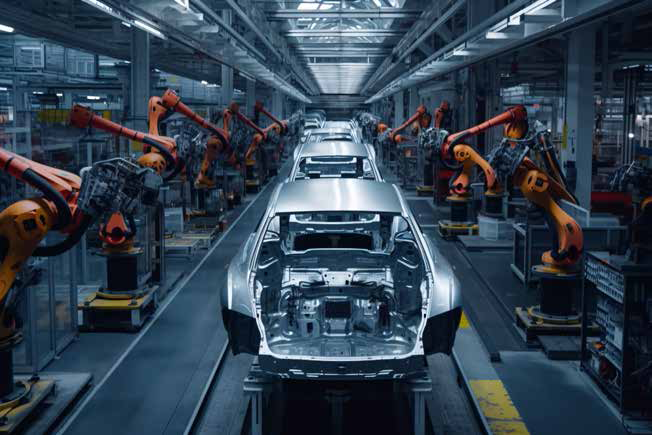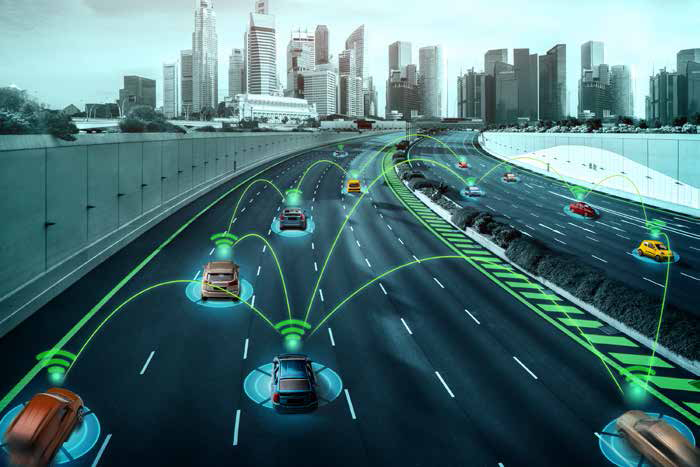

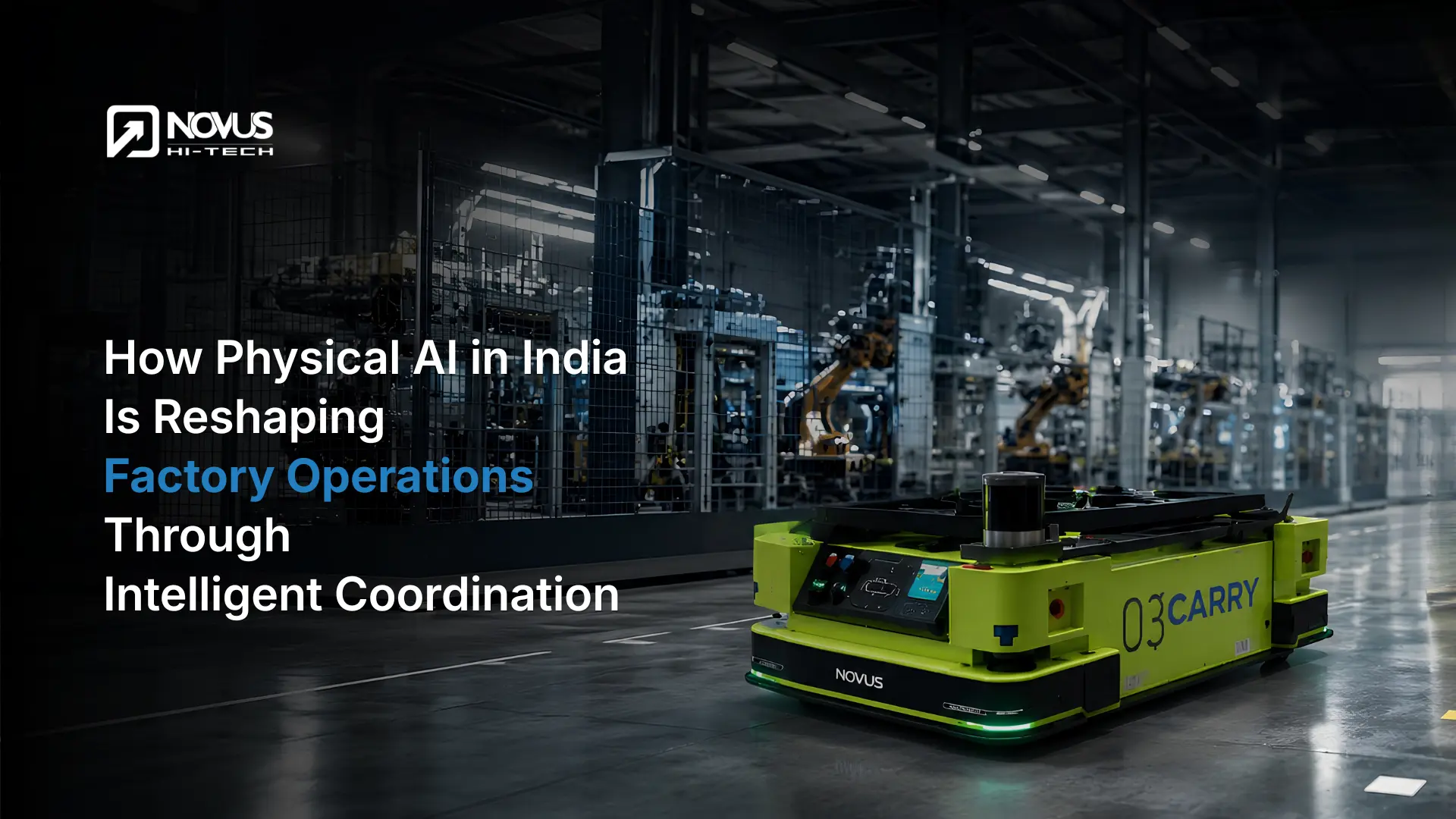
Despite record levels of automation investment, many Indian factories still operate as disconnected islands of technology. Robots assemble, AGVs move materials, vision systems inspect quality, and MES platforms track production. Yet these systems rarely communicate with one another, adapt together, or respond to the factory as a unified whole. The result is a paradox: more automation, but not necessarily more intelligence.
Physical AI in India is beginning to resolve that paradox, not by replacing what manufacturers have already built, but by adding the coordination layer that makes those investments work together. At CES 2026, NVIDIA called this as the “ ChatGPT moment for robotics,” signalling that intelligent physical systems have crossed from research into the industrial mainstream. This article explores the evolution that led here, why intelligence is becoming the defining infrastructure of modern factories, and how India is positioned within this global shift.
What Has Been Covered in This Article?
This article traces the evolution of industrial automation and explains why intelligence is now becoming the core coordination layer of the modern factory. It covers how India’s manufacturing expansion and engineering ecosystem are positioning the country as a meaningful contributor to this global shift, and what the next phase of coordinated industrial operations looks like for manufacturers making automation decisions today.
How Industrial Automation Has Always Evolved by Solving New Problems
Industrial automation has never stood still, and each era it entered was shaped by the limitations of the one before it. Mechanization solved the problem of physical labor but left factories with no flexibility. PLCs brought repeatability but no intelligence. Industrial robotics added speed and precision, but could not adapt to variability. Industry 4.0 connected machines to data but stopped short of enabling autonomous response. The emergence of smart factories and smart manufacturing gave operations visibility through dashboards and real-time monitoring, yet the systems behind those dashboards still could not coordinate on their own.
Each era solved one problem and inherited a new one. The table below captures what each stage contributed and the limitations it left behind:
| Era | Problem Solved | Limitation Left Behind |
| Mechanization | Physical labor | No flexibility |
| PLCs | Repeatability | No intelligence |
| Industrial Robotics | Speed and precision | No adaptability |
| Industry 4.0 | Connectivity and data | No autonomous response |
| Intelligent Automation | Perception, reasoning, coordination | Still emerging |
The World Economic Forum describes this progression as a shift from task automation toward systems that can understand context, learn from environments, and collaborate with other machines and humans in real time. The key observation here is that today’s industrial challenge is not simply adding more automation. It is making intelligent systems work together as one coordinated operation. Worker roles have evolved alongside each technological shift as well. Operators who once managed single machines now oversee multi-system workflows, and engineers who once programmed fixed sequences now configure adaptive systems. The factory floor is becoming increasingly software-defined, and that transition is accelerating across every major industrial sector.
Why Modern Factories Need Intelligence, Not Just Automation
Walk through a modern factory, and you will find a formidable set of technologies already in place: robots on assembly lines, autonomous mobile robots moving materials across warehouse floors, vision systems scanning for defects, MES tracking production progress, WMS managing inventory, ERP consolidating financials, and human operators coordinating across all of it. The challenge is no longer automating individual tasks within this environment. It is enabling all of these technologies to function as one coordinated system, and that is a fundamentally different problem than the ones previous automation eras were designed to solve.
This is the architectural shift that defines the current moment in manufacturing. As Deloitte’s research on software-defined manufacturing explains, the shift is from technology deployment to technology orchestration, where value is generated not from owning individual automated assets but from how intelligently those assets coordinate with one another.
Think of it as an industrial operating system, not a product with that label, but a functional intelligence layer that sits above hardware, connects disparate systems, and enables the factory to behave as a single adaptive entity. When an AMR slows due to congestion, the operating schedule adjusts. When a quality alert fires on a vision system, upstream processes respond before a defect propagates further down the line. When a robot arm encounters an unfamiliar object, it reasons through the situation rather than failing and waiting for human intervention.
The outcomes of this coordination are concrete and operationally significant. Workplace safety improves when machines share spatial awareness and anticipate one another’s movements. Throughput increases when systems identify bottlenecks before they form rather than reacting after the fact. Downtime falls when AI agents detect anomalies before failure occurs. Adaptability becomes structural rather than something that requires expensive manual reconfiguration every time production conditions change.
Why Physical AI in India Is Gaining Serious Industrial Momentum?
The global conversation around intelligent industrial systems is increasingly happening with India in the room, and the structural foundations explain why. India’s manufacturing base is expanding at a scale few markets can replicate, driven in part by the Production Linked Incentive Scheme, which has mobilized substantial investment across electronics, pharmaceuticals, automotive components, and specialty chemicals. That expansion has created demand not just for factory capacity, but for smarter, more efficient factory operations that can compete on quality and throughput alongside cost.
According to the IFR World Robotics 2025 report, India installed a record 9,100 industrial robots in 2024, a 7% increase year on year, ranking sixth globally by annual installations, with the automotive sector accounting for 45% of that demand. These numbers reflect an industrial base that is actively mechanizing and, in several verticals, beginning to do so with intelligent systems rather than fixed-function machines. NASSCOM has also documented the rapid growth of Global Capability Centres across India, with a growing share focused on AI, automation, and advanced engineering research, producing engineers who are not just implementing automation but building the intelligence layers that run on top of it. The pace of warehouse and logistics automation across the Indian industry reflects this same momentum at the operational level.
How Novus Hi-Tech Is Building Physical AI Systems in India
The convergence of manufacturing scale, policy momentum, and engineering depth has created the conditions for India to contribute meaningfully to the next generation of industrial automation, not just as an adopter but as a builder. Novus Hi-Tech is a concrete example of what that contribution looks like in practice. With deployments spanning factory automation and intelligent mobility applications across 100+ enterprise customers in 8+ countries, Novus Hi-Tech has moved well beyond developing individual automation products.
The company builds integrated intelligent systems that coordinate machine vision, autonomous vehicle navigation, and fleet-level decision-making across factory environments, addressing the coordination problem that defines this era of industrial operations. With over 120,000 vehicles equipped with its AI systems and more than 7 billion kilometres of operational data collected, Novus Hi-Tech brings a depth of real-world deployment experience that is rare at this stage of India’s automation journey. India’s contribution to this global shift is still in its formative stages, but companies like Novus Hi-Tech are demonstrating that the capability to build at this level already exists here.
If you are planning your next phase of automation investment, understanding how intelligent orchestration reshapes manufacturing operations at the floor level is a useful starting point. Get in touch with our experts at Novus Hi-Tech for a detailed conversation on factory automation and intelligent systems.
What the Next Decade Looks Like for Factories That Get This Right
The direction of the next decade is becoming visible to those paying attention. Software-defined factories will replace hardware-defined ones, and the competitive advantage will belong to operations where intelligent agents manage workflows, coordinated robot fleets adapt to demand in real time, and continuous learning from operational data feeds back into better decisions at every level.
Human-machine collaboration will evolve alongside this shift, not in the direction of replacement but of amplification, with operators interacting with systems that surface the right decision at the right moment rather than requiring them to manually process thousands of data points across disconnected dashboards.
The World Economic Forum, exploring the future of intelligent manufacturing, describes this as a shift toward factories that can reconfigure themselves around changing production needs without requiring manual reprogramming at every step. The implication for leaders is direct: the question is no longer whether to automate. It is whether the automated systems you have invested in can coordinate intelligently. Organizations that treat automation as a collection of individual tools will face compounding coordination costs over time. Those who build or adopt the intelligence layer that ties those tools together will compound their operational advantage instead. For a broader understanding of warehouse automation types, challenges, and benefits, the operational principles translate directly to factory environments as well.
Novus Hi-Tech’s intelligent factory automation solutions are designed precisely for this transition, helping manufacturers move from fragmented deployments toward operations that reason, adapt, and coordinate at scale. Their systems integrate directly into the WMS, ERP, and IoT frameworks already in place across factory environments, which means manufacturers are not rebuilding their infrastructure but adding the intelligence layer on top of what they have already invested in.
The Next Step in Industrial Automation Is Intelligent Coordination
Industrial automation has advanced by solving the problem the previous era could not. Mechanization gave way to control systems, control systems gave way to robotics, robotics gave way to connectivity, and connectivity is now giving way to intelligence. Physical AI in India is not a replacement for what manufacturers have already built. It is the coordination layer that makes everything already in place work better, together, and with far greater adaptability than any fixed-function system can deliver on its own.
For manufacturing leaders evaluating the next phase of their operations, the strategic question has shifted from “what should we automate?” to “how should our automated systems coordinate?”
That reframing changes what you invest in, how you evaluate vendors, and what kind of architecture you build for the decade ahead. The global conversation around intelligent industrial systems is no longer prospective. It is directional, and in India, it is gaining real momentum. If coordinated factory intelligence is on the roadmap, connect with Novus Hi-Tech to explore what that looks like for your operations