

Every car sold in India today sits somewhere on a six-rung ladder of driving intelligence. At the bottom, a vehicle that alerts you to a drifting lane. At the top, a car that requires no human at all. In between sit billions of dollars’ worth of sensors, software, and regulatory debate.
The levels of ADAS, formally defined by the Society of Automotive Engineers under the SAE J3016 standard, give engineers, regulators, and buyers a shared language for that ladder. Understanding them matters whether you are an OEM designing a new platform, a fleet operator evaluating compliance, or a buyer deciding which car to purchase next.
This guide walks through all six levels: what technologies they include, how they differ in real-world responsibility, and what India’s regulatory roadmap looks like as adoption accelerates.
Level 0 to Level 5 ADAS at a Glance
| SAE Level | Name | Who controls driving | Human monitoring required? | Real-world examples |
|---|---|---|---|---|
| Level 0 | No automation | Human (always) | Yes — fully | Standard vehicles, basic warning alerts |
| Level 1 | Driver assistance | Human + one task automated | Yes — fully | Adaptive cruise control, lane keeping assist |
| Level 2 | Partial automation | Human monitors; system steers + accelerates | Yes — eyes on road | Tesla Autopilot, Maruti e Vitara ADAS suite |
| Level 3 | Conditional automation | System drives; human on standby | Yes — must respond when prompted | Mercedes-Benz Drive Pilot, Honda Legend |
| Level 4 | High automation | System drives within a defined zone | No — within ODD only | Waymo robotaxi, autonomous airport shuttles |
| Level 5 | Full automation | System drives everywhere | No — in all conditions | Not yet commercially available |
Learn how ADAS evolves from basic to fully autonomous driving.
Download our free brochure/e-book for expert insights and trends!
What Are ADAS Levels?
ADAS levels refer to the classification system used to define the degree of vehicle automation in a car or commercial vehicle. These levels are standardized by SAE International (Society of Automotive Engineers).
The SAE levels of driving automation classify how much responsibility the vehicle can handle versus how much human intervention is still required.
Learn more about ADAS Technology and how it’s transforming road safety.
How the SAE defines the levels of ADAS

The SAE J3016 standard, introduced in 2014 and updated in 2021, classifies vehicle automation into six levels based on a simple but critical question: who is responsible for the dynamic driving task at any given moment?
The dynamic driving task includes everything required to operate a vehicle safely — steering, braking, accelerating, monitoring the surroundings, and responding to road events in real time.
A second concept that shapes every level above Level 2 is the Operational Design Domain (ODD) — the specific conditions under which an automated system is designed to function, including road type, speed range, weather, traffic conditions, and geographic location.
For example, a system that performs flawlessly on a well-marked German autobahn may struggle on a rain-soaked Indian highway with inconsistent lane markings and unpredictable traffic behavior.
Based on these principles, SAE defines six distinct levels of driving automation:
- Level 0 – No Automation
- Level 1 – Driver Assistance
- Level 2 – Partial Automation
- Level 3 – Conditional Automation
- Level 4 – High Automation
- Level 5 – Full Automation
As the automation level increases, the vehicle assumes greater responsibility for steering, braking, acceleration, navigation, and environmental awareness — gradually reducing the need for human intervention.
Level 0 ADAS: No Driving Automation
Who controls the vehicle: The human driver, at all times.
Level 0 represents vehicles with no autonomous driving capability. The driver performs every aspect of the dynamic driving task including steering, braking, acceleration, hazard detection, and decision-making. No system takes action on the vehicle’s controls.
What confuses many people is that Level 0 vehicles can still carry ADAS features. Forward collision warnings, blind spot alerts, and parking sensors all fall under Level 0 because they issue alerts but never act. A system that warns you without intervening is not automation. It is information.
Key Level 0 technologies:
- Forward Collision Warning (FCW)
- Blind Spot Monitoring (BSM)
- Rear-view cameras and parking sensors
- Lane Departure Warning (LDW) — warning only, no steering input
Example of Level 0 Vehicles
Most conventional vehicles without active driver assistance systems fall under this category.
Limitations of Level 0 Vehicles
- No automated control
- Higher dependency on driver attention
- Increased accident risks due to human error
The takeaway: If the car informs but never acts, it is Level 0 regardless of how many sensors it has.
Level 1 ADAS: Driver Assistance
Who controls the vehicle: Human driver, with the system automating one task at a time.
Level 1 introduces the first genuine automation: the system can control either steering or speed, but never both simultaneously.
Adaptive cruise control — which adjusts vehicle speed to maintain a safe following distance. The system handles longitudinal control (braking and acceleration) while the driver steers.
Lane keeping assist, in its basic form, handles lateral control (steering corrections to keep the car centred in a lane) while the driver manages speed. Each works independently. The moment they work together, the system crosses into Level 2.
Key Level 1 technologies:
- Adaptive Cruise Control (ACC)
- Lane Keeping Assist (LKA) — corrective steering only
- Automatic Emergency Braking (AEB) — active intervention, distinct from warning
Examples of Level 1 Vehicles
Many modern passenger vehicles equipped with adaptive cruise control fall into this category.
Benefits of Level 1 ADAS
- Improved driving comfort
- Reduced driver fatigue
- Enhanced highway driving convenience
- Better vehicle safety
Indian context: Level 1 features are now standard on a growing range of Indian mass-market vehicles. The MG Gloster was among the first Indian cars to offer Level 1 ADAS; today, models like the Hyundai Creta and Kia Seltos include it across mid-range trims.
Level 2 ADAS: Partial Driving Automation
Who controls the vehicle: System manages both steering and speed simultaneously; the driver monitors and must intervene at any moment.
Level 2 is the most sophisticated automation available in consumer vehicles today, globally as well as in India. The system takes over both lateral and longitudinal control together: it keeps the car centred in its lane while maintaining a safe following distance from the vehicle ahead. On a clear, well-marked highway, this can feel remarkably close to autonomous driving.
It is not. The driver must remain fully engaged, eyes on the road, hands near the wheel, ready to take over the instant the system encounters a situation it cannot handle — a merging vehicle, construction zone, heavy rain, or an unmarked intersection. Misunderstanding this is the single biggest safety risk with Level 2. Manufacturers have begun adding driver monitoring systems (DMS) specifically to enforce this requirement.
Key Level 2 technologies:
- Combined ACC + Lane Centering
- Traffic Jam Assist
- Highway Driving Assist
- Automatic lane change (on command, with driver confirmation)
Examples:
- Tesla Autopilot
- GM Super Cruise
Advantages of Level 2 Automation
- Improved road safety
- Reduced accidents caused by human error
- Better long-distance driving comfort
- Increased fleet safety performance
Level 2 ADAS systems are the most sophisticated assistance systems available for most private consumer vehicles today.
Limitations of Level 2 ADAS
- Drivers must stay alert at all times
- Systems may fail in poor weather conditions
- Overreliance can create safety risks
Indian context: Level 2 ADAS is now appearing across Bharat NCAP-tested vehicles. Several recent 5-star scorers including the Maruti e Vitara and Maruti Victoris — carry full Level 2 suites as standard on top variants. Bharat NCAP 2.0, expected by 2027, will formally evaluate ADAS performance as part of its scoring protocol.
Level 3 ADAS: Conditional Driving Automation
Who controls the vehicle: The system performs the full dynamic driving task within defined conditions; the human must be available to take over when the system requests it.
Level 3 Vehicles have conditional automation. They can carry out the complete packing of hours of driving under certain circumstances (like in traffic congestion) without human intervention, but they require an attentive human driver who is ready to intervene if necessary.
This handover requirement is Level 3’s defining challenge. It introduces a grey area where a system that can drive itself but still needs a human on standby. The liability question (if the system crashes while driving itself, who is responsible?) is precisely why Level 3 deployments remain limited globally and why the UK passed its Automated Vehicles Act 2024 specifically to address this.
Key Level 3 technologies:
- AI-based environment perception (camera + radar + LiDAR fusion)
- Traffic Jam Pilot (low-speed, stop-and-go conditions)
- High-speed highway autopilot within defined corridors
Examples of Level 3 Vehicles:
- Mercedes-Benz Drive Pilot (approved for use on designated highways in Germany up to 98 km/h, and in select US states up to 64 km/h)
- Honda Legend with Traffic Jam Pilot (limited lease in Japan, 2021)
They use complex sensors and AI to analyze current traffic conditions, but have an automatic function and require human continuation.
Benefits of Level 3 Automation
- Reduced driver workload
- Better traffic efficiency
- Increased driving convenience
- Safer highway operations
Challenges of Level 3 ADAS
- Regulatory limitations
- Liability concerns
- Infrastructure dependency
- High sensor costs
Indian context: No vehicle currently sold in India carries certified Level 3 ADAS. The regulatory framework for conditional automation on Indian roads does not yet exist. This is expected to evolve post-2027 as Bharat NCAP 2.0 introduces structured ADAS evaluation.
Level 4 ADAS: High Driving Automation
Who controls the vehicle: The system drives entirely without human input, but only within a defined operational design domain (geo-fenced area or specific conditions).
Level 4 vehicles do not require a human driver within their operational domain. They can navigate, make decisions, handle emergencies, and complete journeys without any human involvement. The critical limitation is the ODD: outside the designated area, zone, or conditions, the vehicle either stops safely or requires human control.
Commercial deployments already exist. Waymo operates Level 4 robotaxis in Phoenix and San Francisco areas where passengers hail the car, enter, and travel without any human driver, and no safety driver is present. These vehicles operate within carefully mapped urban zones under defined conditions.
Key Level 4 technologies:
- High-density sensor fusion (multiple cameras, long-range radar, LiDAR, ultrasonic)
- HD mapping and real-time localisation
- Redundant braking and steering systems
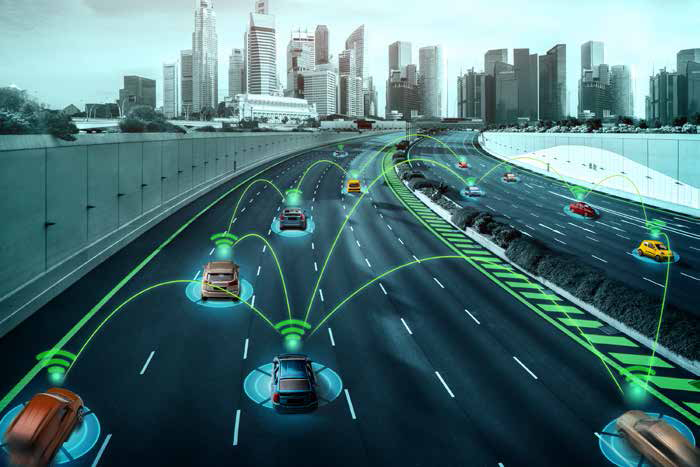
- V2X (vehicle-to-infrastructure) communication
Examples:
- Autonomous shuttle
- Robo-taxis in a defined environment (Waymo One, Cruise robotaxis)
The Level 4 system will often not require a steering wheel or pedals for the vehicle inside of its operational area, but may require a human driver outside of the operational area.
Applications of Level 4 Automation
- Smart cities
- Logistics operations
- Warehouse transportation
- Fleet management
- Autonomous ride-sharing
Level 5 ADAS: Complete Driving Automation
Who controls the vehicle: The system, in all conditions, on all road types, in all environments, without any human involvement.
In Level 5 automation, no human driver is required. The vehicle can perform all driving functions in all environments and conditions. No ODD restrictions, no geo-fencing, no standby requirement.
No production vehicle has achieved Level 5. The technology exists in fragments — sensor accuracy, AI decision-making, redundant systems but integrating them into a commercially viable, legislatively approved product remains years away.
Features of Level 5 Automation
- Fully self-driving capability
- AI-powered navigation
- Human-free operation
- Vehicle-to-everything (V2X) communication
- Complete environmental awareness
Future Potential of Level 5 Vehicles
- Zero-accident transportation systems
- Fully autonomous logistics networks
- Smart urban mobility ecosystems
- Driverless commercial transportation
Challenges of Level 5 Automation
- Regulatory approval
- Cybersecurity concerns
- Infrastructure readiness
- Ethical AI decisions
- Public trust and adoption
No production car has achieved this level yet, but significant strides are being made to get Level 5 ADAS cars in front of consumers.
ADAS Cars in India
India’s ADAS adoption has accelerated sharply over the past three years, driven by rising consumer demand, Bharat NCAP ratings, and regulatory requirements on the horizon.
Mass ADAS Adoption in India Needs Homegrown Solutions
—Anuj Kapuria, MD & CEO, Novus Hi-Tech · Read the full interview →
The regulatory picture:
Bharat NCAP, launched in August 2023, evaluates vehicles primarily on crash safety. Its 5-star rated cars — Tata Harrier, Safari, Curvv, Mahindra XEV 9e, Maruti e Vitara, Toyota Innova Hycross — increasingly carry Level 1 and Level 2 ADAS as standard or near-standard equipment. Features such as AEB, lane departure warning, and lane keeping assist are becoming the default on 5-star candidates.
Bharat NCAP 2.0, expected by 2027, will formally score ADAS performance in its evaluations. The Automotive Research Association of India (ARAI) is already developing an 18-acre dedicated ADAS testing facility near Pune to support this expansion. Features including AEB, lane departure warning, adaptive cruise control, and collision avoidance assist are expected to be part of the upgraded protocol.
For heavy commercial vehicles (trucks and buses), MoRTH has pushed for mandatory ADAS-related safety systems. As regulatory focus on road safety increases, ADAS in commercial fleets is expected to become a major compliance and operational requirement across logistics, mining, and public transport sectors. Industry projections indicate that ADAS will become a mandatory element of heavy vehicle approvals from 2026 onward.
The road condition challenge:
Indian road conditions present specific engineering requirements that global ADAS systems are not designed for by default. Faded or absent lane markings, unpredictable pedestrian and two-wheeler behaviour, free-roaming livestock, and significant variation in road surface quality mean that ADAS algorithms trained on European or North American roads need substantial localisation before they function reliably in Indian traffic.
Leading ADAS providers — including Novus Hi-Tech — are actively developing localised algorithms that account for these conditions: context-aware AEB that distinguishes a wandering cow from an oncoming vehicle, lane keep assist that functions without visible markings, and driver monitoring that adapts to local driving behaviour patterns.
Where most Indian cars sit today:
The majority of new passenger vehicles sold in India in 2025 fall between Level 0 and Level 2. Level 0 remains dominant in volume segments, while Level 1 features are becoming standard across mid-tier models from major manufacturers. Increasing investment in ADAS for OEMs is also accelerating the adoption of Level 2 systems on premium SUVs, EV platforms, and next-generation connected vehicles. Level 3 and above remain absent from the Indian consumer market.
Technologies Powering Autonomous Vehicles
Regardless of level, most ADAS features rely on combinations of four sensor types: cameras (visual recognition), radar (distance and speed measurement), LiDAR (precise 3D mapping), and ultrasonic sensors (close-range detection). The higher the level, the more these sensors are fused together in real time.
Safety alert features (Level 0–1):
- Forward Collision Warning (FCW)
- Lane Departure Warning (LDW)
- Blind Spot Monitoring (BSM)
- Driver Drowsiness Detection
Active intervention features (Level 1–2):
- Automatic Emergency Braking (AEB)
- Adaptive Cruise Control (ACC)
- Lane Keeping Assist (LKA)
- Traffic Sign Recognition
Automation features (Level 2–3):
- Highway Driving Assist (combined ACC + LCA)
- Traffic Jam Pilot
- Automatic Lane Change
- Driver Monitoring System (DMS)
Full autonomy infrastructure (Level 4–5):
- HD Map integration
- LiDAR-based 3D environment modelling
- Redundant braking and steering systems
- V2X communication
- Remote monitoring and intervention systems
Common Features Across ADAS Levels

Regardless of level, ADAS technologies are designed to enhance road safety and improve the user’s driving experience. Across the various levels, common features include:
Alerts & Warnings:
- Lane Departure Warnings
- Blind Spot Warnings
- Forward Collision Warnings
Crash Mitigation:
- Automatic Emergency Braking (AEB)
- Collision Avoidance Systems
Driving Task Assistance:
- Adaptive Cruise Control
- Lane-Centering Assist
- Traffic Sign Recognition
Some of these features may be found at varying levels of ADAS, and they provide various levels of safety and convenience.
Novus Hi-Tech’s Role in ADAS Technology

As one of the premier driving autonomy innovators, Novus High-Tech is leading the driving experience into the future. It designs high-performance ADAS technologies that feature:
- Advanced sensors and LIDAR
- AI-based vision systems
- Real-time data processing units
These elements are essential components of modern ADAS systems that enable manufacturers to progress toward automation in one vehicle, to scaling automation across an entire fleet of vehicles, whether it’s a Level 1 system or processes on the way to full Level 5 automation, Novus Hi-Tech provides the accuracy and performance for the new driver.
Future of Autonomous Driving
The future of transportation is increasingly autonomous, connected, electric, and software-defined, driven by rapid advancements in AI, automation, and connected mobility technologies.
Automakers and technology companies are investing heavily in:
- AI-powered mobility
- Connected vehicle ecosystems
- Smart transportation infrastructure
- Edge AI processing
- Autonomous logistics
- Fleet telematics
- Robotaxis
- Smart manufacturing integration
As regulations evolve and technology improves, Level 4 and Level 5 autonomous vehicles are expected to reshape mobility, logistics, public transportation, and industrial automation.
Conclusion
The six levels of ADAS are not just a technical classification. They mark the actual path automotive safety is taking, from a simple lane departure alert to a vehicle that needs no human input at all. Each level adds a defined layer of capability and responsibility, moving the industry closer to a safer, smarter transport future.
Understanding where any vehicle sits on this ladder is the first step toward making smarter decisions, whether you are an OEM designing a new platform, a fleet operator evaluating your next investment, or a driver choosing your next car.
Novus Hi-Tech builds ADAS systems that span this entire spectrum, from Level 1 driver assistance to advanced Level 2+ fleet safety solutions built for Indian roads and regulatory requirements. Talk to our ADAS team to find the right level of automation for your platform or fleet.